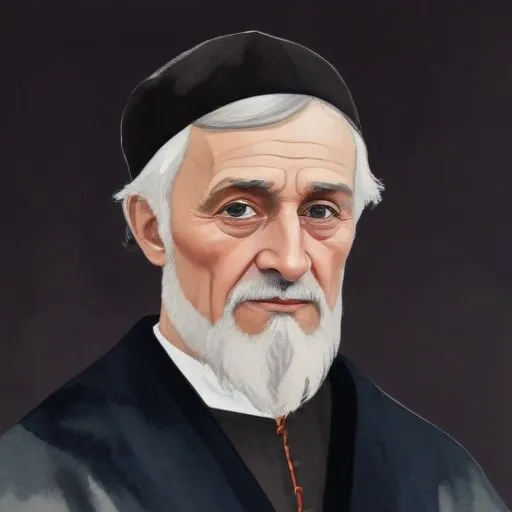
Johannes Cocceius: The Pioneering Theologian of Covenant Theology
A Trailblazer in Hebrew Philology and Exegesis
Johannes Cocceius, a renowned Dutch theologian, is celebrated for his groundbreaking work in Hebrew philology and exegesis, which revolutionized the understanding of biblical scripture. As a leading exponent of covenant or federal theology, Cocceius' innovative approach to biblical interpretation spiritualized the Hebrew scriptures, revealing Christ's presence throughout the Old Testament.
Early Life and Education
Born on August 9, 1603, in Bremen, Germany, Cocceius pursued his academic passion at Hamburg and the University of Franeker, where he was mentored by the esteemed Sixtinus Amama. This intellectual foundation equipped him to excel as a professor of biblical philology at the Gymnasium illustre in his native town, a position he assumed in 1630.
Academic Career and Milestones
Cocceius' academic journey continued at Franeker, where he became a professor of Hebrew in 1636, and later, a professor of theology in 1643. In 1650, he succeeded
Friedrich Spanheim as professor of theology at the University of Leiden, a prestigious institution that provided him with a prominent platform to share his ideas.
The Covenant Theology and Its Implications
Cocceius' magnum opus,
Summa Doctrinae de Foedere et Testamento Dei (1648), articulately presents his covenant theology, which posits that the relationship between God and humanity is rooted in a covenant. He distinguishes between the prelapsarian Covenant of Works and the postlapsarian Covenant of Grace, which necessitates the coming of Jesus Christ for its fulfillment. This theological framework has had a profound impact on the understanding of biblical scripture and its relevance to Christian theology.
Influence and Legacy
Cocceius' innovative approach to biblical theology has inspired a school of thought, with his most notable pupil being Campeius Vitringa. His works, particularly
Lexicon et commentarius sermonis hebraici et chaldaici (1669), have been widely disseminated and continue to influence theologians to this day. The "Cocceian procedure" has become synonymous with biblical theology, offering a redemptive-historical perspective that has shaped Christian thought for centuries.
Philosophical Contributions and Beliefs
Cocceius' millenarian views and emphasis on the covenant relationship between God and humanity have had far-reaching implications for Christian theology. His spiritualization of the Hebrew scriptures has relevance beyond academic circles, speaking to the hearts of believers worldwide.
Personal Milestones and Key Life Events
- August 9, 1603: Born in Bremen, Germany
- 1630: Became professor of biblical philology at the Gymnasium illustre
- 1636: Transferred to Franeker as professor of Hebrew
- 1643: Became professor of theology at Franeker
- 1650: Succeeded Friedrich Spanheim as professor of theology at the University of Leiden
- November 5, 1669: Passed away
Historical Context and Contemporary Significance
Cocceius' life and work are set against the backdrop of the Dutch Golden Age, a period marked by intellectual and artistic flourishing. His covenant theology has continued to influence Christian thought, offering a rich and nuanced understanding of biblical scripture. As a pioneering figure in Hebrew philology and exegesis, Johannes Cocceius remains an indispensable authority in the realm of Christian theology.
FAQ
What was Johannes Cocceius occupation?
Johannes Cocceius was a German-Dutch theologian and academic.
What was Johannes Cocceius area of expertise?
Johannes Cocceius was an expert in biblical studies and theology, and made significant contributions to the field of hermeneutics.
What is Johannes Cocceius most notable work?
Johannes Cocceius most notable work is his commentary on the Bible, which is still studied by scholars today.
When did Johannes Cocceius live?
Johannes Cocceius lived from 1603 to 1669, during the 17th century.
What is Johannes Cocceius legacy?
Johannes Cocceius legacy is as a prominent theologian and biblical scholar who helped to shape Protestant thought and biblical interpretation.