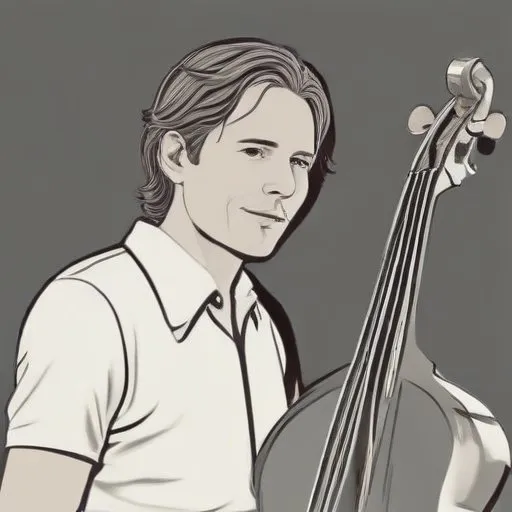
Johannes Matthias Sperger: The Double Bass Virtuoso and Prolific Composer
A Life of Harmony and Innovation
Johannes Matthias Sperger is renowned for his virtuosic skills on the double bass, as well as his remarkable compositional talents, leaving an indelible mark on the world of classical music. With an impressive oeuvre of 44 symphonies, numerous concertos, sonatas, and choral works, Sperger's contributions to the music world are truly remarkable.
Early Life and Training
Born on March 23, 1750, in Feldsberg, Austria, Sperger's fascination with music began at a young age. At just 17, he commenced his training in Vienna, honing his skills as a contrabassist and composer. This formative period laid the foundation for his future success, cementing his reputation as a master of his craft.
Rise to Prominence
Sperger's professional career took off in 1777, when he joined the prestigious Hofkapelle of the Archbishop of Pressburg. During this tenure, he became a member of the Wiener Tonkünstler-Societät, an esteemed society dedicated to promoting classical music. This affiliation afforded him opportunities to perform his own works, solidifying his reputation as a composer and soloist.
A Life of Musical Exploration
Between 1783 and 1786, Sperger served as a member of the Hofkapelle of Count Ludwig von Erdődy in Kohfidisch. This period saw him continue to compose prolifically, penning works that showcased his mastery of the double bass. His innovative approach to the instrument led to the creation of 18 concertos, cementing his status as a trailblazer in the world of classical music.
A New Chapter
In 1789, Sperger began his tenure as the first contrabassist of the Mecklenburg-Schwerin Hofkapelle in Ludwigslust. This new chapter in his life saw him continue to compose, leaving behind a rich legacy of works that continue to inspire and delight audiences to this day.
Lifetime Achievements
Throughout his life, Sperger's compositional output was staggering, with a diverse range of works that include:
- 44 symphonies
- 18 concertos for contrabass
- Instrumental sonatas and rondos
- Cantatas, choral works, and airs
Legacy and Impact
Johannes Matthias Sperger's contributions to classical music have left an indelible mark on the genre. His innovative approach to the double bass, coupled with his prodigious compositional talents, have inspired generations of musicians and composers. His legacy continues to resonate, with his works remaining a staple of classical music repertoire.
Farewell to a Musical Giant
On May 13, 1812, Johannes Matthias Sperger bid farewell to the world, leaving behind a rich cultural heritage that continues to inspire and enrich our lives. As we celebrate his life and works, we are reminded of the transformative power of music to bring people together and transcend time.
FAQ
What was Johannes Matthias Spergers contribution to classical music?
Johannes Matthias Sperger was a prolific composer of classical music, particularly in the genres of opera and chamber music. His works are known for their lyricism and technical complexity.
How did Johannes Matthias Spergers career as a bassist impact his compositional style?
Johannes Matthias Spergers career as a bassist greatly influenced his compositional style, as he wrote many works that featured the bass prominently. His experience as a performer informed his compositional approach.
What is Johannes Matthias Spergers most famous composition?
Johannes Matthias Spergers most famous composition is his opera Diana von Solange, which was widely performed during his lifetime. The opera is a testament to his skill as a composer and his ability to craft compelling musical dramas.
How did Johannes Matthias Spergers music reflect the cultural currents of his time?
Johannes Matthias Spergers music reflected the cultural currents of his time, particularly the emerging Romantic movement. His works often featured expressive melodies and dramatic contrasts, hallmarks of the Romantic style.
What legacy did Johannes Matthias Sperger leave behind?
Johannes Matthias Sperger left behind a legacy of beautiful and technically demanding music. His compositions continue to be performed and admired by audiences today, and his contribution to the classical music repertoire is significant.