


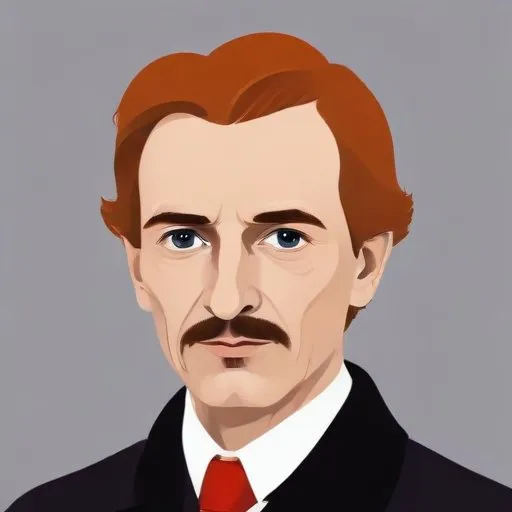
A 17th-century doctor who wrote extensively on the connection between body language and emotions, and is considered one of the first to study nonverbal communication .
John Bulwer, a 17th-century English physician, is renowned for his groundbreaking works on human communication, particularly through gestures and body language. As the first person in England to propose educating deaf people, Bulwer's contributions to the field of linguistics and philosophy are truly remarkable.
Bulwer was born in London in 1606 and lived a life dedicated to learning and writing. His educational background is unclear, but it is believed that he was educated in Oxford as an unmatriculated student in the 1620s. This association with Oxford likely influenced his support for William Laud and the High Church party during the English Civil War.
Between 1640 and 1653, Bulwer published five works that showcased his innovative thinking and dedication to understanding human communication. These works include:
Bulwer's work on gestures and body language was revolutionary for its time. His ideas on educating deaf people were unprecedented, and his proposals for an Academy outlined in Philocophus and The Dumbe mans academie demonstrate his commitment to inclusivity and education.
Bulwer's personal life was marked by love and loss. He married the Widow of Middleton in 1634, but she predeceased him. He later adopted a girl named Chirothea Johnson, who may have been deaf, and raised her as his own.
John Bulwer's contributions to the fields of linguistics, philosophy, and education continue to inspire and influence scholars to this day. His pioneering work on body language and gestures has paved the way for a deeper understanding of human communication, making him a true visionary of his time.
Born in 1578
Discovered the circulatory system and described how blood flows through the body, revolutionizing understanding of human physiology.
Born in 1624
A 17th-century doctor who pioneered the field of epidemiology, studying and documenting the natural history of diseases to develop more effective treatments. He's considered the "English Hippocrates" for his contributions to the field of medicine.
Born in 1632
A 17th-century thinker who laid the groundwork for modern democracy, arguing that governments derive their power from the people and that individuals have inherent rights to life, liberty, and property.
Born in 1656
Predicted celestial events, including the return of a comet that bears his name, and made significant contributions to navigation, astronomy, and mathematics.
Born in 1627
Pioneering scientist who discovered Boyle's Law, which describes the relationship between pressure and volume of gases, and laid foundations for modern chemistry.
Born in 1621
Pioneering 17th-century anatomist who mapped the brain's blood vessels and coined the term "neurology," making significant contributions to the field of neuroscience.
