


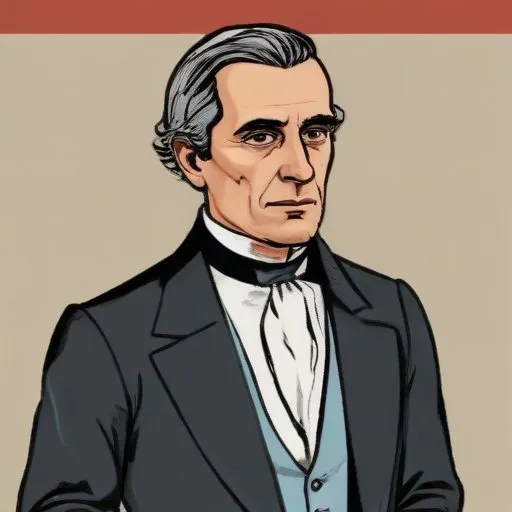
Co-founder of the New Haven Colony, this English minister played a key role in establishing a Puritan settlement in America, shaping the country's early history. He's also known for his theological writings and advocacy for religious freedom.
John Davenport was a renowned English Puritan clergyman and cofounder of the American colony of New Haven, leaving an indelible mark on American history. Born in 1597, Davenport's unwavering commitment to his faith and dedication to the establishment of a Puritan utopia in the New World cemented his legacy as a pioneering figure in American colonization.
Davenport was born in Coventry, Warwickshire, England, to a wealthy family. His father, Henry Davenport, was a draper, alderman, and mayor of Coventry, while his mother, Winifred Barnaby, was a homemaker. Davenport's brother, Francis Davenport, would later become a Catholic theologian and chaplain to Queens Catherine of Braganza and Henrietta Maria de Bourbon.
Davenport's educational pursuits took him to Oxford University, where he matriculated at Merton College in 1613. He later migrated to Magdalen Hall, a institution renowned for its Calvinist and Puritan sympathies, in 1615. Although he did not complete his degree during this time, Davenport returned to Oxford in 1625 and obtained his Bachelor of Divinity (BD) and Master of Arts (MA) degrees.
Davenport's ministerial career began as a chaplain of Hilton Castle, after which he became the curate of St Lawrence Jewry in London. In 1624, he was appointed vicar of St. Stephens Church, in Coleman Street, London. During this period, he formed a close association with John Preston, a prominent Puritan teacher and scholar, and edited his works for posthumous publication.
Davenport's ministry was marked by controversy, particularly his efforts to organize the repurchase of lay impropriations for the support of rural clergy. His attempts were thwarted by Bishop William Laud and condemned by the Court of Exchequer, as were his endeavors to provide relief to Reformed clergy displaced by war in the Electorate of the Palatinate.
In 1633, Davenport resigned from the established church and became a Nonconformist pastor, eventually relocating to Holland. During his time in Holland, it was believed that he was the model for several portraits by Rembrandt, although this theory has since been disputed.
In 1637, Davenport acquired the patent for a colony in Massachusetts and set sail for Boston with a significant portion of his congregation. He stayed with Reverend John Cotton in March 1638, during which time he participated in the church trial of Anne Hutchinson.
John Davenport's contributions to American history are multifaceted and far-reaching. As a cofounder of New Haven, he played a pivotal role in shaping the colony's governance, economy, and social structure. His commitment to Puritan values and his vision for a utopian society have had a lasting impact on American culture and identity.
Through his ministry and writings, Davenport influenced generations of Puritan leaders and thinkers, including Cotton Mather and Jonathan Edwards. His emphasis on education, temperance, and social reform continues to resonate with contemporary American values.
John Davenport's remarkable life and achievements serve as a testament to the power of faith, perseverance, and vision. His enduring legacy continues to inspire and shape American culture, ensuring that his impact will be felt for generations to come.
Born in 1586
Founded the Colony of Connecticut in 1636, establishing a new settlement that would become a hub for trade, commerce, and education. Known for his leadership and vision in shaping the colony's early years.
Born in 1588
A 17th-century English lawyer and politician who played a key role in establishing the Massachusetts Bay Colony and shaping its early government and laws. He's known for his "City upon a Hill" sermon, which emphasized the colony's mission to create a model Christian community.
95 Years Old
Pioneering liver disease researcher and professor who made significant contributions to the understanding and treatment of liver transplantation and hepatology.
Born in 1591
A charismatic Puritan preacher who challenged the authority of the church and advocated for personal religious experience, sparking controversy and eventually leading to her banishment from the Massachusetts Bay Colony.
Born in 1823
The 13th Premier of South Australia, serving from 1876 to 1881, known for his significant contributions to the state's infrastructure development, particularly in the areas of railways and telegraphy.
