


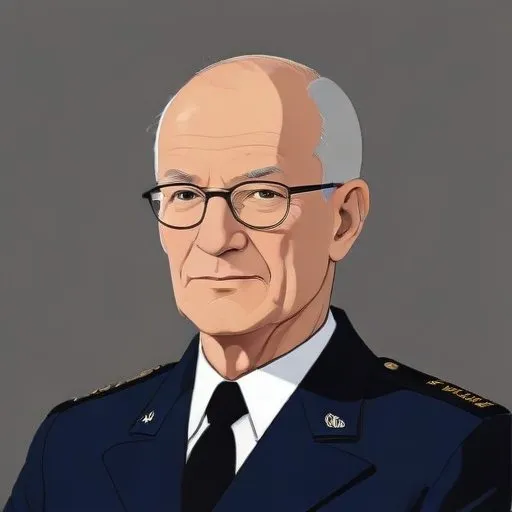
A renowned military historian, diplomat, and ambassador who served as a bridge between the US military and government, known for his insightful writings on military strategy and international relations.
As the second son of President Dwight D. Eisenhower, John Sheldon Doud Eisenhower led a life of distinguished military service, diplomatic endeavors, and historical significance. He is best known for his role as a United States Army officer, diplomat, and military historian, serving as the United States Ambassador to Belgium from 1969 to 1971.
John Eisenhower was born on August 3, 1922, at Denver General Hospital in Denver, Colorado, to future U.S. President Dwight D. Eisenhower and his wife, Mamie. He was their second child, following the death of his elder brother, Doud, who died in 1921 at the age of three due to scarlet fever.
Eisenhower followed in his father's footsteps, attending the United States Military Academy, graduating on June 6, 1944, the day of the Normandy landings, which his father was commanding. He later earned an M.A. degree in English and comparative literature from Columbia University in 1950 and taught in the English Department at West Point from 1948 to 1951. Eisenhower graduated from the Army Command and General Staff College in 1955.
Eisenhower served in the U.S. Army during World War II and the Korean War, remaining on active duty until 1963 and then serving in the U.S. Army Reserve until retirement in 1975, attaining the rank of brigadier general. Although he faced challenges in his military career due to concerns for his safety and the potential distraction his capture or death would cause to his father, Eisenhower went on to have a decorated and accomplished military career.
In 1969, Eisenhower was appointed as the United States Ambassador to Belgium, serving under President Richard Nixon, who had previously been his father's vice president. This marked a significant milestone in his diplomatic career, demonstrating his ability to navigate complex international relations and build bridges between nations.
Throughout his life, John Eisenhower was known for his humility, dedication to public service, and commitment to his family. He was married to Barbara Thompson from 1947 until his death in 2013, and they had four children together. Eisenhower's legacy extends beyond his military and diplomatic achievements, as he also made significant contributions to the field of military history through his writings and teaching.
One of Eisenhower's most notable quotes is: "I was born with a sword in my hand, and I'll die with a sword in my hand." This quote reflects his unwavering commitment to public service and his unshakeable sense of duty.
John Eisenhower's life and legacy have had a profound impact on modern society, inspiring generations of military personnel, diplomats, and public servants. His dedication to his country, his family, and his craft serves as a shining example of what it means to live a life of purpose and service.
In the context of American history, John Eisenhower's life and achievements are a testament to the enduring legacy of his father, President Dwight D. Eisenhower. His own accomplishments, however, stand as a testament to his own character, dedication, and commitment to serving his country.
Born in 1890
Led the Allied forces to victory in World War II and later served as President, maintaining peace and prosperity during the Cold War era. He's known for his strategic leadership and diplomatic skills.
Born in 1913
The 37th President of the United States, a polarizing figure who led the country through significant domestic and foreign policy changes, infamous for his involvement in the Watergate scandal.
Born in 1923
A renowned diplomat and strategist who played a pivotal role in shaping global politics during the Cold War era, known for his Realpolitik approach and brokering peace agreements .
Born in 1908
The 36th President of the United States, a skilled politician and leader, played a crucial role in passing landmark civil rights legislation, including the Civil Rights Act and Voting Rights Act.
Born in 1916
The 8th United States Secretary of Defense played a crucial role in shaping US foreign policy during the Cold War era, particularly in the Vietnam War. He is infamous for his controversial decisions and legacy.
Born in 1909
The 54th United States Secretary of State, a key figure in shaping American foreign policy during the Cold War era, known for his role in the Cuban Missile Crisis and Vietnam War.
Born in 1888
A prominent Cold War diplomat who served as Secretary of State under President Dwight D. Eisenhower, known for his anti-communist foreign policy and role in shaping the United States' response to the Soviet Union.
Born in 1893
The 5th Director of Central Intelligence was a master spy and diplomat who oversaw the CIA during the Cold War, orchestrating covert operations and shaping global politics. He's infamous for his role in the Bay of Pigs invasion and CIA-led coups.
