


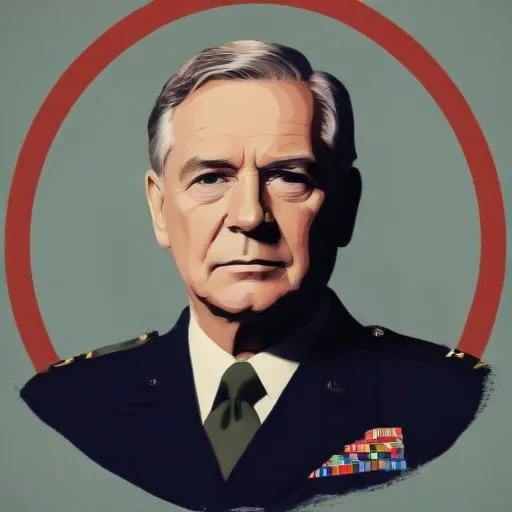
The 54th United States Secretary of State, a key figure in shaping American foreign policy during the Cold War era, known for his role in the Cuban Missile Crisis and Vietnam War.
As the second-longest serving Secretary of State in U.S. history, Dean Rusk played a pivotal role in shaping America's foreign policy during the tumultuous 1960s, serving under Presidents John F. Kennedy and Lyndon B. Johnson from 1961 to 1969. Rusk's legacy is deeply rooted in his diplomatic efforts, particularly during the Cuban Missile Crisis, and his later support for the Vietnam War.
Born on February 9, 1909, in Cherokee County, Georgia, Rusk grew up in a poor farm family, but his academic prowess and dedication earned him a scholarship to Davidson College, where he graduated in 1931. His academic excellence further took him to St. John's College, Oxford, as a Rhodes Scholar, where he immersed himself in English history and customs.
After teaching at Mills College in California, Rusk joined the U.S. Army during World War II, serving as a staff officer in the China-Burma-India Theater and becoming a senior aide to General Joseph Stilwell. Following the war, he transitioned to the State Department, rising through the ranks to become Assistant Secretary of State for Far Eastern Affairs in 1950. In 1952, he left to become president of the Rockefeller Foundation, a position he held until 1961.
Rusk's tenure as Secretary of State was marked by significant events, including the Cuban Missile Crisis, where he supported diplomatic efforts to resolve the crisis peacefully. However, he also became known for his later support of the Vietnam War, a decision that sparked controversy and public debate.
Rusk's political philosophy was rooted in a strong belief in American exceptionalism and a commitment to containing communism. His diplomatic approach was often characterized as cautious and pragmatic, earning him both praise and criticism from his contemporaries.
After leaving the State Department in 1969, Rusk returned to academia, teaching international relations at the University of Georgia School of Law. His legacy as a statesman and diplomat continues to be debated among historians and scholars, with some praising his commitment to American leadership and others criticizing his role in the Vietnam War.
Rusk's personal life was marked by his marriage to Virginia Frazier, with whom he had three children. He passed away on December 20, 1994, at the age of 85, leaving behind a complex and multifaceted legacy that continues to shape American foreign policy to this day.
Rusk's tenure as Secretary of State continues to influence American foreign policy, with his diplomatic efforts during the Cuban Missile Crisis serving as a model for crisis management. His legacy, however, is also marked by controversy, particularly regarding his support for the Vietnam War, which continues to shape public perception of American involvement in international conflicts.
Born in 1917
The 35th President of the United States was a charismatic leader who navigated the country through the Cuban Missile Crisis and advocated for civil rights, leaving a lasting legacy in American politics.
Born in 1908
The 36th President of the United States, a skilled politician and leader, played a crucial role in passing landmark civil rights legislation, including the Civil Rights Act and Voting Rights Act.
Born in 1913
The 37th President of the United States, a polarizing figure who led the country through significant domestic and foreign policy changes, infamous for his involvement in the Watergate scandal.
Born in 1923
A renowned diplomat and strategist who played a pivotal role in shaping global politics during the Cold War era, known for his Realpolitik approach and brokering peace agreements .
Born in 1916
The 8th United States Secretary of Defense played a crucial role in shaping US foreign policy during the Cold War era, particularly in the Vietnam War. He is infamous for his controversial decisions and legacy.
Born in 1906
A pioneering Air Force general who played a crucial role in shaping the US military's strategic bombing capabilities during World War II and the Cold War. He's also known for his hawkish stance on communism and his influence on US foreign policy.
Born in 1885
Led the U.S. Pacific Fleet to victory in World War II, playing a crucial role in defeating Japan and ending the war. He was a highly respected and decorated naval leader.
Born in 1880
A highly decorated military leader and statesman who played a crucial role in shaping post-WWII foreign policy and was awarded the Nobel Peace Prize for his efforts. He's most known for authoring the Marshall Plan, a massive economic aid program that helped rebuild war-torn Europe.
