


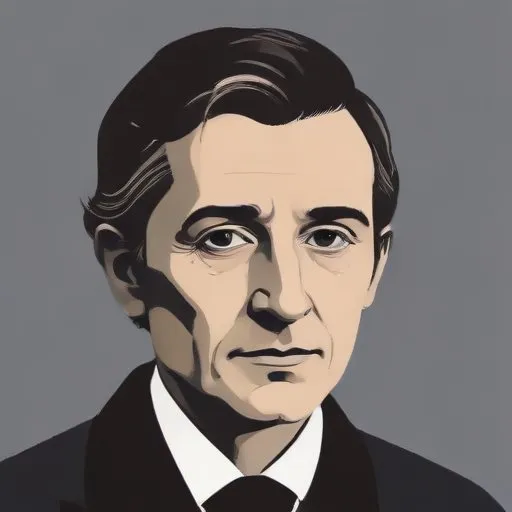
A 17th-century poet who wrote about love, nature, and morality, known for his lyrical style and themes that resonated with the English Renaissance.
John Fitchett, a renowned English poet, is best known for his magnum opus, the epic poem King Alfred, which took him an astonishing 40 years to research and write. This monumental work, comprising over 130,000 lines, cemented Fitchett's reputation as a literary giant of his time.
Born on September 21, 1776, in Liverpool, Fitchett's early life was marked by tragedy when he lost both his parents before the age of ten. His guardian, Mr. Kerfoot, took him under his wing and enrolled him at Warrington Grammar School, where he was taught by the Rev. Edward Owen.
In 1793, Fitchett was articled to his guardian and eventually became a successful attorney, entering into a partnership with him. However, his true passion lay in poetry, and he began writing at a young age. His first published work, Bewsey, a Poem, written at 18, gained considerable success and set the stage for his future literary endeavors.
Fitchett's most notable work, King Alfred, is a romantic epic poem that tells the story of the life and times of King Alfred. Written over a span of 40 years, it was privately circulated in five quarto volumes between 1808 and 1834. Unfortunately, Fitchett did not live to complete the work, but he left provisions for its completion, which was undertaken by his friend Robert Roscoe. The completed poem, with an additional 2,585 lines, made it the longest poem written in English at the time.
Fitchett remained unmarried throughout his life and passed away on October 20, 1838, in Warrington. He was buried at Winwick Church, and his library was bequeathed to his nephew, John Fitchett Marsh. The collection was later sold at Sotheby's, London, in 1882.
In addition to King Alfred, Fitchett wrote numerous fugitive pieces, which were collected and printed in 1836 under the title Minor Poems, composed at various Times. These poems showcase Fitchett's skill and versatility as a poet, offering a glimpse into his creative genius.
John Fitchett's legacy is one of passion, dedication, and literary excellence. His epic poem, King Alfred, remains a testament to his creative prowess, inspiring future generations of poets and writers. Fitchett's contribution to English literature is immeasurable, solidifying his place as a prominent figure in the world of poetry.
Born in 1795
Romantic poet celebrated for sensual language and vivid imagery, capturing the beauty of nature and human experience in odes like "To Autumn" and "Ode to a Nightingale".
Born in 1792
Romantic-era writer of lyrical poetry and Gothic dramas that explored the human condition, freedom, and the beauty of nature.
Born in 1788
Romantic poet and playwright celebrated for passionate, expressive works that explored themes of love, freedom, and the human condition.
Born in 1608
Wrote epic poems, including "Paradise Lost", that explored themes of morality, free will, and the human condition.
Born in 1770
A major Romantic poet, known for his focus on nature, emotion, and the human experience, creating works that evoke a sense of wonder and connection to the natural world.
Born in 1772
A leading figure of the Romantic movement, he crafted vivid, imaginative poetry and explored the human experience through his writing and philosophical ideas. His works continue to inspire and influence literature and art to this day.
Born in 1774
A leading Romantic poet and historian, known for his vivid storytelling and influential works on British history, particularly his three-volume "Life of Nelson".
Born in 1731
A renowned poet and hymnwriter, known for his evocative and expressive works that explored themes of nature, faith, and the human experience. His hymns, such as "Light Shining Out of Darkness", remain popular to this day.
