


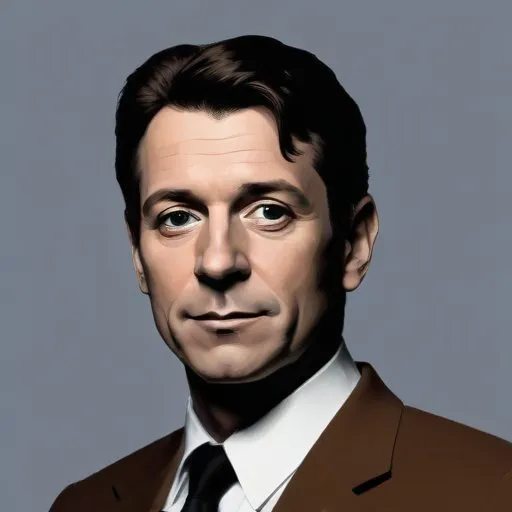
Documented the American West and Native American communities through poignant photographs, capturing the essence of their struggles and triumphs.
John Hoagland was a renowned American photojournalist and war correspondent, best known for his brave and poignant coverage of the Salvadoran Civil War, as well as other conflicts in Nicaragua and Lebanon, for Newsweek magazine.
Born on June 15, 1947, in San Diego, California, Hoagland was the oldest of five children to Helen and Al Hoagland. He grew up in a family native to San Diego, where he attended Helix High School and later studied at the University of California, San Diego in 1965.
It was during his college years that Hoagland was influenced by his professor, Herbert Marcuse, a world-renowned scholar and author of "Eros and Civilization" and "One Dimensional Man." Marcuse, along with another classmate, Angela Davis, inspired Hoagland to pursue a career in journalism.
During the Vietnam War, Hoagland applied for and received conscientious objector status. However, this did not deter him from actively participating in anti-war movements. In 1970, he was present at a massive anti-war protest in downtown Los Angeles, where journalist Ruben Salazar was shot and killed by police. Hoagland was arrested along with his friends, and his video equipment was confiscated.
This experience only fueled Hoagland's desire to become a journalist. He began his career by joining anti-war protests, eventually transitioning from passive to active protesting. Hoagland worked as a steel welder in San Francisco, but he was also an amateur photographer, capturing images of what he found interesting or corrupt.
Almost 30 years old at the time, Hoagland decided to take his camera to Nicaragua to document the Nicaraguan Revolution for Newsweek. This marked the beginning of his illustrious career as a war correspondent.
Hoagland's photographs were published in prominent news outlets, including the Associated Press, United Press International, and Gamma Liaison news photography agency. His work with Newsweek magazine took him to the front lines of conflicts in El Salvador, Nicaragua, and Lebanon, capturing the harsh realities of war and its impact on humanity.
Tragically, John Hoagland's life was cut short on March 16, 1984, when he was killed while covering the Salvadoran Civil War in El Salvador.
Despite his untimely death, Hoagland's legacy lives on through his son, Eros Hoagland, who is also a photographer and continues to work in conflict zones around the globe.
John Hoagland's bravery, conviction, and commitment to telling the stories of those affected by conflict have left an indelible mark on the world of photojournalism. His legacy serves as a testament to the power of journalism to inspire and provoke change.
91 Years Old
A renowned war photographer and correspondent, capturing the harsh realities of conflict and human suffering through his lens, with a career spanning over 60 years.
82 Years Old
A renowned documentary photographer capturing the human condition, particularly in war-torn and impoverished regions, through hauntingly beautiful and thought-provoking images.
Born in 1913
A pioneering war photographer and journalist, capturing iconic images of conflict and human struggle, particularly during World War II and the Spanish Civil War.
Born in 1910
A pioneering female war photographer who captured the Spanish Civil War's brutal reality through her lens, leaving a lasting impact on the genre.
Born in 1908
A pioneer of street photography, capturing life's fleeting moments in elegant, geometric compositions that defined the genre. Known for coining the term "the decisive moment."
71 Years Old
A renowned photographer capturing the human experience through hauntingly beautiful and often controversial images that explore the complexities of adolescence and the human condition.
77 Years Old
Celebrated portrait photographer capturing intimate, often provocative images of celebrities and world leaders, pushing the boundaries of artistic expression.
