


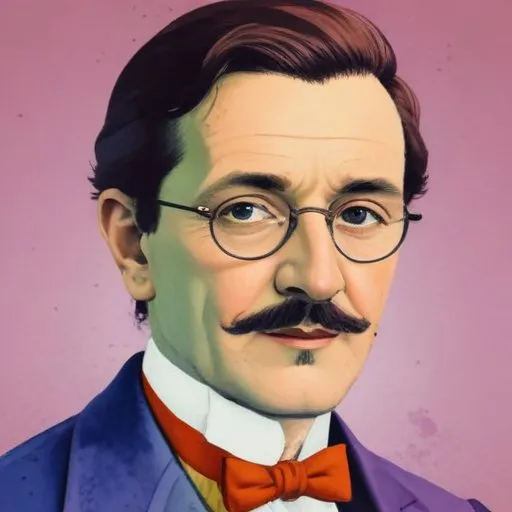
A renowned scientist and journalist who communicated complex scientific concepts to the masses through his writing, making science accessible to a broad audience.
John Maddox, a renowned Welsh theoretical chemist, physicist, and science writer, is best known for his 22-year tenure as the editor of Nature, one of the world's most prestigious scientific journals. During his time at the helm, Maddox fearlessly confronted pseudoscientific claims, earning him a reputation as a fierce defender of scientific rigor.
John Royden Maddox was born on November 27, 1925, in Penllergaer, near Swansea, Wales. His father, Arthur Jack Maddox, worked as a furnaceman at an aluminum plant. From a young age, Maddox demonstrated exceptional academic prowess, winning a state scholarship to Christ Church, Oxford, where he studied chemistry, and later, to King's College London, where he pursued physics.
Maddox's academic credentials paved the way for a distinguished career in science and journalism. He lectured in theoretical physics at the University of Manchester from 1949 to 1955, before becoming the science correspondent at The Manchester Guardian for nearly a decade. In 1964, he coordinated the Nuffield Science Teaching Project, a role that prepared him for his future leadership positions.
In 1966, Maddox took the reins as editor of Nature, a position he held until 1973, and again from 1980 to 1995. During his tenure, he oversaw the publication of groundbreaking research and fearlessly tackled controversial topics, cementing Nature's reputation as a premier scientific journal.
Maddox's unwavering commitment to scientific integrity often led him to confront pseudoscientific claims head-on. In 1981, he penned a scathing editorial, "A Book for Burning," in response to British biologist Rupert Sheldrake's book, A New Science of Life, which proposed the theory of morphic resonance. Maddox denounced Sheldrake's ideas as pseudoscience, sparking a heated debate that continued for years.
John Maddox's remarkable career has left an indelible mark on the scientific community. As a fierce proponent of scientific rigor, he inspired generations of scientists, writers, and thinkers to critically evaluate evidence and challenge unsubstantiated claims. His tireless efforts to promote scientific literacy and debunk pseudoscience have earned him a place among the most influential science communicators of the 20th century.
Throughout his life, Maddox remained committed to his work and his family. He married Anne Keith-Lucas in 1951, with whom he had three children. Despite his busy schedule, he found time to indulge in his love of literature, music, and the arts.
John Maddox's remarkable life serves as a testament to the power of intellectual curiosity, critical thinking, and passion. As we continue to navigate the complexities of modern science, his legacy reminds us of the importance of scrutinizing evidence, challenging dogma, and upholding the principles of scientific inquiry.
Born in 1916
Pioneering scientist who discovered the structure of DNA, revolutionizing our understanding of genetics and life itself.
98 Years Old
Discovered the structure of DNA, revolutionizing our understanding of genetics and earning a Nobel Prize. Pioneering work in molecular biology has far-reaching implications for medicine and beyond.
Born in 1920
A British scientist who contributed significantly to the discovery of the structure of DNA, providing high-quality X-ray crystallography images that helped James Watson and Francis Crick develop their famous model.
Born in 1916
A Nobel Prize-winning physicist and biologist who contributed significantly to the discovery of the structure of DNA, using X-ray crystallography to produce the first clear images of the molecule.
Born in 1901
Pioneering chemist and peace activist who won two unshared Nobel Prizes, one for chemistry and one for peace, for his groundbreaking work on the nature of the chemical bond and his tireless efforts to promote nuclear disarmament.
Born in 1915
A Nobel Prize-winning biologist and immunologist who made groundbreaking discoveries in tissue transplantation and immunology, leading to significant advancements in organ transplants and our understanding of the immune system.
Born in 1910
A French biochemist and geneticist who discovered the mechanism of gene regulation, earning a Nobel Prize in Physiology or Medicine in 1965. He's also known for his book "Chance and Necessity," which explores the philosophical implications of modern biology.
Born in 1920
A French biologist and geneticist who discovered the mechanism of gene regulation, pioneering the field of molecular biology. He won the Nobel Prize in Physiology or Medicine in 1965 for his work on the genetic control of enzyme synthesis.
