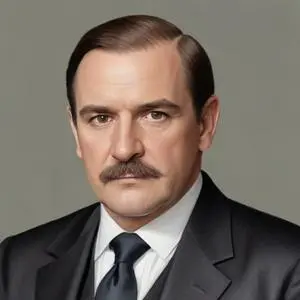
John Marshall Harlan II: A Supreme Court Justice of Unwavering Integrity
A Guardian of the Constitution
John Marshall Harlan II, a luminary of the American judicial system, served as an Associate Justice of the United States Supreme Court from 1955 to 1971. Known for his steadfast commitment to upholding the Constitution, Harlan's tenure was marked by his conservative approach to jurisprudence, earning him a reputation as a champion of judicial restraint.
Early Life and Education
Born on May 20, 1899, Harlan's early life was filled with academic rigor. He attended Upper Canada College and Appleby College, before matriculating at Princeton University. His academic prowess earned him a Rhodes Scholarship, which he used to study law at Balliol College, Oxford. Upon his return to the United States, Harlan earned his law degree from New York Law School.
Rise to Prominence
Harlan's legal career began at the esteemed law firm of Root, Clark, Buckner & Howland, where he worked alongside notable figures such as
Elihu Root. He later served as Assistant U.S. Attorney for the Southern District of New York and Special Assistant Attorney General of New York. In 1954, Harlan was appointed to the United States Court of Appeals for the Second Circuit, a stepping stone to his eventual Supreme Court nomination.
Supreme Court Tenure
In 1955, President Dwight Eisenhower nominated Harlan to the United States Supreme Court, following the death of Justice
Robert H. Jackson. During his 16-year tenure, Harlan established himself as a conservative justice, advocating for a limited role for the judiciary. He believed that the Supreme Court should not be a haven for reform movements, instead adhering closely to precedent.
Jurisprudential Philosophy
Harlan's judicial philosophy was shaped by his belief in the importance of state sovereignty and the limited role of the federal government. He disagreed with the doctrine of incorporation, which held that the federal Bill of Rights applied to state governments. Instead, he advocated for a broad interpretation of the Fourteenth Amendment's Due Process Clause, arguing that it protected a wide range of rights not explicitly mentioned in the Constitution.
Notable Cases and Opinions
Harlan's opinions were often characterized by their eloquence and nuance. In
Cohen v. California (1971), he wrote a dissenting opinion, arguing that the First Amendment did not protect offensive language. In
Griffin v. Illinois (1956), Harlan delivered the majority opinion, holding that the Fourteenth Amendment required states to provide indigent defendants with free trial transcripts.
Personal Life and Legacy
Despite his ill health, Harlan remained committed to his duties, earning the respect of his colleagues and the admiration of the American public. He retired from the Supreme Court on September 23, 1971, and passed away three months later on December 29, 1971, due to complications from spinal cancer. Harlan's legacy as a defender of the Constitution and a champion of judicial restraint continues to inspire generations of jurists and legal scholars.
Awards and Honors
- Appointed to the United States Court of Appeals for the Second Circuit (1954)
- Nominated to the United States Supreme Court (1955)
- Recipient of the Congressional Gold Medal (1964)
Quotes and Memorable Sayings
- "The Supreme Court is not a general haven for reform movements." - Griffin v. Illinois (1956)
- "The Constitution is not a panacea for every ill in our society." - Cohen v. California (1971)
FAQ
What was John Marshall Harlan IIs most significant Supreme Court decision?
John Marshall Harlan IIs most notable Supreme Court decision was his dissent in the landmark case of Poe v. Ullman (1961), in which he argued that the court should not have dismissed a challenge to a Connecticut law banning contraceptives.
What was John Marshall Harlan IIs role in the development of American jurisprudence?
John Marshall Harlan II played a crucial role in shaping American jurisprudence, serving on the Supreme Court for over 16 years and influencing the outcome of numerous significant cases, including those related to civil rights and individual liberties.
How did John Marshall Harlan IIs background influence his judicial decisions?
John Marshall Harlan IIs background as a lawyer and jurist influenced his judicial decisions, which often reflected a pragmatic and incremental approach to constitutional interpretation, rather than a more activist or ideological stance.
What honors did John Marshall Harlan II receive for his contributions to American law?
John Marshall Harlan II received numerous honors for his contributions to American law, including the American Bar Associations Gold Medal in 1969 and the Presidential Medal of Freedom in 1972.
How did John Marshall Harlan IIs judicial philosophy differ from that of his predecessors?
John Marshall Harlan IIs judicial philosophy differed from that of his predecessors in its emphasis on judicial restraint and deference to legislative and executive authority, reflecting a more conservative and incremental approach to constitutional interpretation.