


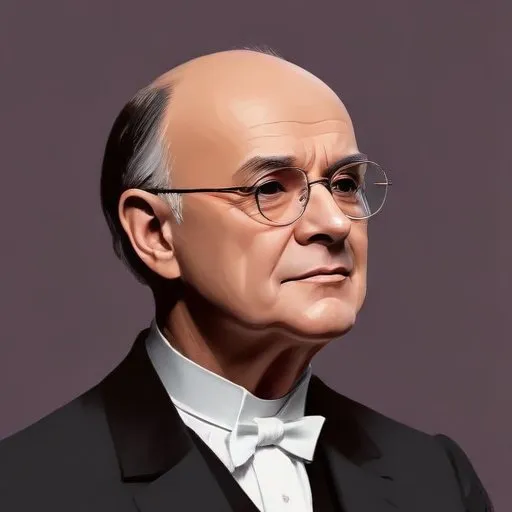
A renowned composer, conductor, and producer, celebrated for his contributions to classical music, particularly in the genres of choral and sacred music, with a distinctive and accessible style.
John Rutter is renowned for his sublime and transcendent choral music, which has captivated audiences worldwide. As a composer, conductor, editor, arranger, and record producer, Rutter has made an indelible mark on the world of classical music, particularly in the realm of choral repertoire.
Born on September 24, 1945, in London, England, Rutter grew up in a family of modest means, living above the Globe pub on Marylebone Road. His early life was filled with music, and he began singing as a chorister at Highgate School, where he was fortunate enough to participate in the first recording of Benjamin Britten's War Requiem under the composer's baton.
After completing his education at Highgate, Rutter went on to study music at Clare College, Cambridge, where he was an active member of the choir and began to compose his own music. His talent was soon recognized, and his compositions were published while he was still an undergraduate.
In 1981, Rutter founded the Cambridge Singers, a world-renowned choir that he conducts to this day. The choir's repertoire is deeply rooted in sacred choral music, and Rutter's own compositions feature prominently in their performances. The choir has made numerous recordings, many of which have been released on Rutter's own label, Collegium Records.
From 1985 to 1992, Rutter struggled with myalgic encephalomyelitis (ME), also known as chronic fatigue syndrome. This debilitating illness severely limited his output, and he was forced to stop writing music on commission due to his inability to meet deadlines. Despite this setback, Rutter persevered, and his music continued to inspire and uplift those who heard it.
Rutter's contributions to choral music have been recognized with numerous awards and honors. He was inducted as a National Patron of Delta Omicron, an international professional music fraternity, in 1985. He is also a Vice-President of the Joyful Company of Singers, President of The Bach Choir, and President of the Association of British Choral Directors (ABCD).
Rutter's compositions are predominantly choral, and his arrangements of traditional carols and hymns have become staples of the Christmas repertoire. His music is characterized by its lyricism, accessibility, and emotional depth, making it beloved by performers and audiences alike.
John Rutter's impact on choral music is immeasurable. His compositions and arrangements have inspired generations of musicians, and his commitment to promoting choral music has helped to spread its beauty and joy to every corner of the globe. As a conductor, editor, and arranger, Rutter has left an indelible mark on the world of classical music, and his legacy will continue to inspire and delight audiences for years to come.
Born in 1913
A renowned musician who masterfully blended classical and opera styles, creating iconic works like "Peter Grimes" and "The Young Person's Guide to the Orchestra".
Born in 1905
A renowned composer and conductor, known for blending modernist and romantic elements in his works, creating a unique and expressive sound. His operas and symphonies are highly acclaimed for their lyricism and dramatic intensity.
Born in 1902
A renowned composer of orchestral and choral works, particularly famous for his iconic score for Laurence Olivier's 1944 film "Henry V" and his ceremonial music for British coronations.
Born in 1872
A renowned composer and educator, he's celebrated for his symphonies and folk-song inspired works that evoke a sense of English heritage and nostalgia. His music is a testament to his love for his homeland's cultural roots.
Born in 1874
A renowned composer and educator, best known for his orchestral suite "The Planets", which evokes a sense of cosmic wonder and exploration. His music is a staple of classical repertoire, still widely performed today.
Born in 1892
A renowned British organist, composer, and educator, he was a prominent figure in the development of 20th-century Anglican church music, particularly in his contributions to the genre of hymnody.
Born in 1862
A pioneering composer of the early 20th century, known for his impressionistic and expressive works that evoke a sense of nature and the human experience. His music is characterized by lush harmonies and orchestration.
Born in 1857
A renowned composer and educator, best known for his iconic orchestral works, including the majestic "Pomp and Circumstance" march, which is a staple at graduations worldwide.
