


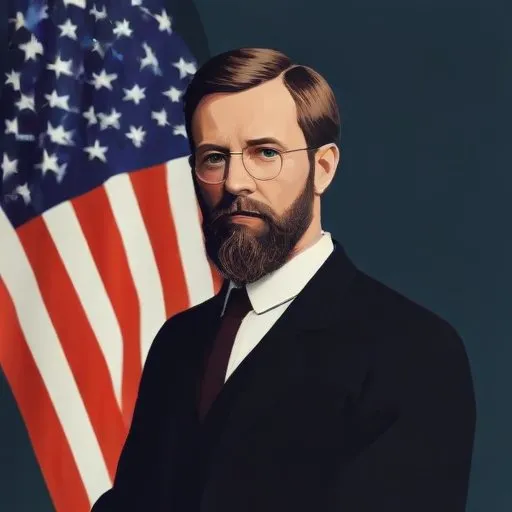
Leading labor mediator and scholar who advanced collective bargaining and industrial relations, known for his work in resolving major labor disputes and shaping US labor policy.
John Thomas Dunlop was a renowned American administrator, labor economist, and educator, best known for his instrumental role in shaping the industrial relations landscape in the United States. As the United States Secretary of Labor from 1975 to 1976, he played a pivotal role in resolving labor disputes and promoting industrial harmony during a tumultuous period in American history.
Dunlop's exceptional mediation and arbitration skills earned him a reputation as a trusted and impartial mediator in labor disputes. He chaired various labor-management committees and arbitrated disputes in industries ranging from steel to healthcare, leaving an indelible mark on the American labor landscape. His work in this area was instrumental in promoting collective bargaining, reducing strikes, and improving labor relations.
In addition to his work in government and mediation, Dunlop was a distinguished academic. He taught at Harvard University for over four decades, serving as the Chairman of the Economics Department from 1961 to 1966 and Dean of the Faculty of Arts and Sciences from 1969 to 1973. His academic work focused on industrial relations, labor economics, and dispute resolution, earning him numerous accolades and publications.
In 1994, Dunlop chaired the United States Commission on the Future of Worker-Management Relations, which produced the seminal Dunlop Report. This influential document provided a framework for improving labor relations, promoting collective bargaining, and enhancing competitiveness in the American economy. The report's recommendations have had a lasting impact on labor policy, shaping the course of industrial relations in the United States and beyond.
Dunlop's contributions to labor economics, mediation, and education were recognized with numerous awards and honors, including the Presidential Medal of Freedom, the nation's highest civilian honor. He was also awarded the Guggenheim Fellowship, the Harvard University Medal, and the Labor and Employment Relations Association's (LERA) Lifetime Achievement Award.
Born on July 5, 1914, in Plattsburgh, New York, Dunlop grew up in a family of modest means. He earned his undergraduate degree from Rensselaer Polytechnic Institute and his Ph.D. in economics from the University of California, Berkeley. Dunlop's early life experiences, including working in a steel mill during the Great Depression, shaped his interest in labor economics and industrial relations.
Dunlop's work has had a profound impact on modern society, shaping labor policy, promoting collective bargaining, and improving industrial relations. His legacy extends beyond the United States, influencing labor relations globally. As a trusted advisor to every U.S. Presidential Administration from Franklin D. Roosevelt to Bill Clinton, Dunlop's counsel played a significant role in shaping American economic policy.
At the core of Dunlop's philosophical approach was a deep commitment to social justice, fairness, and the importance of cooperation between labor and management. He believed that industrial relations were critical to promoting economic growth, social stability, and better working conditions. Dunlop's philosophy emphasized the need for dialogue, compromise, and collaboration in resolving labor disputes.
John Thomas Dunlop's remarkable life and career serve as a testament to the power of dedication, hard work, and a commitment to social justice. As a pioneering labor economist, mediator, and educator, his legacy continues to shape the industrial relations landscape in the United States and beyond. Dunlop's work remains a beacon of hope for a more harmonious and equitable future, where labor and management work together to promote prosperity and social progress.
Born in 1894
A pioneering labor leader who fought for workers' rights, leading the AFL-CIO and playing a key role in shaping American labor laws.
Born in 1912
A pioneering civil rights activist who played a key role in organizing the 1963 March on Washington, where Martin Luther King Jr. delivered his iconic "I Have a Dream" speech.
Born in 1889
Leader of the Brotherhood of Sleeping Car Porters, pioneering the Civil Rights Movement through nonviolent protests and advocacy for African American workers' rights.
Born in 1850
Leading the American Federation of Labor, he fought for workers' rights, better wages, and improved working conditions, shaping the labor movement in the United States.
Born in 1909
A renowned management guru, known for pioneering modern management practices and authoring influential books on business and society.
Born in 1880
Led a powerful miners' union, fighting for workers' rights and fair wages, and was a key figure in shaping America's labor movement. Known for his charismatic leadership and militant tactics.
Born in 1855
A pioneering labor leader who fought for workers' rights and social justice, founding the Industrial Workers of the World and running for president five times on the Socialist Party ticket.
