


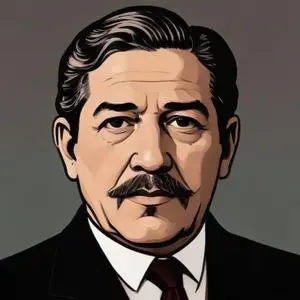
Leading the American Federation of Labor, he fought for workers' rights, better wages, and improved working conditions, shaping the labor movement in the United States.
As the founder of the American Federation of Labor (AFL) and its president for over three decades, Samuel Gompers was a trailblazing labor union leader who fought tirelessly for workers' rights, better wages, and improved working conditions. He is remembered as a key figure in American labor history, playing a pivotal role in shaping the country's industrial landscape and advocating for the rights of working-class Americans.
Born Samuel Gumpertz on January 27, 1850, in Spitalfields, a working-class area in the East End of London, Gompers was the son of a Jewish family that originally hailed from Amsterdam. He was educated at the Jewish Free School, where he received a basic education before being sent to work as an apprentice cigar maker at the age of 10 to support his impoverished family.
Gompers continued his studies in night school, learning Hebrew and studying the Talmud, a process he later likened to studying law. He immigrated to the United States with his family in 1863, eventually finding work as a cigar maker in New York City. It was during this time that he became involved in the labor movement, joining the Cigar Makers' International Union and quickly rising through the ranks.
In 1886, Gompers co-founded the American Federation of Labor (AFL), a national federation of labor unions that aimed to promote the interests of working-class Americans. He served as the organization's president from 1886 to 1894 and again from 1895 until his death in 1924. Under his leadership, the AFL grew rapidly, affiliating with various craft unions and becoming a powerful force in American labor.
Gompers was a strong believer in the power of collective bargaining and encouraged AFL member unions to take political action to elect their friends and defeat their enemies. He promoted harmony among the different craft unions that comprised the AFL, trying to minimize jurisdictional battles. He also believed in the importance of education, advocating for the establishment of vocational training programs and worker education initiatives.
Gompers' legacy extends far beyond his work in the labor movement. He played a crucial role in shaping American society, advocating for better working conditions, higher wages, and social justice. His work laid the foundation for future labor leaders and continues to inspire social and economic reforms.
"Doing easily what others find difficult is talent; doing what is impossible with talent is genius."
Samuel Gompers' life and work are a testament to the power of dedication and perseverance. He left an indelible mark on American labor history, shaping the course of the labor movement and inspiring generations of workers to fight for their rights. Today, his legacy continues to inspire social and economic reforms, cementing his place as one of the most important labor leaders in American history.
Samuel Gompers was honored with numerous awards and recognition for his work, including a place in the Labor Hall of Fame and a U.S. postage stamp in his honor.
Born in 1855
A pioneering labor leader who fought for workers' rights and social justice, founding the Industrial Workers of the World and running for president five times on the Socialist Party ticket.
Born in 1878
A pioneering muckraker, exposing social and economic injustices through influential novels, most notably "The Jungle", which led to significant reforms in the meatpacking industry.
Born in 1880
Led a powerful miners' union, fighting for workers' rights and fair wages, and was a key figure in shaping America's labor movement. Known for his charismatic leadership and militant tactics.
99 Years Old
Founded the United Farm Workers to improve working conditions and wages for farmworkers, leading boycotts and strikes to bring attention to their plight.
Born in 1889
Leader of the Brotherhood of Sleeping Car Porters, pioneering the Civil Rights Movement through nonviolent protests and advocacy for African American workers' rights.
Born in 1912
A pioneering civil rights activist who played a key role in organizing the 1963 March on Washington, where Martin Luther King Jr. delivered his iconic "I Have a Dream" speech.
Born in 1894
A pioneering labor leader who fought for workers' rights, leading the AFL-CIO and playing a key role in shaping American labor laws.
Born in 1913
Leader of the International Brotherhood of Teamsters labor union, notorious for his mysterious disappearance and alleged ties to organized crime.
