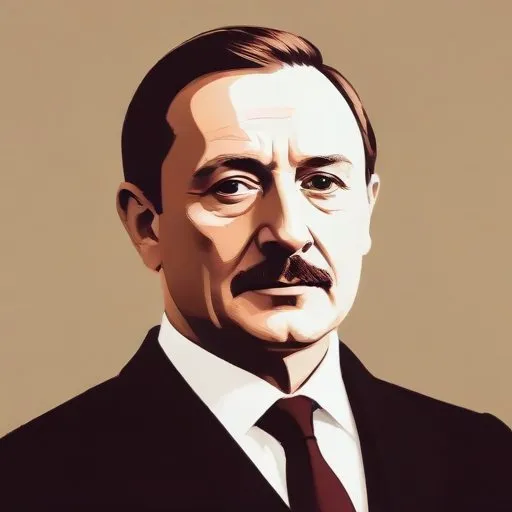
Joseph Bech: The Resilient Leader of Luxembourg
A Legacy of Public Service
Joseph Bech, a prominent Luxembourgish politician and lawyer, left an indelible mark on his country's history. He is renowned for serving as the 15th and 17th Prime Minister of Luxembourg, holding the office for a total of 15 years, from 1926 to 1937 and again from 1953 to 1958.
Rise to Prominence
Born on February 17, 1887, Bech pursued higher education in law at Fribourg and Paris, earning his doctorate in law in 1912. He qualified as a lawyer in 1914 and quickly entered the political arena. On June 30, 1914, he was elected to the Luxembourgish Chamber of Deputies, representing the Canton of Grevenmacher for the Party of the Right.
Cabinet Positions and Milestones
Bech's political career was marked by several notable appointments. On April 15, 1921, he joined the cabinet of Prime Minister Émile Reuter, holding positions as Director-General for the Interior and Director-General for Education. Although he lost these positions in 1925, he would go on to assume even greater responsibilities. In 1926, Bech became Prime Minister, Minister for Foreign Affairs, Education, and Winegrowing, a portfolio he would maintain until 1954.
Leadership during Turbulent Times
Bech's leadership was tested during World War II, when Luxembourg was invaded by Germany on May 10, 1940. Along with the government and the Grand Ducal Family, Bech escaped to France, where they received transit visas from the Portuguese consul Aristides de Sousa Mendes in June 1940. This courageous act allowed them to flee to neutral Portugal and eventually the United Kingdom, ensuring the continuity of Luxembourg's government-in-exile.
Post-War Return to Power
After the war, Bech returned to Luxembourg and resumed his political career. On December 29, 1953, he once again became Prime Minister, a position he held until March 29, 1958. During this period, he focused on rebuilding and modernizing Luxembourg, laying the foundations for the country's future prosperity.
Legacy and Honors
The College of Europe, a prestigious institution, honored Bech's legacy by naming the 1982–1983 academic year after him. This recognition is a testament to his enduring impact on Luxembourg's politics, education, and society.
Personal Life
Bech was married to Georgette, and they had two children, Charles and Betty. Despite the turmoil of war and the demands of public office, Bech remained devoted to his family throughout his life.
Historical Context and Impact
Joseph Bech's remarkable career spanned a period of significant transformation in Luxembourg, marked by war, occupation, and reconstruction. His leadership, resilience, and commitment to public service have left a lasting legacy, shaping the country's development and cementing his place in Luxembourg's history.
FAQ
What were Joseph Bechs accomplishments as Prime Minister of Luxembourg?
Joseph Bech served as the 15th Prime Minister of Luxembourg from 1926 to 1937 and implemented several significant reforms, including the introduction of compulsory education and old-age pensions. He also played a crucial role in maintaining Luxembourgs neutrality during World War II.
What was Joseph Bechs early life and education like?
Joseph Bech was born on February 25, 1887, in Diekirch, Luxembourg. He studied law at the University of Fribourg and later earned a doctorate in law from the University of Paris.
What were Joseph Bechs contributions to Luxembourgs international relations?
Joseph Bech was a skilled diplomat who played a key role in shaping Luxembourgs international relations. He helped establish the Benelux Economic Union and was a strong advocate for European integration.
What was Joseph Bechs stance on World War II?
Joseph Bech was a fierce opponent of Nazi Germany and refused to collaborate with the occupying forces during World War II. He went into exile in London and served as the leader of the Luxembourgish government-in-exile.
What legacy did Joseph Bech leave behind?
Joseph Bech is remembered as one of the most important figures in Luxembourgs history, known for his commitment to democracy, European integration, and social reform. He left behind a legacy of stability and progress that continues to shape Luxembourgs politics and society.