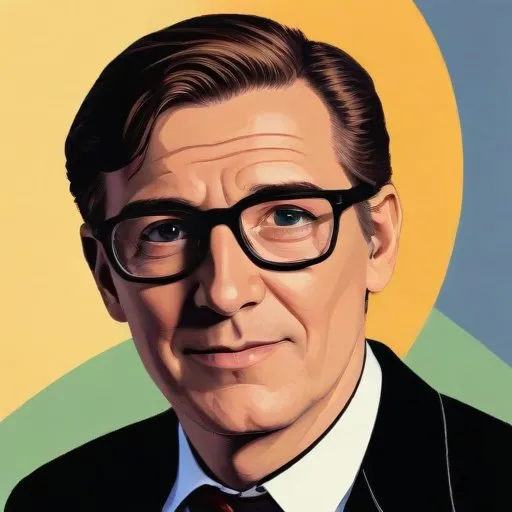
Joseph Grinnell: The Pioneering Biologist Who Revolutionized Field Observations
Introducing the Grinnell System
Joseph Grinnell is renowned for developing the Grinnell System, a method of recording precise field observations that has become a cornerstone of modern biological research. As a field biologist and zoologist, Grinnell's innovative approach to data collection and analysis has had a lasting impact on our understanding of the natural world.
Early Life and Education
Born on February 27, 1877, in Oakland, California, Joseph Grinnell was raised in a family of scientists and explorers. His father, Fordyce Grinnell, was a physician who worked with Native American tribes, and his distant cousins included prominent figures such as George Bird Grinnell, founder of the Audubon Society.
First Expeditions and the Spark of Curiosity
Grinnell's fascination with the natural world was ignited during his teenage years, when he accompanied Captain Richard Henry Pratt on an inspection tour of Indian Schools on the Pacific coast, including Alaska. This experience sparked a lifelong passion for exploration and scientific inquiry.
The Grinnell System: A New Era in Field Observations
Grinnell's most significant contribution to biology was the development of the Grinnell System, a rigorous method of recording and analyzing field observations. This approach emphasized precision, accuracy, and thoroughness, allowing researchers to build a comprehensive understanding of ecosystems and the species that inhabited them.
Career Highlights and Major Works
Throughout his career, Grinnell authored numerous articles and books, including
The Distribution of the Birds of California and
Animal Life in the Yosemite. He also served as the first director of the Museum of Vertebrate Zoology at the University of California, Berkeley, and edited
The Condor, a prominent ornithological magazine.
Influence on Modern Biology
Grinnell's work has had a profound impact on modern biology, influencing generations of researchers and scientists. His concept of the niche, which describes the specific role of a species within its ecosystem, remains a fundamental concept in ecology today.
Awards and Honors
Grinnell received numerous awards and honors for his contributions to biology, including the Elliott Coues Award from the American Ornithologists' Union and the
Henry Walker Prize from the California Academy of Sciences.
Legacy and Impact
Joseph Grinnell's legacy extends far beyond his own research and writings. His work has inspired countless scientists, conservationists, and naturalists, shaping our understanding of the natural world and informing efforts to protect and preserve ecosystems.
Personal Milestones and Key Life Events
- 1877: Born in Oakland, California
- 1896: Accompanied Captain Richard Henry Pratt on an inspection tour of Indian Schools on the Pacific coast
- 1906: Became editor of The Condor
- 1908: Appointed as the first director of the Museum of Vertebrate Zoology at the University of California, Berkeley
- 1939: Passed away on May 29, leaving behind a legacy of scientific contributions and discoveries
Trivia and Fun Facts
- Grinnell's first scientific specimen was a toad, collected during his childhood in Carlisle, Pennsylvania
- He was known for his exceptional skills in taxidermy and specimen preparation
- Grinnell's work in California helped establish the state as a hub for ornithological research
Through his groundbreaking research, innovative methods, and tireless dedication to the field of biology, Joseph Grinnell has left an indelible mark on our understanding of the natural world. His legacy continues to inspire scientists, conservationists, and nature enthusiasts alike.
FAQ
What was Joseph Grinnells contribution to ornithology?
Joseph Grinnell was a prominent ornithologist who made significant contributions to the field, including the discovery of new species and the development of new methods for studying bird behavior and ecology.
What was Joseph Grinnells role in the Museum of Vertebrate Zoology?
Joseph Grinnell was the founder and director of the Museum of Vertebrate Zoology at the University of California, Berkeley. He played a key role in building the museums collections and developing its research programs.
How did Joseph Grinnells work impact the field of zoology?
Joseph Grinnells work had a significant impact on the field of zoology, particularly in the areas of ornithology and mammalogy. His research and collections helped to shape our understanding of vertebrate diversity and ecology.
What awards did Joseph Grinnell receive for his work?
Joseph Grinnell received numerous awards and honors for his work, including the Elliott Coues Award from the American Ornithologists Union and the title of Honorary Fellow of the American Museum of Natural History.
What is Joseph Grinnells legacy in zoology?
Joseph Grinnells legacy in zoology is one of dedication, innovation, and leadership. He is remembered as a pioneering ornithologist and zoologist, and his work continues to influence research and education in the field to this day.