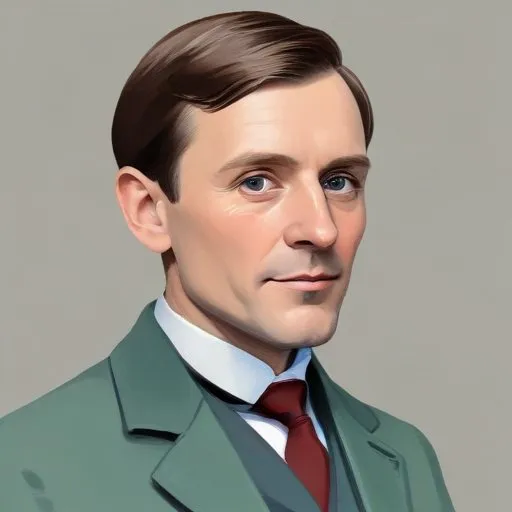
Philip Henry Gosse: The Pioneering Naturalist Behind the Aquarium Craze
Breaking Barriers in Marine Biology
Philip Henry Gosse, affectionately known to his friends as Henry, is hailed as a pioneering naturalist and populariser of natural science. He is credited with creating and stocking the first public aquarium at the London Zoo in 1853, thus kickstarting the aquarium craze in early Victorian England. This trailblazing achievement was a testament to his innovative spirit and passion for marine biology.
A Life of Discovery and Innovation
Gosse's fascination with the natural world began at an early age. Born on April 6, 1810, in Worcester, England, he spent his childhood in Poole, Dorset, where his aunt, Susan Bell, introduced him to zoology and encouraged his artistic talents. At just 15, Gosse began working as a clerk in the counting house of George Garland and Sons in Poole. However, it was during his time in Newfoundland, where he served as a clerk for Slade, Elson and Co. from 1827 to 1832, that he developed a deep interest in entomology and became the first person to systematically investigate and record the island's entomology.
The Birth of the Aquarium
Gosse's groundbreaking work in marine biology led to the publication of his seminal book,
The Aquarium: An Unveiling of the Wonders of the Deep Sea, in 1854. This comprehensive manual not only coined the term "aquarium" but also provided a thorough guide on how to create and maintain these underwater ecosystems. The book's success sparked a national fascination with aquariums, with many Britons eager to replicate Gosse's innovative designs in their own homes.
Bridging Science and Faith
Gosse's work was not limited to the realm of science alone. He was deeply committed to his Christian faith and sought to reconcile the biblical account of creation with the geological ages proposed by
Charles Lyell. His book,
Omphalos, published in 1857, attempted to merge these two seemingly disparate perspectives. While this work sparked controversy and debate, it remains a testament to Gosse's unwavering commitment to both science and faith.
A Lasting Legacy
Philip Henry Gosse's contributions to the fields of marine biology and natural history are undeniable. His pioneering work in aquarium design and maintenance paved the way for future generations of scientists and enthusiasts alike. Furthermore, his commitment to reconciling science and faith continues to inspire and challenge scholars today.
Personal Milestones and Key Life Events
- 1810: Born on April 6th in Worcester, England
- 1827-1832: Served as a clerk in Newfoundland and developed an interest in entomology
- 1832: Experienced a religious conversion
- 1853: Created and stocked the first public aquarium at the London Zoo
- 1854: Published The Aquarium: An Unveiling of the Wonders of the Deep Sea
- 1857: Published Omphalos, an attempt to reconcile science and faith
- 1888: Passed away on August 23rd
Inspirational Quotes
"The aquarium is a window into the wonders of the deep sea, a testament to the ingenuity and beauty of creation." - Philip Henry Gosse
Philip Henry Gosse's remarkable life and achievements serve as a testament to the power of human curiosity, innovation, and faith. His groundbreaking work in marine biology and commitment to reconciling science and faith continue to inspire and intrigue us to this day.
FAQ
What is Philip Henry Gosses most famous work?
Philip Henry Gosse is best known for his book Omphalos: An Attempt to Untie the Geological Knot (1857), which proposed a new theory of creation and the age of the Earth.
What was Philip Henry Gosses role in British science?
Philip Henry Gosse was a prominent biologist, academic, and writer in British science, known for his research on marine biology, botany, and geology. He was a fellow of the Royal Society and wrote several influential books on science and religion.
Who was Philip Henry Gosses mentor?
Philip Henry Gosse was mentored by the British naturalist and theologian John Stevens Henslow, who introduced him to the study of natural history and encouraged his research on marine biology.
What is Philip Henry Gosses contribution to British science?
Philip Henry Gosse played a significant role in shaping British science, introducing new ideas on marine biology, geology, and the relationship between science and religion. His work influenced later generations of scientists, including Charles Darwin.
Where did Philip Henry Gosse study biology?
Philip Henry Gosse studied biology at the University of London, where he was trained in zoology, botany, and geology. This education laid the foundation for his later success as a biologist and academic.