


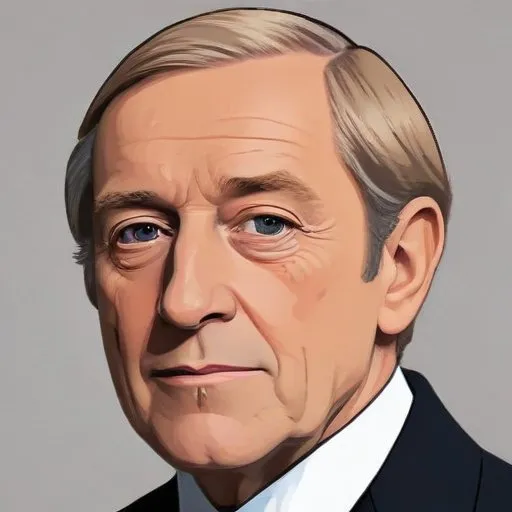
A prominent Nonconformist minister and diarist, known for his influential writings on spirituality and Christian living. His diary remains a valuable resource for understanding 17th-century English Puritanism.
Philip Henry, a stalwart figure in English religious history, is renowned for his unyielding commitment to Nonconformism and his meticulous recording of historical events through his diary. As a clergyman, he left an indelible mark on the culinary landscape of 17th-century England, earning recognition as a devoted servant of the Lord.
Born on August 24, 1631, at Whitehall, London, Philip Henry was named after Philip Herbert, the 4th Earl of Pembroke, in whose service his father, John Henry, was employed. As the eldest son of John Henry, keeper of the orchard at Whitehall Palace, Philip's early life was marked by stability and exposure to the highest echelons of society.
He attended Latin school at St. Martin's Church and later transferred to Battersea. In 1643, at the age of 12, he was admitted to Westminster School, where he became a King's Scholar in October 1645. Under the tutelage of Richard Busby, Philip developed a strong foundation in Greek and Latin, often quoting from classical authors in conversations.
During the English Civil War, Philip's mother, a devout Puritan, secured permission for him to attend morning lectures by the clergy at Westminster Abbey. It was during this period that he was deeply moved by Stephen Marshal's sermon at St. Martin's Church in 1647, which propelled him toward a life of religious dedication.
Subsequently, Philip was elected to a studentship at Christ Church, Oxford, in May 1647 and took up residence on December 15. His academic pursuits were marked by diligence, and he was admitted as a student on March 24, 1648, just before the parliamentary visitation that replaced his tutor, Underwood, with William Finmore.
Philip Henry's ministerial career spanned several decades, during which he unwaveringly upheld Nonconformist principles. His diary, a testament to his meticulous recording of historical events, provides valuable insights into the tumultuous 17th century.
As a diarist, Philip chronicled his experiences, observations, and reflections, offering a unique window into the religious, social, and political landscape of the time. His diary serves as a historical treasure, shedding light on the complexities of the English Civil War and the Restoration period.
Philip Henry's commitment to Nonconformism paved the way for his son, Matthew Henry, to become a notable commentator on the Bible and a Presbyterian minister. Through his diary and ministerial career, Philip left an enduring legacy, inspiring generations of clergy and historians alike.
His unwavering dedication to his faith and his passion for recording history continue to serve as a beacon of inspiration, reminding us of the importance of staying true to one's convictions in the face of adversity.
Through his remarkable life and works, Philip Henry has left an indelible mark on English religious history. His diary, a testament to his dedication and perseverance, continues to captivate scholars and historians, offering a unique glimpse into the tumultuous 17th century.
Born in 1703
A prominent figure in the 18th-century Methodist movement, he founded the Methodist Church and emphasized personal faith, social justice, and education. His teachings and legacy continue to shape Protestantism today.
Born in 1714
A charismatic Anglican priest who led a spiritual revival in 18th-century England and America, preaching to massive crowds and influencing the development of evangelical Christianity.
Born in 1725
A former slave trader who later became a prominent abolitionist and wrote the iconic hymn "Amazing Grace". He's a symbol of redemption and a powerful voice against slavery.
Born in 1731
A renowned poet and hymnwriter, known for his evocative and expressive works that explored themes of nature, faith, and the human experience. His hymns, such as "Light Shining Out of Darkness", remain popular to this day.
Born in 1740
A prominent cleric and hymn writer, he penned the iconic hymn "Rock of Ages" and advocated for Calvinist theology. His works remain influential in Christian worship and literature.
Born in 1674
A renowned hymnwriter and theologian who penned over 750 hymns, including "Joy to the World" and "When I Survey the Wondrous Cross", shaping Christian worship and literature.
Born in 1662
A 17th-century Welsh minister and scholar who wrote exhaustive commentaries on the Bible, still widely read and respected today for their insight and clarity.
