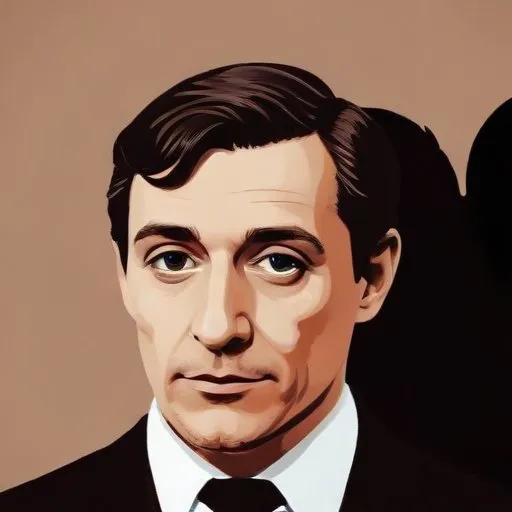
Joseph Henry Shorthouse: The Visionary Novelist Behind "John Inglesant"
A Philosophical Romance that Captivated the Victorian Era
Joseph Henry Shorthouse is renowned for his mesmerizing novel, "John Inglesant", a philosophical romance that delves into the intricacies of 17th-century English religious intrigue. This masterpiece, which took him ten years to complete, catapulted him to literary fame in the late 19th century.
Early Life and Influences
Born on September 9, 1834, in Birmingham, England, Shorthouse was the eldest of three sons to Joseph Shorthouse and Mary Ann Hawker. His family's Quaker roots and his father's involvement in the chemical industry would later influence his writing. He received a partly home-based and partly formal education at Grove House School, Tottenham.
A turning Point: Marriage and Conversion
In 1857, Shorthouse married his childhood friend, Sarah Scott, at the Friends meeting house in Warwick. This union marked a significant turning point in his life, as he and his wife converted to the Church of England in 1861. This shift in faith would later manifest in his writing, particularly in "John Inglesant".
The Birth of "John Inglesant"
Shorthouse spent over a decade crafting his magnum opus, "John Inglesant", which initially appeared privately in 1876. The novel's commercial publication in 1881, facilitated by Alexander Macmillan and Mrs. Humphry Ward, brought him widespread acclaim. This historical romance weaves a complex narrative of faith, forgiveness, and loyalty, set against the backdrop of the English Civil War.
Philosophical Themes and Beliefs
Shorthouse's writing often grappled with the tensions between Anglicanism and Catholicism. He identified with the Oxford school of High Churchmen, yet valued the freedom and reason afforded by the Anglican church. His philosophical inclinations are reflected in "John Inglesant", which explores the human struggle for faith and redemption.
Personal Milestones and Challenges
Shorthouse's life was not without its challenges. He suffered from epilepsy, which first afflicted him in 1862. His health began to decline in 1900, ultimately leading to his passing on March 4, 1903, at his Edgbaston home. He left behind no children, but a rich literary legacy.
Legacy and Impact
Shorthouse's "John Inglesant" continues to captivate readers with its nuanced exploration of the human condition. His unique blend of philosophical introspection and historical fiction has influenced generations of writers. Today, his work remains a testament to the power of literature to illuminate the complexities of the human experience.
- Notable Works: "John Inglesant" (1881)
- Philosophical Contributions: Exploration of faith, forgiveness, and loyalty in the context of the English Civil War
- Influence on Modern Society: Continues to inspire writers and scholars with its thought-provoking themes
A Lasting Legacy
Joseph Henry Shorthouse's remarkable novel, "John Inglesant", remains an enduring testament to his genius. His life, marked by personal struggles and literary triumphs, serves as a reminder of the transformative power of literature to capture the essence of the human experience.
FAQ
What were Joseph Henry Shorthouses most famous works?
Joseph Henry Shorthouse was a prolific writer, and his most famous works include John Inglesant, The Little Schoolmaster Mark, and The Countess Eve. His writing often explored themes of love, morality, and social class.
What was Joseph Henry Shorthouses approach to literature?
Joseph Henry Shorthouse was a romantic writer who believed in the power of literature to explore the human condition. He was known for his vivid descriptions of nature and his ability to create complex, nuanced characters.
What were Joseph Henry Shorthouses views on society?
Joseph Henry Shorthouse was a strong critic of social injustice and inequality. He believed that literature could be a powerful tool for social change, and his works often explored themes of poverty, education, and womens rights.
What was Joseph Henry Shorthouses role in the literary world?
Joseph Henry Shorthouse was a prominent figure in the literary world, and his works were widely read and reviewed. He was known for his wit and humor, and his writing often explored themes of love, morality, and social class.
What is Joseph Henry Shorthouses legacy in English literature?
Joseph Henry Shorthouse is remembered as a significant figure in English literature, known for his Romantic style and his ability to explore complex themes and characters. His works continue to be widely read and studied, and he remains an important part of the literary canon.