


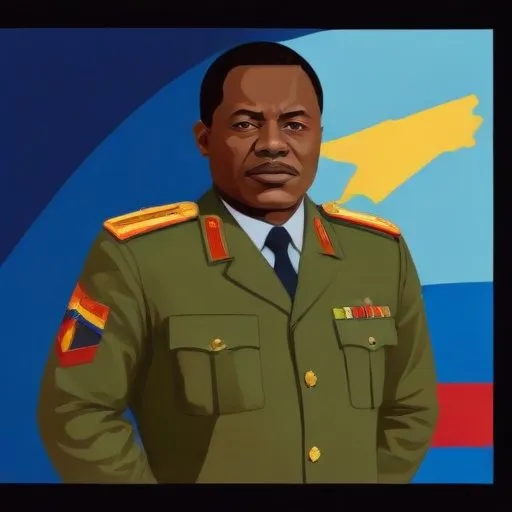
A Congolese soldier-turned-politician who ruled the Democratic Republic of the Congo from 2001 to 2019, known for his controversial presidency marked by corruption and human rights abuses.
Joseph Kabila is known for serving as the President of the Democratic Republic of the Congo from January 2001 to January 2019, making him one of the longest-serving leaders in the country's history. He took office just ten days after the assassination of his father, President Laurent-Désir Kabila, in the midst of the Second Congo War.
Born on June 4, 1971, in Hewabora, a small village in the Fizi Territory of the South Kivu Province, Kabila was one of twins, along with his sister Jaynet. His early life was marked by turmoil, with his family frequently moving to avoid violence and instability in the region.
Kabila's rise to power was swift and unexpected. Following his father's assassination, he was chosen to succeed him as president, despite having no prior political experience. At just 29 years old, he became the youngest head of state in Africa at the time.
Initially, Kabila faced numerous challenges, including an ongoing war and a divided country. However, he managed to consolidate power and eventually negotiate a peace agreement, the Pretoria Accord, in 2003, which ended the Second Congo War.
Kabila's presidency was marked by controversy and instability. He was re-elected in 2006 and 2011, but his rule was marred by human rights abuses, corruption, and violence.
One of the most notable controversies surrounding Kabila's presidency was the delay in holding elections. His term was due to expire in 2016, but he managed to stay in power for two more years, citing the need for a census before holding elections.
Eventually, Kabila stepped down in 2019, following the country's first peaceful transition of power since independence. However, allegations of election fraud and manipulation prompted widespread criticism and protests.
Joseph Kabila's legacy is complex and multifaceted. While he managed to maintain a degree of stability in the country, his rule was marked by widespread corruption and human rights abuses.
In 2021, it was reported that Kabila had embezzled over $138 million during his presidency, further tarnishing his reputation.
Despite these controversies, Kabila's legacy also includes significant investments in infrastructure and economic development, which have contributed to the country's growth and modernization.
Since stepping down from power, Kabila has maintained a relatively low profile. He currently serves as a senator for life, a position granted to former presidents under the Congolese constitution.
Little is known about Kabila's personal life, although it is reported that he is married with several children.
As Kabila's legacy continues to be debated and evaluated, one thing is certain – his impact on the Democratic Republic of the Congo will be felt for generations to come.
86 Years Old
The first democratically elected president of the Democratic Republic of the Congo, who led the country to independence from Mobutu's regime and implemented economic reforms. He's also known for his mysterious assassination in 2001.
Born in 1925
The first Prime Minister of the Democratic Republic of the Congo, a key figure in the country's struggle for independence from Belgium, and a symbol of African nationalism. He played a crucial role in shaping the country's early years, but his life was cut short by assassination.
96 Years Old
A ruthless dictator who ruled Zaire with an iron fist, notorious for embezzling millions and plunging his country into economic chaos.
84 Years Old
African strongman who ruled Equatorial Guinea with an iron fist for over 40 years, accused of human rights abuses and corruption.
Born in 1924
The 2nd President of Zimbabwe, a controversial figure who ruled with an iron fist, known for his country's economic downfall and human rights abuses.
68 Years Old
The leader who oversaw Rwanda's transformation from devastating genocide to economic growth and stability, known for his authoritarian rule and human rights controversies.
