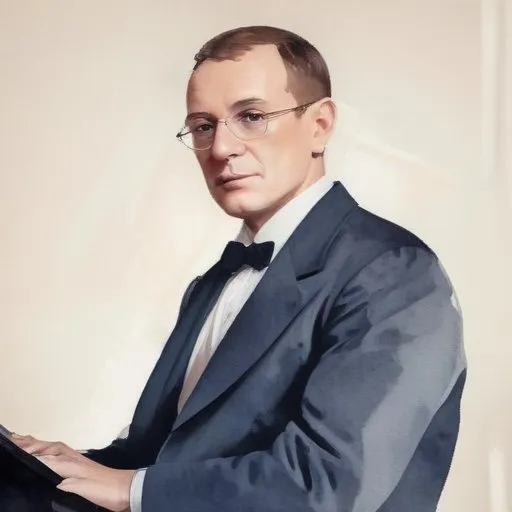
Joseph Kosma: The Hungarian Composer Who Captivated the World
The Maestro of French Cinema
Joseph Kosma is renowned for his extraordinary contribution to the world of music, particularly in the realm of French cinema. With a career spanning over three decades, Kosma's unique talent for crafting emotive and evocative scores has left an indelible mark on the film industry.
Early Life and Education
Born on October 22, 1905, in Budapest, Hungary, Kosma came from a family of intellectuals. His parents were stenography and typing teachers, and his maternal relatives included the legendary photographer
László Moholy-Nagy and conductor
Georg Solti. Kosma's affinity for music began at a tender age, with him starting to play the piano at five and composing his first opera, "Christmas in the Trenches," at just 11 years old.
Kosma's formal education took him to the Academy of Music in Budapest, where he studied under the guidance of Leo Weiner. He also had the opportunity to learn from the esteemed composer Béla Bartók at the Liszt Academy, earning diplomas in composition and conducting.
The Berlin Connection
In 1928, Kosma received a grant to study in Berlin, where he met fellow musician Lilli Apel, whom he later married. It was during this period that Kosma crossed paths with
Hanns Eisler, a German composer, and
Bertolt Brecht, the famous playwright. These connections would later shape his approach to music and its relationship with theater and film.
The French Connection
Kosma and his wife emigrated to Paris in 1933, marking the beginning of a new chapter in his life. He soon became acquainted with the poet and screenwriter
Jacques Prévert, with whom he collaborated on numerous projects. This partnership led to the creation of several popular songs, which were recorded by prominent singers of the time.
Film Scores and Collaborations
Kosma's association with Prévert and director
Jean Renoir propelled him into the world of film scoring. He composed music for some of Renoir's most iconic films, including "La Grande Illusion" (1937), "La Bête Humaine" (1938), and "La Règle du Jeu" (1939). These collaborations not only showcased Kosma's talent but also demonstrated his ability to craft scores that elevated the cinematic experience.
War and Resistance
During World War II, Kosma was placed under house arrest in the Alpes-Maritimes region and prohibited from composing music. However, Prévert helped Kosma contribute to films by working behind the scenes. One such example is the pantomime of the music for "Les Enfants du Paradis" (1945), which was released after the war.
Legacy and Impact
Joseph Kosma's legacy extends far beyond his impressive body of work. He played a significant role in shaping the sound of French cinema, influencing generations of composers and filmmakers. His music continues to evoke emotions and transport audiences to another era.
- Among his notable works are scores for "Voyage Surprise" (1946) and "Le Testament du docteur Cordelier" (1959).
- Kosma's scores have been praised for their innovative use of jazz and popular music elements.
- He remains an inspiration to composers, with his music continuing to be performed and admired worldwide.
Award and Recognition
Kosma's contributions to the world of music and cinema have been recognized with several awards and honors. His legacy serves as a testament to the power of artistic collaboration and innovation.
In conclusion, Joseph Kosma's remarkable journey is a testament to the transformative power of music and the impact one individual can have on the world of arts.
FAQ
What was Joseph Kosmas role in French music?
Joseph Kosma was a Hungarian-French pianist and composer who was an important figure in French music, particularly in the development of film music.
What was Joseph Kosmas most famous collaboration?
Kosmas most famous collaboration was with French poet Jacques Prévert, with whom he wrote many songs, including the iconic Les Feuilles Mortes.
What was Joseph Kosmas style of music like?
Kosmas music was known for its lyricism and romanticism, often incorporating elements of jazz and popular music.
Did Joseph Kosma compose music for film?
Yes, Kosma composed music for many films, including Les Enfants du Paradis and La Belle et la Bête, and was one of the most prominent film composers of his time.
What is Joseph Kosmas legacy in French music?
Joseph Kosmas legacy in French music is that of a talented and influential composer and pianist who made significant contributions to the countrys musical heritage.