


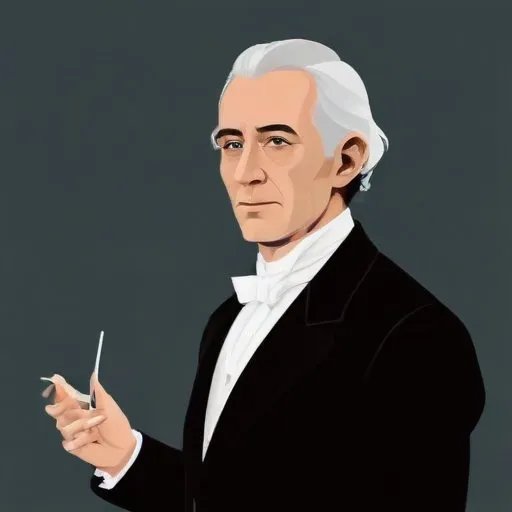
Austrian composer and conductor of the Classical period, known for his sacred music and operas, particularly his requiem masses. He was a prominent figure in Vienna's musical scene during the late 18th century.
Joseph Leopold Eybler was a renowned Austrian composer and contemporary of the great Wolfgang Amadeus Mozart, known for his exceptional musical talent and contributions to the classical music scene. As a master of chamber music and church styles, Eybler's compositions continue to inspire and influence musicians to this day.
Born on February 8, 1765, in Schwechat, near Vienna, Eybler was immersed in music from a young age. His father, a teacher, choir director, and friend of the Haydn family, introduced him to the world of music, and Eybler went on to study composition under the guidance of Johann Georg Albrechtsberger.
In 1792, Eybler became the choir director at the Karmeliterkirche (Carmelite Church) in Vienna, a position he held for two years before moving to the Schottenkloster, where he spent the next thirty years. During this time, he also held court posts, including that of court Kapellmeister (chapel master) from 1824 to 1833.
Eybler's association with Mozart is a significant aspect of his life and career. Through Joseph Haydn, Eybler met Mozart, who not only gave him lessons but also entrusted him with the rehearsal of his opera Cos fan tutte. Eybler even conducted some performances of the opera. Mozart's testimonial for Eybler, written on May 30, 1790, is a testament to their friendship and Eybler's exceptional talent.
I, the undersigned, attest herewith that I have found the bearer of this, Herr Joseph Eybler, to be a worthy pupil of his famous master Albrechtsberger, a well-grounded composer, equally skilled at chamber music and the church style, fully experienced in the art of the song, also an accomplished organ and clavier player – in short, a young musician such as one can only regret, as so seldom has his equal.
Eybler's contributions to classical music are multifaceted. He composed numerous works, including a Requiem in C minor, commissioned by Empress Marie Therese in 1803. His compositions showcase his mastery of various styles, from chamber music to church music, and his ability to blend different genres.
Eybler remained a close friend of Mozart until the latter's death. He was one of the few people who stood by Mozart during his final illness and even helped to nurse him. Eybler's personal life was marked by his dedication to his craft, and he continued to compose and perform music until his death on July 24, 1846.
Eybler's music has had a lasting impact on the classical music scene. His compositions continue to inspire and influence contemporary musicians, and his legacy serves as a testament to the power of music to transcend time and generations.
Eybler's exceptional talent and contributions to classical music have earned him a place in the annals of music history. His friendship with Mozart and his association with other prominent composers of the time have cemented his status as a master of classical music.
Joseph Leopold Eybler's legacy serves as a reminder of the power of music to bring people together and transcend time. His compositions continue to inspire and influence musicians, ensuring that his music will be remembered for generations to come.
Born in 1756
A child prodigy and master of classical music, he composed over 600 works, including symphonies, operas, and chamber music, that continue to inspire and influence musicians today.
Born in 1770
A musical genius who expanded the possibilities of classical music, creating iconic symphonies and piano sonatas that continue to inspire and influence generations of artists.
Born in 1732
A renowned composer and pianist of the Classical period, known for his symphonies, operas, and chamber music that showcased his innovative and expressive style. He played a significant role in shaping the Classical music era.
Born in 1714
A pioneering opera composer who revolutionized the art form with his innovative and expressive works, blending music and drama in a way that captivated audiences.
Born in 1750
A renowned 18th-century composer and conductor, known for his operas and rivalry with Mozart, as depicted in the movie Amadeus.
Born in 1797
A renowned composer of symphonies, operas, and chamber music, particularly famous for his emotional and expressive lieder (art songs) that showcased his mastery of melody and harmony.
81 Years Old
The 20th Director of the Central Intelligence Agency, a four-star general who oversaw the NSA and CIA, playing a pivotal role in shaping US national security and intelligence policies. Known for his controversial stances on surveillance and torture.
Born in 1782
A virtuosic violinist and composer who revolutionized the instrument's technical possibilities, leaving an indelible mark on classical music.
