


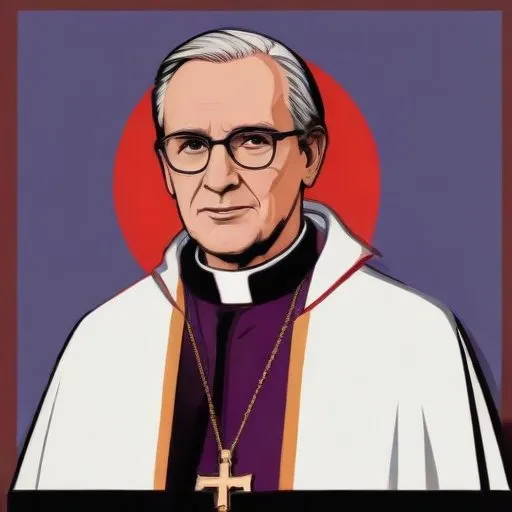
A pioneering Episcopal bishop who played a crucial role in the development of the American church, particularly in the South during the Civil War era.
Joseph Martin Sartoris, an American prelate of the Roman Catholic Church, is known for his exemplary service as an auxiliary bishop of the Archdiocese of Los Angeles in California from 1994 to 2002. With a lifetime of dedication to the Church, Sartoris has left an indelible mark on the Catholic community in California and beyond.
Born on July 1, 1927, in Los Angeles, California, Sartoris was called to serve the Lord from a young age. He pursued his priestly vocation at St. John's Seminary in Camarillo, California, and was ordained into the priesthood by Cardinal James McIntyre on May 30, 1953.
After his ordination, Sartoris was assigned to various parishes, where he served as an associate pastor, teacher, and assistant principal. His remarkable commitment to the Church and its people did not go unnoticed, and he was soon entrusted with leadership roles, including administrator pro tempore at Dolores Mission Parish and administrator at Nativity Parish, both in Los Angeles.
In 1978, Sartoris was appointed pastor of St. Margaret Mary Parish in Lomita, California, a position he held until his elevation to bishop. On February 8, 1994, Pope John Paul II appointed Sartoris as the titular bishop of Oliva and an auxiliary bishop of Los Angeles. He was consecrated a bishop by Cardinal Roger Mahony on May 19, 1994, at St. Vibiana Cathedral in Los Angeles.
As an auxiliary bishop, Sartoris led the archdiocese's San Pedro Pastoral Region from 1994 to 2002, guiding the spiritual growth and development of the faithful under his care. His dedication to the people of God earned him the respect and admiration of his peers and followers alike.
Throughout his illustrious career, Sartoris has demonstrated an unwavering commitment to the Catholic Church and its mission. His selfless service, spiritual guidance, and leadership have inspired countless individuals, shaping the fabric of the Catholic community in California and beyond.
As an educational institution, the Catholic Church has greatly benefited from Sartoris's contributions. His role as a teacher and assistant principal has nurtured the minds and spirits of numerous students, many of whom have gone on to become devoted servants of the Church.
Joseph Martin Sartoris's remarkable life of service and devotion to the Catholic Church serves as a testament to the enduring power of faith and dedication. His legacy continues to inspire generations of Catholics, solidifying his place as a prominent figure in the history of the Catholic Church in the United States.
Born in 1801
A leading figure in the Oxford Movement, he was a prominent theologian and philosopher who converted to Catholicism, influencing Christian thought and education. He's also known for his poetry and hymns.
Born in 1499
Reigned from 1559 to 1565, this Pope oversaw the final session of the Council of Trent, shaping Catholic doctrine and practice for centuries to come. He also commissioned the construction of the Sistine Chapel's dome.
Born in 1810
The first pope to fully embrace modernity, he issued the groundbreaking encyclical Rerum Novarum, which addressed social justice and workers' rights, shaping the Catholic Church's stance on social issues.
Born in 1504
Leader of the Catholic Church during the Counter-Reformation, he excommunicated Queen Elizabeth I and played a key role in the Council of Trent.
Born in 1675
A 18th-century pope who reformed the Catholic Church, promoting tolerance and scholarship, and is known for his encyclicals on topics like usury and the sacraments.
Born in 1876
The leader of the Catholic Church from 1939 to 1958, known for his controversial role during World War II, particularly in regards to the Holocaust. He is also remembered for his encyclicals on social justice and liturgical reforms.
Born in 1876
The leader of the Catholic Church from 1939 to 1958, known for his controversial role during World War II, particularly in regards to the Holocaust. He is also remembered for his encyclicals on social justice and liturgical reforms.
Born in 1881
Reformed the Catholic Church, introducing progressive reforms and ecumenical dialogue, and convened the Second Vatican Council.
