


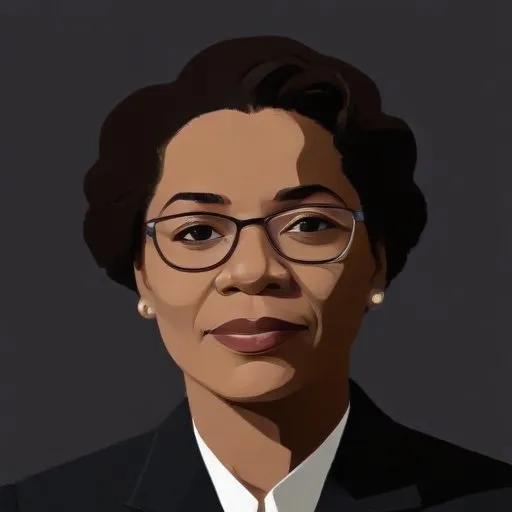
A pioneering African American lawyer and activist who fought for civil rights and social justice, particularly in the areas of education and housing.
Juanita Jackson Mitchell, a remarkable African American woman, made history as the first to practice law in Maryland, paving the way for generations to come. Her extraordinary career spanned decades, leaves an indelible mark on the struggle for racial equality, education, and social justice.
Born on January 2, 1913, in Hot Springs, Arkansas, Mitchell grew up in a family that instilled in her the importance of education and community service. She attended Frederick Douglass High School, Morgan State College, and later graduated cum laude from the University of Pennsylvania with a B.S. in education in 1931. Mitchell furthered her education, earning a M.A. in sociology from the University of Pennsylvania in 1935.
In 1950, Mitchell became the first African American woman to graduate from the University of Maryland School of Law, and subsequently, the first to practice law in Maryland. Her remarkable achievement opened doors for countless women and minorities to pursue careers in law.
Throughout her career, Mitchell worked tirelessly to desegregate various aspects of life, including schools, restaurants, parks, and swimming pools. Her tireless efforts led to Maryland becoming the first southern state to integrate its schools after the landmark 1954 Supreme Court case, Brown v. Board of Education.
Mitchell's commitment to social justice extended beyond the courtroom. She was an integral part of the National Association for the Advancement of Colored People (NAACP), serving as National Youth Director and later as president of the Baltimore City branch. Her leadership played a crucial role in organizing and developing programs for the NAACP's Youth and College Division.
In the 1940s, 50s, and 60s, Mitchell spearheaded voter registration drives in Baltimore, empowering African Americans to exercise their right to vote. Her crusade for civil rights and human dignity earned her recognition from the highest echelons of power, including an invitation to the White House Conference on Women and Civil Rights by President John F. Kennedy in 1966.
Juanita Jackson Mitchell's groundbreaking achievements and unwavering dedication to the fight for racial equality have left an indelible mark on American history. Her pioneering spirit has inspired generations of lawyers, activists, and community leaders to strive for a more just and equitable society.
Through her life's work, Mitchell has shown us that even in the face of adversity, courage, perseverance, and an unshakeable commitment to justice can bring about transformative change. Her remarkable story serves as a testament to the power of individual action and collective effort in shaping a brighter future for all.
Born in 1908
A trailblazing lawyer and civil rights champion who broke racial barriers in the US justice system, serving as the first African American on the Supreme Court. He fought tirelessly for equality and justice, leaving a lasting impact on American history.
97 Years Old
A prominent leader in the civil rights movement, advocating for racial equality and social justice through nonviolent means, leaving a lasting impact on American history.
Born in 1913
Refused to give up her seat on a Montgomery, Alabama bus to a white person, sparking the Montgomery Bus Boycott, a pivotal event in the Civil Rights Movement.
Born in 1912
A pioneering figure in the struggle for racial and gender equality, she dedicated her life to empowering African American women and promoting education and social justice.
Born in 1875
Pioneering educator and civil rights activist who founded a school for African American students in Florida and advised several US presidents on racial issues.
Born in 1902
A renowned poet, novelist, and playwright who powerfully voiced the experiences and struggles of African Americans during the Harlem Renaissance, using jazz and blues rhythms to convey the spirit of his people.
Born in 1891
A celebrated author and anthropologist who explored African-American culture through novels, stories, and folklore, particularly in the rural South during the early 20th century.
Born in 1898
A renowned singer, actor, and activist who used his talents to promote social justice and equality, particularly for African Americans, through powerful performances and outspoken advocacy.
