


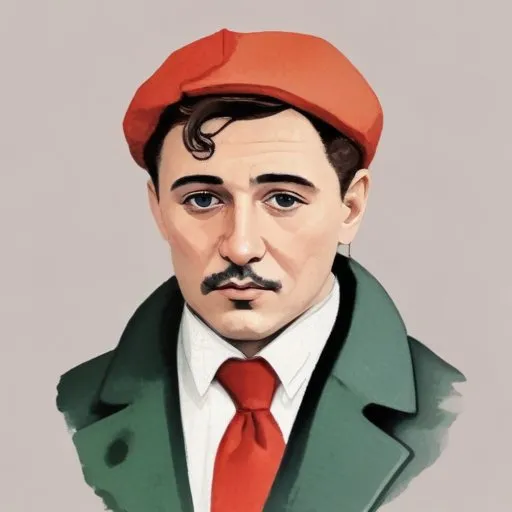
A Polish poet, essayist, and translator who explored the intersection of philosophy and literature, known for his lyrical and introspective works that delve into the human condition.
Julian Przybo, a Polish poet, essayist, and translator, is renowned for being one of the most important poets of the Krakow Avant-Garde movement. His literary works, which span several decades, have had a profound impact on Polish literature and continue to be celebrated today.
Born on March 5, 1901, in Gwoźnica near Strzyżów, Przybo came from a peasant family. He attended the Konarski Secondary School in Rzeszów from 1912 and later studied Polish studies at the Jagiellonian University in Kraków from 1920 to 1923.
Przybo's literary career began in the 1920s, when he contributed to the avant-garde magazine Zwrotnica. He published his works in various magazines and journals, including Zaranie Śląskie (Silesian Dawn), before and after World War II. His poetry collections, such as Ruby (1925), Oburcz (1926), and Z ponad (1930), showcased his unique style and perspective.
Przybo supported socialist ideals and volunteered for the Polish Army during the Polish-Soviet War in 1920. He worked as a teacher in various locations, including Sokal, Chrzanów, and Cieszyn, before becoming a diplomat in Switzerland from 1947 to 1951. Afterward, he was the director of the Jagiellonian Library in Kraków.
In 1941, Przybo was arrested by the Gestapo, the Nazi German secret police, and later became a member of the Polish Workers' Party and the Polish United Workers' Party. However, after the Hungarian Revolution of 1956, he left the Polish United Workers' Party.
Julian Przybo's literary contributions have had a lasting impact on Polish literature and culture. His unique style and perspective continue to inspire writers and readers today. Despite facing challenges and setbacks throughout his life, Przybo remained committed to his art and his ideals, leaving behind a rich legacy that will be celebrated for generations to come.
Born in 1798
A national hero in Poland, celebrated for his romantic poetry and plays that ignited a sense of patriotism and freedom during a time of foreign rule. His works are still widely read and performed today.
Born in 1809
A leading figure of the Polish Romantic movement, known for his poetic and theatrical works that explored themes of love, freedom, and national identity. His plays and poems are still widely performed and studied in Poland today.
Born in 1847
A pioneering journalist and author who explored social issues and championed realism in Polish literature, leaving a lasting impact on the country's literary scene.
Born in 1846
A Polish journalist and author who wrote epic historical novels, including "Quo Vadis", which won him the Nobel Prize in Literature in 1905. His works are known for their vivid storytelling and historical accuracy.
Born in 1867
A Polish novelist who won the Nobel Prize in Literature in 1924 for his novel "Ch?opi" (The Peasants), a realistic depiction of rural life in Poland. He's known for his detailed and nuanced portrayals of Polish society and culture.
Born in 1878
A Ukrainian-Polish poet and academic who made significant contributions to 20th-century Polish literature, exploring themes of existentialism and modernity. Their work is characterized by its lyricism and philosophical depth.
