


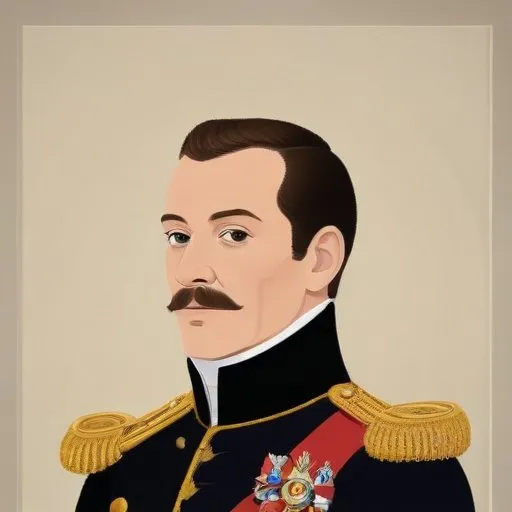
A 17th-century German duke who ruled Saxe-Lauenburg and was a prominent military leader during the Thirty Years' War, known for his brutal tactics and territorial conquests.
Julius Henry, Duke of Saxe-Lauenburg, is remembered as a distinguished military leader and statesman who served as Field Marshal in the imperial army and later ascended to the throne of Saxe-Lauenburg between 1656 and 1665. His remarkable career was marked by a series of notable military campaigns, strategic alliances, and key appointments that cemented his position as a trusted advisor to Emperor Ferdinand II.
Born on April 9, 1586, in Wolfenbüttel, Julius Henry was the son of Duke Francis II and his second wife, Maria of Brunswick and Lunenburg Wolfenbüttel. He received his education at the University of Tübingen, which laid the foundation for his future success in military and state affairs.
Julius Henry's military career began under the command of King Gustavus Adolphus of Sweden, where he honed his skills as a military strategist and leader. He later served as a regimental commander in the Uskok War against the Republic of Venice in 1617 and in Hungary. His bravery and tactical prowess earned him recognition, and he fought alongside the imperial army in the Battle of the White Mountain.
In 1619, Julius Henry, along with Count of Altheim and Charles Gonzaga, founded the Order of the Conception, a papally confirmed order. This honor reflected his growing influence and reputation within the imperial court.
Julius Henry was known for his close friendship with Albrecht von Wallenstein, a powerful and influential military leader. This association led to suspicions that Julius Henry was involved in Wallenstein's plots against the emperor, although there is no concrete evidence to support these claims.
Julius Henry's legacy is marked by his exceptional military prowess, strategic alliances, and key appointments that shaped the course of his career. His influence extended beyond the battlefield, as he played a crucial role in shaping imperial policy and diplomacy during a tumultuous period in European history.
Through his life and achievements, Julius Henry, Duke of Saxe-Lauenburg, left an indelible mark on the annals of European history, solidifying his position as one of the most notable figures of his time.
Born in 1683
King of Great Britain and Ireland from 1727 to 1760, known for his military victories, particularly the Battle of Dettingen, and his role in the War of the Austrian Succession.
