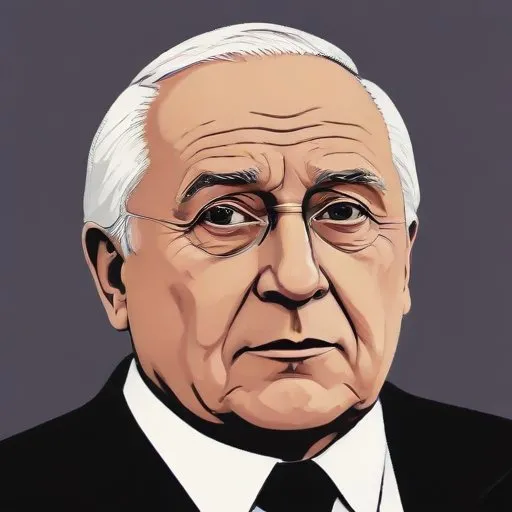
Julius Martov: The Leader of the Mensheviks and a Key Figure in Russian Revolution
Early Life and Intellectual Development
Julius Martov, born Yuliy Osipovich Tsederbaum, was a prominent Russian revolutionary, politician, and the leader of the Mensheviks, a faction of the Russian Social Democratic Labour Party (RSDLP). He is known for his significant contributions to the development of Marxist theory and his leadership during the Russian Revolution.
Martov was born on November 24, 1873, in Constantinople to a middle-class Jewish family. His family was politically active, and he was exposed to Marxist ideas from an early age. After the Russian famine of 1891-1892, Martov became deeply interested in Marxism, which shaped his worldview and influenced his future activism.
Rise to Prominence and Collaboration with Lenin
Martov briefly attended Saint Petersburg Imperial University, but was expelled and exiled to Vilna, where he developed influential ideas on worker agitation. Returning to Saint Petersburg in 1895, Martov collaborated with
Vladimir Lenin to co-found the League of Struggle for the Emancipation of the Working Class. This partnership marked the beginning of a complex and tumultuous relationship between the two revolutionary leaders.
In 1900, Martov and Lenin co-founded the party newspaper Iskra, which became a crucial platform for disseminating Marxist ideology and promoting revolutionary activism. Their partnership continued until the RSDLP's ideological schism in 1903, when Martov became the leader of the Menshevik faction, while Lenin led the opposing Bolshevik faction.
The Mensheviks and the Russian Revolution
As the leader of the Mensheviks, Martov advocated for a gradual and democratic approach to revolution, emphasizing the importance of worker self-organization and parliamentary reform. In contrast, the Bolsheviks, led by Lenin, advocated for a more radical and revolutionary approach, emphasizing the role of a vanguard party and authoritarian control.
After the February Revolution of 1917, Martov returned to Russia and led the faction of Mensheviks who opposed the Provisional Government. He advocated for an all-socialist coalition government, but found himself politically marginalized following the October Revolution, in which the Bolsheviks came to power.
Later Life and Exile
Martov continued to lead the Mensheviks and denounced many of the Soviet government's repressive measures during the civil war, including the Red Terror. In 1920, he left Russia for Germany, where he continued to write and engage in political activism. The Mensheviks were outlawed in Russia a year later, and Martov's health began to decline due to tuberculosis.
Martov died on April 4, 1923, in Schömberg, Germany. Despite his untimely death, his legacy as a key figure in Russian revolutionary politics and a committed advocate for democratic socialism continues to be felt.
Philosophical Contributions and Beliefs
Martov's philosophical contributions centered on the development of Marxist theory and the role of the working class in revolutionary politics. He believed in the importance of worker self-organization and the need for a democratic and gradual approach to revolution. Martov's ideas on worker agitation and his advocacy for parliamentary reform continue to influence socialist and democratic thought to this day.
Impact on Modern Society
Martov's legacy extends beyond the Russian Revolution, as his ideas on democratic socialism and worker self-organization continue to inspire social and political movements around the world. His commitment to Marxist theory and his advocacy for a more gradual and democratic approach to revolution remain relevant in contemporary debates on socialism and democracy.
Quotes and Memorable Sayings
* "The working class is not a tool for the revolution, but the revolution itself."
* "Socialism is not a goal, but a method."
* "The most effective way to combat oppression is to organize the oppressed."
Historical Context and Legacy
Martov's life and activism are set against the backdrop of the Russian Revolution and the tumultuous early years of the Soviet Union. His legacy as a key figure in Russian revolutionary politics and a committed advocate for democratic socialism continues to be felt today. Despite his differences with Lenin and the Bolsheviks, Martov's ideas on worker self-organization and parliamentary reform remain an essential part of the socialist and democratic tradition.
FAQ
What was Julius Martovs role in the Russian Revolution?
Martov was a key figure in the Russian Revolution, serving as a leader of the Menshevik faction and advocating for a more democratic and gradual approach to socialist reform.
How did Julius Martovs Menshevism differ from Bolshevism?
Martovs Mensheviks emphasized the importance of democratic processes and gradual reforms, contrasting with the more radical and authoritarian approach of the Bolsheviks, led by Vladimir Lenin.
What was Julius Martovs relationship with Vladimir Lenin?
Martov and Lenin were former allies and friends, but their differing political views ultimately led to a bitter split, with Martov emerging as a vocal critic of Lenins authoritarian tactics.
How did Julius Martovs views on socialism evolve over time?
Throughout his life, Martov remained committed to democratic socialism, advocating for a more inclusive and participatory approach to revolutionary change, whereas Lenins views became increasingly authoritarian.
What is Julius Martovs legacy in the history of socialism?
As a prominent Menshevik leader, Martovs contributions to the development of democratic socialism continue to influence socialist thought and practice, offering an alternative to more authoritarian interpretations of socialism.