


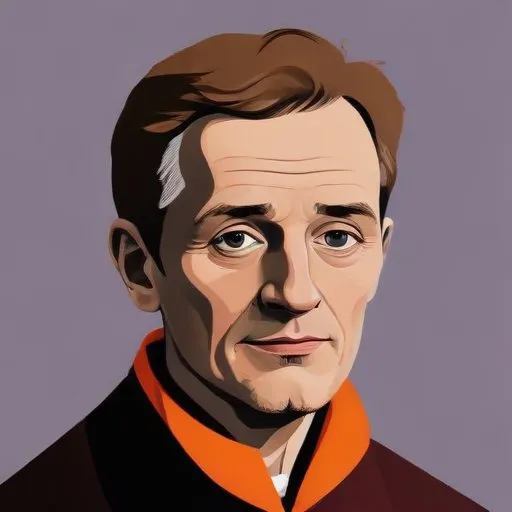
A German Romantic poet and writer, known for his dark and mystical works, including the famous poem "The Seeress of Prevorst", which explores themes of mysticism and the supernatural.
Justinus Kerner, a German poet, physician, and medical writer, is best known for giving the first detailed description of botulism, a rare and potentially life-threatening illness. His groundbreaking work in the field of medicine has left an indelible mark on the scientific community.
Born on September 18, 1786, in Ludwigsburg, Baden-Württemberg, Germany, Kerner was apprenticed in a cloth factory before pursuing his passion for medicine. With the help of Professor Karl Philipp Conz, he entered the University of Tübingen in 1804, where he studied medicine and literature, befriending notable poets like Ludwig Uhland and Gustav Schwab.
In addition to his medical pursuits, Kerner was an accomplished poet and writer. His work, Reiseschatten von dem Schattenspieler Luchs, published in 1811, showcased his caustic humor and personal experiences. He also collaborated with Uhland and Schwab on the Poetischer Almanach for 1812 and the Deutscher Dichterwald in 1813, which featured some of his best poems.
In 1815, Kerner became the district medical officer (Oberamtsarzt) in Gaildorf, and in 1818, he was transferred to Weinsberg, where he spent the rest of his life. His house, situated at the foot of the historical Schloss Weibertreu, became a hub for literary enthusiasts and intellectuals, including Gustav IV Adolf of Sweden, who visited him with a knapsack on his back.
Kerner's most famous work is perhaps Die Seherin von Prevorst, which tells the story of Friederike Hauffe, a somnambulist and clairvoyante who arrived at his house in 1826. This work offers a fascinating glimpse into the human psyche and the paranormal.
Justinus Kerner's contributions to the field of medicine and literature have had a lasting impact on modern society. His pioneering work on botulism has saved countless lives, and his poetic works continue to inspire generations of readers and writers. His legacy serves as a testament to the power of human curiosity and innovation.
Through his multifaceted talents and groundbreaking research, Justinus Kerner has left an indelible mark on the world, inspiring future generations to explore the realms of science, literature, and the human experience.
Born in 1776
A German Romantic-era mastermind who crafted dark, fantastical tales and composed mesmerizing music, leaving an indelible mark on literature and classical music.
Born in 1787
A 19th-century German literary figure who wrote romantic poetry and studied medieval history and literature, known for his lyrical and patriotic works. He's a significant contributor to the German literary canon.
Born in 1759
A renowned poet and playwright who crafted influential works that explored the human condition, morality, and the struggle for freedom, leaving a lasting impact on German literature.
Born in 1749
A German literary giant who penned iconic works like "Faust" and "The Sorrows of Young Werther", shaping the Romantic movement and influencing countless writers.
Born in 1797
A 19th-century literary mastermind who penned poignant poetry and biting social commentary, known for his witty satire and romantic verses that still resonate today.
Born in 1790
Austrian actor and playwright who wrote and performed in popular folk plays, often incorporating magic and fantasy elements, and was a key figure in Vienna's theatrical scene. He is particularly known for his humorous and satirical works that poked fun at social issues of his time.
Born in 1781
A German botanist and poet who traveled the world, discovering new plant species and writing romantic poetry that explored the human condition.
