


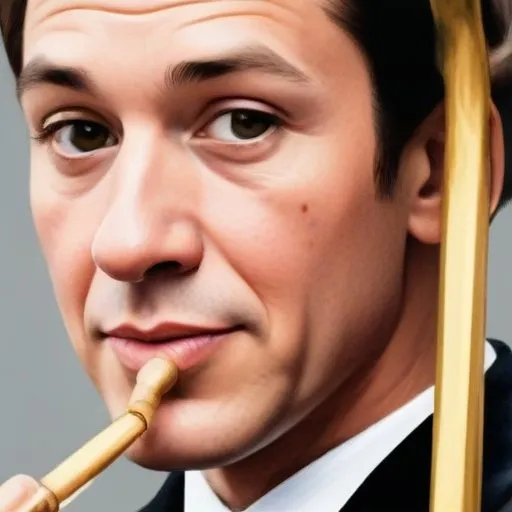
A renowned trombonist and composer who blended jazz and classical music, creating a unique sound that influenced generations of musicians.
Kai Winding, a Danish-born American trombonist and jazz composer, is best known for his iconic rendition of "More," the theme from the movie Mondo Cane, which reached number 8 on the Billboard Hot 100 in 1963. This legendary musician's collaborations with fellow trombonist J.J. Johnson are still widely revered today, and his impact on the jazz world is undeniable.
Born in Aarhus, Denmark, on May 18, 1922, Kai Winding was the son of a naturalized U.S. citizen, Ove Winding. This unique circumstance granted Kai and his sisters, Ann and Alice, automatic U.S. citizenship. In 1934, Kai's mother, Jenny, moved the family to the United States, where Kai would go on to graduate from Stuyvesant High School in New York City in 1940.
Winding's professional music career began that same year, playing trombone with Shorty Allen's band. He would later perform with Sonny Dunham and Alvino Rey, before serving in the United States Coast Guard during World War II. After the war, Winding joined Benny Goodman's orchestra, followed by Stan Kenton's.
In 1949, Winding participated in the Birth of the Cool sessions, appearing on four of the twelve tracks, while J.J. Johnson appeared on the remaining eight. This marked the beginning of a long and fruitful association between the two trombonists, who would go on to record duets for Savoy Records and Columbia.
Winding's experimentation with instruments in brass ensembles led to the creation of the album Jay & Kai - 6 in 1956, featuring a trombone octet and the trombonium. He composed and arranged many of the works he and Johnson recorded, showcasing his versatility as a musician and composer.
In the 1960s, Winding's association with Verve Records and producer Creed Taylor led to the creation of his most commercially successful recording, "More." Arranged and conducted by Claus Ogerman, this timeless hit reached number 8 on the Billboard Hot 100, marking Winding's only entry on the chart.
Kai Winding's contributions to the world of jazz are still felt today. His collaborations with J.J. Johnson, as well as his innovative approach to trombone playing and composition, have inspired generations of musicians. Though he may be best known for his hit "More," Winding's impact on the jazz world extends far beyond this single achievement.
Born in 1924
A pioneering trombonist and composer who blended bebop and classical music, creating a unique sound that influenced generations of jazz musicians.
Born in 1917
A virtuosic trumpet player and composer who revolutionized jazz with his lightning-fast solos and iconic puffy cheeks, creating a new language for the instrument. He's synonymous with bebop and modern jazz.
Born in 1917
A jazz legend who revolutionized piano playing and composition with unorthodox techniques and harmonies, creating a unique, improvisational style that continues to inspire generations of musicians.
Born in 1920
A pioneering jazz saxophonist and composer, known for his lightning-fast solos and innovative bebop style that revolutionized jazz music. 82
Born in 1926
A legendary jazz musician who revolutionized the genre with his improvisational style and iconic albums like "Kind of Blue". He's synonymous with cool, jazzy sophistication.
Born in 1926
A legendary jazz saxophonist and composer who revolutionized the genre with his innovative, spiritually-driven improvisations and iconic albums like "A Love Supreme".
96 Years Old
A legendary jazz saxophonist and composer, renowned for his improvisational genius and iconic recordings that redefined the genre. His playing style is characterized by intense emotional expression and harmonic innovation.
97 Years Old
A highly influential and innovative jazz pianist and composer, known for his lyrical and introspective playing style, which expanded the possibilities of jazz harmony and improvisation.
