


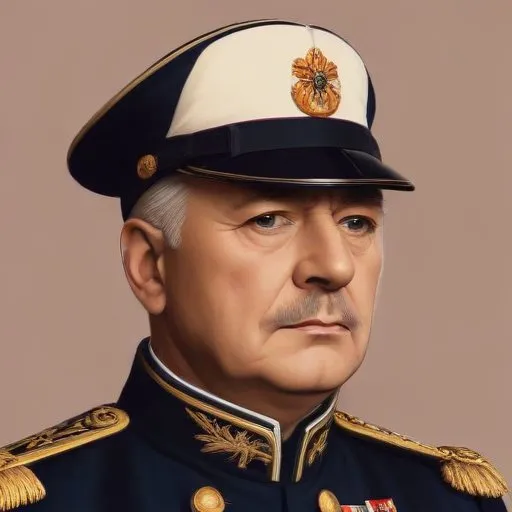
A Prussian field marshal who played a crucial role in the Napoleonic Wars, particularly at the Battle of Waterloo, and is credited with convincing the Duke of Wellington to attack the French army. He's also known for his cartographic skills, creating detailed maps of the battlefields.
Karl Freiherr von Mffling, a renowned Prussian Generalfeldmarschall and military theorist, is best known for his instrumental role in the Battle of Waterloo and his significant contributions to the development of the Prussian General Staff.
Born on June 12, 1775, in Halle, Germany, Mffling entered the Prussian army in 1790, marking the beginning of his illustrious military career. He quickly proved himself to be a talented and ambitious officer, earning promotions and assignments to various general staffs, including those of Generals von Wartensleben, Frederick Louis, Prince of Hohenlohe-Ingelfingen, and Gebhard Leberecht von Blcher.
In addition to his military prowess, Mffling was an accomplished cartographer and topographer. He applied his skills in survey work and map-making to the battlefield, providing invaluable insights to commanders and strategists. His expertise in this field earned him recognition, and he was tasked with survey duties under the astronomer Franz Xaver, Baron Von Zach.
Mffling's military career reached new heights during the Napoleonic Wars. He served as Blcher's liaison officer in Wellington's headquarters during the Battle of Waterloo, playing a crucial role in the final victory over Napoleon. His exceptional skills in military strategy and cartography made him an indispensable asset to the Allied forces.
Following the wars, Mffling continued to serve his country, taking on a diplomatic role at the Congress of Aix-la-Chapelle. He also played a significant role in the development of the Prussian General Staff as Chief, shaping the future of the Prussian army.
Mffling's outstanding service and achievements earned him numerous awards and honors, including the prestigious title of Generalfeldmarschall. His contributions to military strategy, cartography, and diplomacy left a lasting impact on the Prussian army and the world at large.
Karl Freiherr von Mffling's remarkable career serves as a testament to his exceptional skill, dedication, and strategic thinking. As a military theorist, cartographer, and diplomat, he left an indelible mark on European history, shaping the course of the Napoleonic Wars and the development of modern military strategy.
"Foresight and preparation are the keys to victory in war." — Karl Freiherr von Mffling
Born in 1755
A pioneering military reformer who modernized the Prussian army and played a key role in the Napoleonic Wars, known for his innovative tactics and strategic thinking.
Born in 1760
A highly influential Prussian military strategist who reformed the Prussian army and played a key role in defeating Napoleon, earning him a legendary status in military history.
Born in 1865
A German general and politician who played a crucial role in World War I, masterminding the 1918 Spring Offensive and later promoting Nazi ideology.
Born in 1847
A German field marshal and politician who served as the 2nd President of Germany during the Weimar Republic, playing a crucial role in the rise of the Nazi Party. He's infamous for appointing Adolf Hitler as Chancellor of Germany in 1933.
Born in 1876
A German naval leader who played a key role in the Kriegsmarine during World War II, overseeing the German U-boat fleet and naval operations. He was a close advisor to Adolf Hitler and implemented the German naval strategy during the war.
Born in 1888
A pioneering tank commander who revolutionized modern warfare with his innovative blitzkrieg tactics, earning him the nickname "Father of the Panzerwaffe".
