


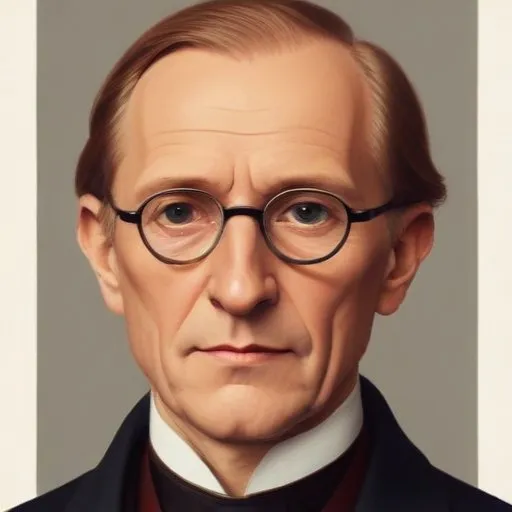
A German theologian and author who wrote influential works on rational Christianity and was a vocal critic of religious dogma, known for his radical and provocative ideas.
Karl Friedrich Bahrdt, a German Protestant biblical scholar, theologian, and polemicist, was a force to be reckoned with in 18th-century Germany. Known for his unorthodox views and scandalous behavior, Bahrdt left an indelible mark on the world of theology, biblical exegesis, and intellectual discourse.
Bahrdt was born on August 25, 1741, in Bischofswerda, Upper Lusatia, to a pastor father who later became a professor, canon, and general superintendent at Leipzig. The young Bahrdt received his early education at the renowned school of Pforta, where he demonstrated a keen intellect and a predilection for controversy.
After graduating, Bahrdt lectured on biblical exegesis at Leipzig and later became a catechist at the church of St. Peter, where his eloquence and popularity earned him a reputation as a rising star in the theological firmament.
However, Bahrdt's irregular conduct soon caught up with him, and he was forced to resign his positions and leave Leipzig in 1768. Christian Adolph Klotz, a prominent educator, came to his rescue, securing him the chair in biblical antiquities at the University of Erfurt.
Despite his initial success, Bahrdt's orthodoxy began to wane, and he became embroiled in a series of controversies that would dog him for the rest of his life. To make ends meet, Bahrdt took on the role of an innkeeper and private tutor, a far cry from his earlier ambitions.
In 1771, he completed his doctorate of theology at Erlangen, which enabled him to persuade the faculty at Erfurt to appoint him professor designate of theology. However, his continued theological deviations and personal scandals led to his marginalization within the academic community.
Despite the controversy that surrounded him, Bahrdt's contributions to biblical scholarship and theological discourse remain significant. His emphasis on the historical and cultural context of the Bible, as well as his critique of dogmatic theology, paved the way for later scholars and thinkers.
Bahrdt's influence extends beyond the realm of theology, too. His unorthodox views and brazen challenges to authority have inspired generations of thinkers, writers, and artists who have sought to question the status quo and push the boundaries of knowledge and understanding.
In the end, Bahrdt's tumultuous life and legacy serve as a testament to the power of intellectual curiosity and the importance of questioning received wisdom. As we reflect on his life and work, we are reminded that even the most unorthodox of thinkers can leave an indelible mark on the world of ideas.
Born in 1724
Developed influential philosophical frameworks, such as the Critique of Pure Reason, that shaped modern Western thought on ethics, morality, and human understanding.
Born in 1768
A pioneering theologian and philosopher who shaped modern Christian thought and hermeneutics, known for his emphasis on individual experience and understanding of religious texts.
Born in 1729
A prominent Enlightenment thinker, he's known for his influential writings on philosophy, literature, and theology, which helped shape modern German culture. He's also credited with developing the concept of dramatic irony in literature.
Born in 1762
A German philosopher and academic who developed the concept of German idealism, emphasizing the role of the individual and the nation in shaping reality. He's known for his influence on German philosophy and the development of existentialism.
Born in 1483
A German monk and priest who sparked the Protestant Reformation, challenging Catholic Church authority and shaping Western Christianity. He's famous for nailing 95 theses to a church door, sparking a religious revolution.
Born in 1632
A 17th-century philosopher and scholar who developed a comprehensive philosophical system that emphasizes God, nature, and human freedom, influencing modern thought on ethics, politics, and religion.
