


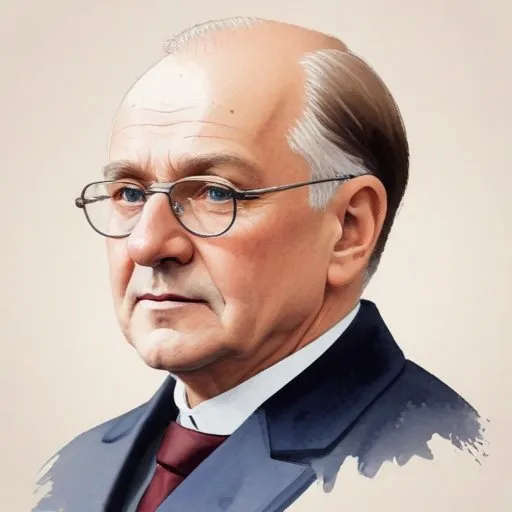
A German physician and politician who advocated for gay rights and wrote about human sexuality, making significant contributions to the field of sexology.
KarlGnther Heimsoth was a German physician, polygraph, and politician, known for his groundbreaking work on homosexuality and his involvement with the Nazi and Communist parties. Born on December 4, 1899, in Charlottenburg, Heimsoth's multifaceted career spanned over two decades, leaving an indelible mark on the fields of medicine, politics, and social reform.
Heimsoth's early life was shaped by his family's middle-class background. His father, a court clerk and bank director, instilled in him a strong sense of discipline and responsibility. Growing up in Dortmund, Heimsoth developed a keen interest in medicine, which led him to enlist in the Prussian Army during World War I. He was deployed on the Western Front, where he rose to the rank of lieutenant.
After the war, Heimsoth pursued his passion for medicine, enrolling in the University of Tbingen in 1919. He continued his clinical training at the Universities of Munich, Kiel, and Rostock, eventually passing his state examination to practice medicine in 1924.
In 1924, Heimsoth wrote his dissertation, "Hetero und Homophilie" (Hetero and Homophilia), which introduced the term "homophilia" in sexology. This pioneering work argued that homophilia was a natural aspect of human relationships, characterized by a desire for same-sex intimacy. Heimsoth's thesis challenged traditional views on sexuality, sparking controversy and debate in the medical community.
Heimsoth's political affiliations were marked by contradictions. Initially, he was a member of the Nazi Party, but later shifted his allegiance to the Communist Party of Germany. His involvement with the Freikorps, a paramilitary organization, during the Ruhr Uprising, fights in Thuringia, and Silesian Uprisings, further complicated his political identity.
Despite these contradictions, Heimsoth remained committed to social reform and activism. His work on homosexuality, though groundbreaking, was often overshadowed by his political affiliations. However, his legacy as a physician and sexologist continues to inspire scholars and LGBTQ+ activists today.
Heimsoth's life was marked by contradictions, but his contributions to the fields of medicine and sexology are undeniable. His work on homophilia paved the way for future generations of researchers and activists, challenging traditional views on sexuality and fostering a more inclusive understanding of human relationships.
In the end, Heimsoth's complex life serves as a testament to the power of human curiosity and the importance of embracing diversity in all its forms.
Through his life and work, KarlGnther Heimsoth left an indelible mark on the fields of medicine, politics, and social reform. His legacy continues to inspire and educate future generations, serving as a testament to the power of human curiosity and the importance of embracing diversity in all its forms.
Born in 1889
The dictator of Nazi Germany, responsible for the genocide of six million Jews and millions of other people during World War II, and infamous for his extreme nationalist and anti-Semitic ideology.
Born in 1897
A mastermind of Nazi propaganda, he crafted a persuasive narrative that fueled the Third Reich's rise to power, leaving a lasting impact on the world.
Born in 1893
A high-ranking Nazi official, he was a decorated World War I fighter pilot and later became a prominent politician, serving as Minister President of Prussia. He's infamous for his role in the Nazi regime and war crimes trials.
Born in 1894
A high-ranking Nazi official who flew to Scotland on a solo mission to negotiate peace with the UK, but was instead arrested and imprisoned.
Born in 1893
A German diplomat who served as the Nazi regime's Foreign Minister, orchestrating key alliances and treaties that led to World War II. He was a close associate of Adolf Hitler and played a crucial role in shaping Nazi foreign policy.
Born in 1900
Leading the SS and Gestapo, he oversaw the Nazi regime's brutal security apparatus and implemented the "Final Solution," orchestrating the genocide of six million Jews during World War II.
Born in 1903
Austrian-German lawyer and general who served as the highest-ranking leader of the Nazi police forces, responsible for overseeing the Gestapo, SS, and concentration camps during World War II. He was a key figure in the Holocaust and other atrocities committed by the Nazi regime.
Born in 1904
A high-ranking Nazi officer and physician who oversaw the Nazi euthanasia program, responsible for the deaths of thousands of people with mental and physical disabilities.
