


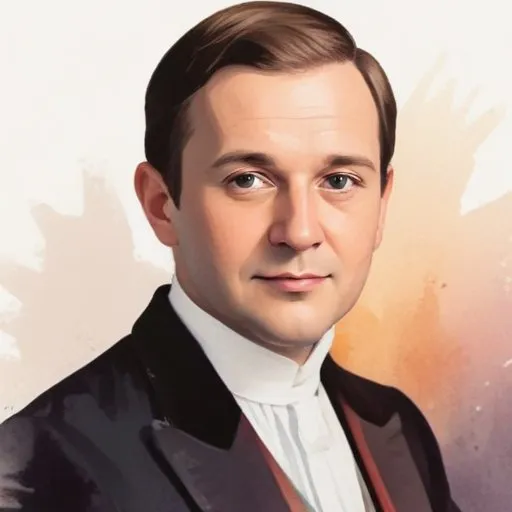
Renowned for their interpretations of Baroque music, particularly Bach's works, and leading the Munich Bach Orchestra and Choir to international acclaim.
Karl Richter was a German conductor, choirmaster, organist, and harpsichordist renowned for his interpretations of Baroque music, particularly the works of Johann Sebastian Bach. As the founder and conductor of the Munich Bach Choir and Orchestra, Richter's ensemble became a prominent international ensemble, celebrated for its authentic and expressive performances.
Born on October 15, 1926, in Plauen, Germany, Richter was exposed to music from an early age. His father, Christian Johannes Richter, was a Protestant pastor, and his mother, Clara Hedwig Richter, instilled in him a love for music. Richter's early education took place in Dresden, where he was a member of the prestigious Dresdner Kreuzchor. He later continued his studies in Leipzig, graduating in 1949.
In 1949, Richter became the organist at St. Thomas Church in Leipzig, a position once held by Bach himself. This appointment marked the beginning of Richter's lifelong dedication to promoting Bach's music. During his tenure, he prepared a special performance of Bach's St. Anne Prelude and Fugue in E-flat for the reception following the inauguration of Bach's new grave.
In 1952, Richter moved to Munich, where he taught organ at the University of Music and Performing Arts and served as cantor and organist at St. Mark's Church. Two years later, he founded the Munich Bach Choir, followed by the Munich Bach Orchestra. Under his direction, these ensembles flourished, becoming world-renowned for their authentic and expressive performances of Bach's works.
Richter's Munich Bach Choir and Orchestra embarked on numerous international tours, performing in Japan, the United States, Canada, Latin America, Eastern Europe, and the Soviet Union. Their recordings, often featuring Richter at the organ or harpsichord, remain highly acclaimed and widely regarded as benchmarks for Baroque music interpretation.
In 1977, a recording of the First Movement from Bach's Brandenburg Concerto No. 2 in F, performed by the Munich Bach Orchestra under Richter's direction, was selected by NASA to be included on the Voyager Golden Record. This gold-plated copper record, containing sounds and images of human existence, was sent into space on the Voyager spacecraft, ensuring Richter's legacy would transcend earthly bounds.
Richter married Gladys Müller in 1952, and they had two children, Tobias and Simone. Throughout his life, he remained committed to his family and his music, leaving behind a legacy that continues to inspire and enrich generations of music lovers.
Karl Richter's unwavering dedication to Bach's music has had a profound impact on the world of classical music. His interpretations, characterized by simplicity, clarity, and a deep understanding of Baroque style, have influenced countless musicians and ensembles. As a conductor, organist, and harpsichordist, Richter's artistry continues to inspire and delight audiences, cementing his place as one of the greatest Bach interpreters of the 20th century.
Born in 1685
A master of Baroque music, he composed over 1,000 works, including orchestral suites, cantatas, and passions, that still inspire and influence musicians today. His innovative use of counterpoint and harmony raised the bar for classical music.
Born in 1685
A renowned Baroque composer and organist, famous for creating majestic orchestral suites, operas, and oratorios, including the iconic "Messiah" masterpiece.
Born in 1678
A virtuosic violinist and prolific composer, he crafted over 400 concertos, including "The Four Seasons," which remains a beloved and iconic masterpiece of classical music.
Born in 1653
A virtuosic violinist and composer who revolutionized the concerto grosso form, creating a new era of classical music. His influential works elevated the violin to a solo instrument, shaping the course of Western classical music.
Born in 1585
A renowned Baroque composer and organist, known for his contributions to the development of the oratorio and passion genres, creating over 500 works that showcased his mastery of choral music.
Born in 1809
A renowned 19th-century musician who masterfully blended classical and romantic styles, creating iconic works like the "Wedding March" and "Elijah" oratorio. His compositions continue to inspire and influence generations of artists.
Born in 1811
A virtuosic pianist and composer who revolutionized classical music with his technically demanding and emotionally expressive works, blending Hungarian folk influences with Romantic-era drama.
Born in 1885
A renowned composer and conductor, known for his interpretations of Beethoven and Bruckner, and his leadership of the Berlin State Opera and Los Angeles Philharmonic.
