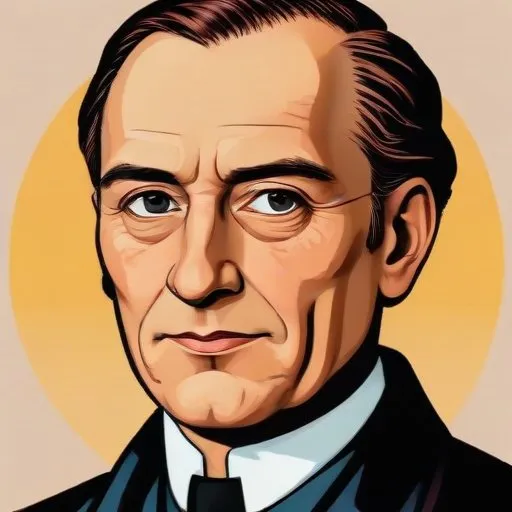
Karl Robert Eduard von Hartmann

Karl Robert Eduard von Hartmann

Karl Robert Eduard von Hartmann was born on February 23rd, 1842

Full Name: Karl Robert Eduard von Hartmann
Profession: Philosopher and Author
Place of Birth: Berlin, Prussia
Nationality: German
Notable Work: Philosophy of the Unconscious
Education: Berlin University
Influence: Friedrich Nietzsche
Movement: German Idealism

A 19th-century German philosopher and author who developed a pessimistic and deterministic philosophy that emphasized the role of the unconscious mind, influencing later thinkers like Sigmund Freud. His work spanned metaphysics, ethics, and aesthetics.

Written by: Grace Lee Grace Lee

Karl Robert Eduard von Hartmann: The Pioneering Philosopher of the Unconscious

A Philosopher Ahead of His Time

Karl Robert Eduard von Hartmann was a German philosopher renowned for his groundbreaking work on the unconscious mind, precursor to the concepts of Sigmund Freud. Von Hartmann's philosophical contributions continue to influence modern psychology, philosophy, and literature, cementing his position as a pioneer in the realm of human consciousness.

Philosophical Contributions and Beliefs

Von Hartmann's magnum opus, "Philosophy of the Unconscious" (1869), introduced the concept of the unconscious as a driving force behind human behavior, predating Freud's psychoanalytic theories. He posited that the unconscious mind is the reservoir of human instincts, emotions, and thoughts, which shape our conscious experiences. His philosophy emphasized the importance of understanding the unconscious to gain insight into human nature.

Career Highlights and Major Works

Von Hartmann's academic career was marked by several notable publications, including: These works solidified his reputation as a leading figure in German philosophical circles.

Influence on Modern Society

Von Hartmann's ideas have permeated various disciplines, including: His philosophical contributions continue to resonate in contemporary thought, shaping our understanding of human nature and behavior.

Personal Milestones and Key Life Events

Born on February 23, 1842, in Berlin, Prussia (now Germany), von Hartmann was the son of a high-ranking government official. He studied philosophy at the University of Berlin, earning his Ph.D. in 1867. Throughout his life, he was drawn to the works of philosophers such as Immanuel Kant and Arthur Schopenhauer, whose ideas greatly influenced his own philosophical development.

Quotes and Memorable Sayings

"The unconscious is the dark abyss from which spring the faintest gleams of consciousness." This quote encapsulates von Hartmann's core philosophy, highlighting the significance of the unconscious in shaping human consciousness.

Historical Context and Legacy

Von Hartmann's work was contemporaneous with the emergence of German Idealism, a philosophical movement that emphasized the role of the individual in understanding reality. His contributions to the field of philosophy paved the way for subsequent thinkers, ensuring his legacy as a pioneering philosopher of the unconscious.

Comparative Analysis with Contemporaries

Von Hartmann's ideas were often juxtaposed with those of Friedrich Nietzsche, who also explored the realm of the unconscious. While both philosophers shared similar interests, their approaches differed, with von Hartmann focusing on the unconscious as a driving force, whereas Nietzsche emphasized individual will and creativity.

Personal Relationships and Anecdotes

Von Hartmann's personal life was marked by a deep sense of introspection, reflecting his philosophical focus on the unconscious. He maintained a close relationship with his sister, Emma, who shared his intellectual curiosity and philosophical interests.

Impact on Their Field

Von Hartmann's groundbreaking work on the unconscious mind has left an indelible mark on the fields of philosophy, psychology, and literature. His ideas continue to inspire and influence scholars, ensuring his legacy as a visionary philosopher ahead of his time.
Timeline
1842
Born in Berlin
Karl Robert Eduard von Hartmann was born in Berlin, Prussia (now Germany), to a noble family.
1858
Began Writing Career
Hartmann began his writing career, producing philosophical and literary works that explored themes of ethics and morality.
1869
Published Philosophy of the Unconscious
Hartmann published his most famous work, Philosophy of the Unconscious, which explored the role of the unconscious mind in human behavior.
1880
Appointed Professor
Hartmann was appointed Professor of Philosophy at the University of Berlin, a position he held until his death.
1906
Died at Age 64
Karl Robert Eduard von Hartmann passed away at the age of 64, leaving behind a legacy as a German philosopher and author.
Karl Robert Eduard von Hartmann

Karl Robert Eduard von Hartmann Quiz

Karl Robert Eduard von Hartmann's philosophical views were characterized by

Score: 0/5
FAQ
What is Karl Robert Eduard von Hartmanns significance in German philosophy?
Karl Robert Eduard von Hartmann was a German philosopher and author who made significant contributions to German philosophy, particularly in the areas of metaphysics and epistemology.
What are Karl Robert Eduard von Hartmanns main philosophical ideas?
Karl Robert Eduard von Hartmanns main philosophical ideas centered around the concept of the Unconscious, which he believed was the source of human creativity and intuition.
What is Karl Robert Eduard von Hartmanns legacy in German thought?
Karl Robert Eduard von Hartmanns legacy in German thought is that of a pioneering figure who helped shape the development of German philosophy, particularly in the areas of metaphysics and epistemology.
How did Karl Robert Eduard von Hartmann influence Friedrich Nietzsche?
Karl Robert Eduard von Hartmanns ideas on the Unconscious influenced Friedrich Nietzsches concepts of the Will to Power and the Eternal Recurrence.
What is Karl Robert Eduard von Hartmanns role in the development of psychoanalysis?
Karl Robert Eduard von Hartmanns ideas on the Unconscious helped lay the groundwork for later psychoanalytic theories, particularly those of Sigmund Freud.

Related People:

Arthur Schopenhauer

Born in 1788

A pessimistic philosopher who wrote about the human condition, emphasizing the struggles and sufferings of life, and is famous for his concept of the "will to life".

Georg Wilhelm Friedrich Hegel

Born in 1770

A German philosopher and academic who developed a comprehensive and systematic philosophy that emphasized the unity of all things and the dialectical process of thesis, antithesis, and synthesis. His ideas have had a profound impact on modern thought, influencing fields such as philosophy, politics, and art.

Immanuel Kant

Born in 1724

Developed influential philosophical frameworks, such as the Critique of Pure Reason, that shaped modern Western thought on ethics, morality, and human understanding.

Johann Gottlieb Fichte

Born in 1762

A German philosopher and academic who developed the concept of German idealism, emphasizing the role of the individual and the nation in shaping reality. He's known for his influence on German philosophy and the development of existentialism.

Rudolf Christoph Eucken

Born in 1846

A German philosopher and author who explored the human experience, morality, and the role of individualism in society, earning him the Nobel Prize in Literature in 1908.

Ernst Cassirer

Born in 1874

A philosopher who developed the concept of "symbolic forms" to understand human culture and knowledge, and is known for his work on the philosophy of science and the Enlightenment.

Martin Heidegger

Born in 1889

A German philosopher and academic who explored the meaning of existence, time, and human existence, influencing 20th-century philosophy with his concept of "Being-in-the-world".