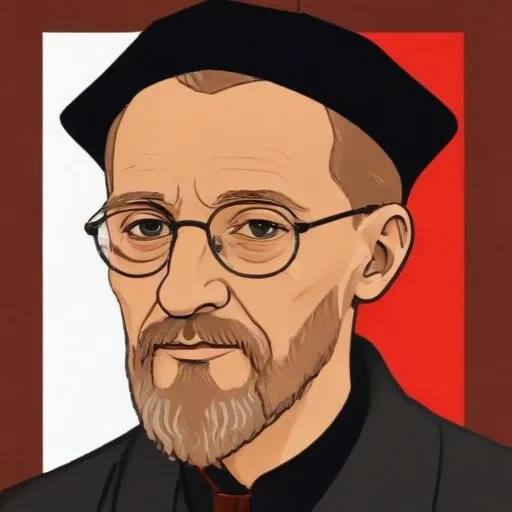
Kaspar Ulenberg: The Catholic Convert and Theological Writer
A Pioneer in Biblical Translation and Theological Writings
Kaspar Ulenberg is renowned for his groundbreaking work as a Catholic convert, theological writer, and translator of the Bible. Born in 1549, Ulenberg's journey from a Lutheran upbringing to Catholicism was a pivotal moment in his life, shaping his literary career and theological contributions.
A Lutheran Upbringing and Early Doubts
Ulenberg was born in Lippstadt, Westphalia, to Lutheran parents. Initially intended for the Lutheran ministry, he received his grammatical education in Lippstadt, Soest, and Brunswick. During his studies, he was exposed to the writings of
Martin Luther, which sparked his first doubts about the truth of Lutheran doctrines. The disputes between Protestant theologians and the emergence of Calvinism in Saxony further fueled his skepticism.
Conversion to Catholicism and Academic Pursuits
In 1572, Ulenberg converted to Catholicism, a decision influenced by his friendships with Johann Nopelius and Gerwin Calenius, two Catholic countrymen. He went on to obtain degrees in philosophy from the University of Cologne and became a professor at the Gymnasium Laurentianum in Cologne. In 1575, he was ordained as a priest and served as a parish priest in Kaiserswerth.
Literary Career and Theological Contributions
Ulenberg's literary career began with his work "Die Psalmen Davids in allerlei deutsche Gesangreime gebracht" (The Psalms of David in Various German Singing Rhymes). This marked the start of his notable contributions to Catholic literature and theology. His writings and translations played a significant role in shaping Catholic thought and devotion during the 16th century.
Teaching and Mentoring
Throughout his career, Ulenberg held various teaching and mentoring positions. He was regent of the Laurentian gymnasium for 22 years, during which he directed the education of princes Wilhelm and Hermann of Baden. He also served as rector of the University of Cologne from 1610 to 1612.
Legacy and Impact
Ulenberg's legacy extends beyond his literary contributions. His conversion to Catholicism and subsequent writings helped to bridge the gap between Protestantism and Catholicism. His teachings and mentorship played a crucial role in shaping the minds of future Catholic leaders. Through his works, Ulenberg left an indelible mark on Catholic theology and literature.
Notable Works
- Die Psalmen Davids in allerlei deutsche Gesangreime gebracht
- Translations of the Bible into German
- Various theological treatises and writings
Personal Milestones and Key Life Events
- 1549: Born in Lippstadt, Westphalia
- 1572: Converted to Catholicism
- 1575: Ordained as a priest
- 1583: Became parish priest of St. Cuniberts in Cologne
- 1600-1606: Directed the education of princes Wilhelm and Hermann of Baden
- 1610-1612: Served as rector of the University of Cologne
- 1617: Died in Cologne
By exploring Ulenberg's life and works, we gain insight into the complexities of 16th-century Catholic theology and the profound impact of his contributions on the literary and theological landscape of his time.
FAQ
What was Kaspar Ulenbergs role in the German Reformation?
Kaspar Ulenberg was a German theologian who played a significant role in the German Reformation. He was a prominent figure in the Lutheran movement and contributed to the development of Lutheran theology.
What was Kaspar Ulenbergs relationship with Martin Luther?
Kaspar Ulenberg had a close relationship with Martin Luther, the leader of the German Reformation. He was one of Luthers most trusted advisors and contributed to the development of Lutheran theology.
What was Kaspar Ulenbergs contribution to Lutheran theology?
Kaspar Ulenberg made significant contributions to Lutheran theology, writing several important treatises on the nature of salvation and the role of faith in Christian life. He was known for his expertise in biblical scholarship and his ability to articulate complex theological concepts.
What was Kaspar Ulenbergs role in the Council of Trent?
Kaspar Ulenberg played a significant role in the Council of Trent, a major Catholic Church council that was convened in response to the Protestant Reformation. He was one of the leading Lutheran theologians who participated in the council and contributed to the development of Lutheran theology.
How did Kaspar Ulenbergs life reflect the social and political climate of 16th-century Germany?
Kaspar Ulenbergs life reflected the social and political climate of 16th-century Germany, a time of great turmoil and upheaval in the face of the Protestant Reformation. His experiences and achievements demonstrate the important role that theologians played in shaping the course of the Reformation.