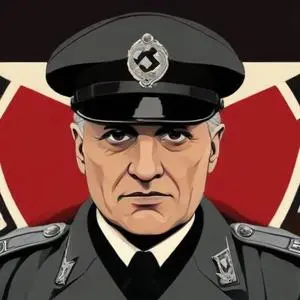
Klaus Barbie: The Notorious "Butcher of Lyon"
Klaus Barbie, a German SS officer, earned the moniker "The Butcher of Lyon" for his brutal reign of terror as the head of the Gestapo in Lyon, France during World War II. His name became synonymous with torture, cruelty, and oppression as he ruthlessly hunted down and killed thousands of Jews, members of the French Resistance, and innocent civilians.
The Early Years
Born on October 25, 1913, in Godesberg, Germany (now part of Bonn), Klaus Barbie grew up in a dysfunctional family. His father, Nikolaus, was a wounded veteran of World War I who harbored a deep hatred for the French, which would later influence Klaus's own ideology. Klaus's childhood was marked by abuse and neglect, and he was relieved to be sent away to boarding school in Trier at the age of 10.
Barbie's career in the SS began in 1935, and he quickly rose through the ranks due to his ruthlessness and unwavering dedication to the Nazi regime. In 1942, he was appointed head of the Gestapo in Lyon, where he earned his notorious reputation for his brutal methods of interrogation and torture. His victims included Jews, members of the French Resistance, and even innocent civilians who were suspected of aiding the resistance.
After the war, Barbie escaped prosecution with the help of United States intelligence services, who employed him for his anticommunist efforts. He fled to Bolivia, where he advised the dictatorial regime on how to repress opposition through torture. In 1972, his whereabouts were discovered, and he was recruited by the West German Intelligence Service. Barbie is suspected of having played a role in the 1980 Bolivian coup d'état orchestrated by Luis García Meza.
In 1983, Barbie's protection from the Bolivian government was revoked, and he was arrested and extradited to France. He was convicted of crimes against humanity and sentenced to life in prison. Although he had been sentenced to death in absentia twice earlier, capital punishment had been abolished in France in 1981.
Klaus Barbie died of cancer in prison on September 25, 1991, at the age of 77. His legacy is one of violence, terror, and oppression, and his name remains synonymous with the atrocities committed during World War II. Despite his heinous crimes, Barbie's life serves as a reminder of the dangers of unchecked power and the importance of holding accountable those who commit atrocities against humanity.
- 25 October 1913: Klaus Barbie was born in Godesberg, Germany (now part of Bonn)
- 1942: Appointed head of the Gestapo in Lyon, France
- 1947: Sentenced to death in absentia for the first time
- 1954: Sentenced to death in absentia for the second time
- 1972: Discovered living in Bolivia
- 1980: Suspected of involvement in the Bolivian coup d'état
- 1983: Arrested and extradited to France
- 1983: Convicted of crimes against humanity and sentenced to life in prison
- 25 September 1991: Died of cancer in prison at the age of 77
FAQ
What is Klaus Barbies most notorious role in World War II?
Barbie was a Gestapo officer known as the Butcher of Lyon for his brutal treatment of French Resistance fighters and civilians during the war.
What was Klaus Barbies early life and education like?
Barbie was born in 1913 in Bad Godesberg, Germany. He joined the Nazi Party in 1935 and began his career in the Gestapo in 1940.
How did Klaus Barbies war crimes come to light?
Barbies war crimes were investigated and documented by French authorities after the war, leading to his eventual extradition and trial in 1987.
What was Klaus Barbies fate after the war?
Barbie fled to South America after the war, where he lived in hiding until his arrest in 1983. He was extradited to France and sentenced to life imprisonment in 1987.
What is Klaus Barbies legacy in the history of World War II?
Barbie is remembered as one of the most notorious war criminals of World War II, whose brutal actions and ideology were responsible for the suffering and death of countless innocent people.