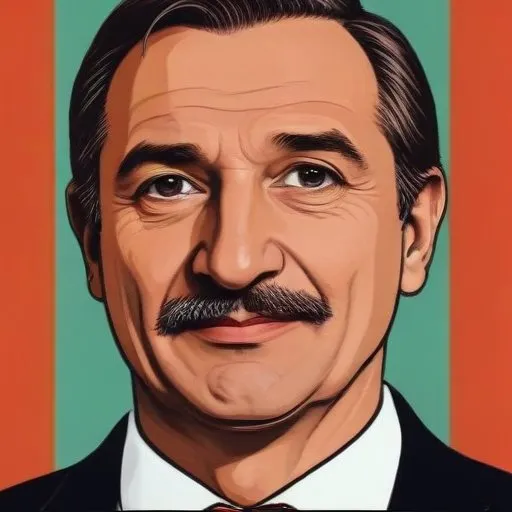
Kroly Grsz: The Hungarian Communist Leader and Politician
A Career Marked by Rise to Power and Controversy
Kroly Grsz, a Hungarian communist politician, is known for serving as the General Secretary of the Hungarian Socialist Workers' Party from 1988 to 1989. During his tenure, he played a significant role in shaping Hungary's political landscape, leaving a lasting impact on the country's history.
Early Life and Career
Born on August 1, 1930, in Miskolc, Hungary, Grsz joined the Hungarian Communist Party at the tender age of 14. As the Communists took full power in 1949, Grsz rose through the party ranks, becoming an influential leader in his native region. He held various positions, including the head of the Department of Agitation and Propaganda in the Borsod-Abaj-Zemplén County branch of the Hungarian Working People's Party (MDP) from 1954.
Rise to Prominence
Grzs's career was marked by a series of strategic appointments. In 1974, he was appointed head of the Department of Agitation and Propaganda of the governing Hungarian Socialist Workers' Party. Five years later, in 1979, he was elected first secretary of the party committee of his home county. In 1984, he returned to national prominence as the head of the party committee in Budapest, eventually becoming a member of the Politburo in 1985.
Prime Minister and General Secretary
In 1987, Grsz was appointed Prime Minister of Hungary, succeeding
György Lázár. His appointment was seen as a breath of fresh air, bringing in a new era of leadership to the country. The following year, in May 1988, Grsz was elected General Secretary of the Hungarian Socialist Workers' Party, becoming the most powerful person in the country.
Legacy and Controversies
Grzs's tenure as General Secretary was marked by controversy. His leadership style was seen as authoritarian, and he was criticized for suppressing dissent and limiting freedom of speech. Despite this, he is also credited with introducing reforms that paved the way for Hungary's transition to democracy. Grsz's legacy remains complex, with some viewing him as a champion of reform, while others see him as a symbol of communist oppression.
Personal Life and Milestones
Grzs passed away on January 7, 1996, leaving behind a complex legacy. Throughout his life, he remained committed to the ideals of communism, albeit with a more pragmatic approach. His rise to power was marked by strategic alliances and clever maneuvering, earning him both admiration and criticism from his contemporaries.
Impact on Modern Society
Grzs's impact on modern society is multifaceted. As a key player in Hungary's transition to democracy, he played a significant role in shaping the country's political landscape. His legacy continues to influence Hungarian politics, with his reforms laying the groundwork for the country's eventual integration into the European Union.
Quotations and Memorable Sayings
One of Grsz's most famous quotes is: "We must adapt to the changing circumstances, but our goal remains the same: to build socialism."
Historical Context and Legacy
Grzs's life and career are inseparable from the tumultuous history of Hungary during the 20th century. His rise to power and subsequent reforms are a testament to the complex and often contradictory nature of communist ideology. As a key figure in Hungarian history, Grsz's legacy continues to be debated and reevaluated by historians and scholars.
Comparative Analysis with Contemporaries
Grzs's career is often compared to that of other prominent communist leaders, including
Mikhail Gorbachev and Nicolae Ceaușescu. While sharing similarities with these leaders, Grsz's unique approach to reform and his willingness to adapt to changing circumstances set him apart.
Awards and Honors
Grzs received various awards and honors during his lifetime, including the Hungarian Order of the Flag and the Order of the Red Banner.
Trivia and Fun Facts
- Grzs was known for his love of literature and was an avid reader of Hungarian poetry.
- He was fluent in multiple languages, including Russian and English.
- Grzs was a skilled orator, often delivering passionate speeches that resonated with the Hungarian people.
Impact on Pop Culture
Grzs's life and career have inspired numerous works of literature, film, and art. His complex and often contradictory nature has made him a fascinating subject for exploration in popular culture.
Charitable Work and Social Contributions
Throughout his life, Grsz was committed to social welfare and charitable work. He supported various initiatives aimed at improving living conditions for Hungarians, particularly in rural areas.
Inspirational Stories and Motivations
Grzs's rise to power, despite humble beginnings, is a testament to his determination and perseverance. His commitment to communist ideals, albeit with a pragmatic approach, serves as a inspiration to those who believe in the power of ideology to shape society.
Visual Timeline and Milestones

Predictions and Speculations
As historians continue to reevaluate Grzs's legacy, one thing is certain: his impact on Hungarian history and politics will be felt for generations to come.