


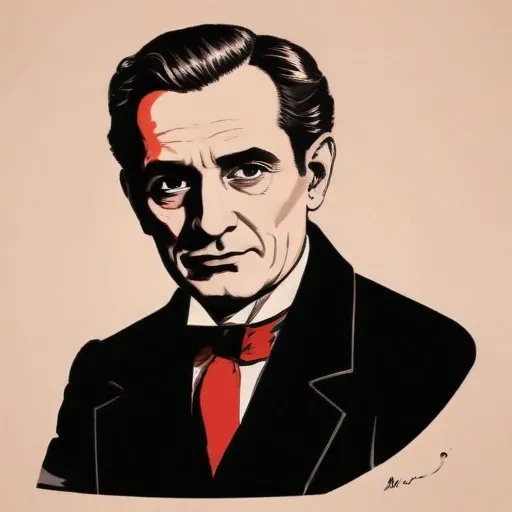
Austrian author and educator who wrote about his experiences as a conscientious objector during World War II and was imprisoned in concentration camps, later sharing his story to promote peace and tolerance.
Meet Leopold Engleitner, an Austrian conscientious objector and concentration camp survivor who spoke publicly about his experiences, inspiring countless individuals with his unwavering dedication to his beliefs. As one of Jehovah's Witnesses, Engleitner's remarkable story is a testament to the power of standing up for what is right, even in the face of unimaginable adversity.
Born on July 23, 1905, in Aigen-Voglhub, Austria, Engleitner grew up in the imperial city of Bad Ischl. He developed a deep connection with his faith, intensively studying the Bible in the 1930s and getting baptized as a Jehovah's Witness in 1932.
Engleitner's commitment to his beliefs led to religious intolerance and persecution from his neighborhood and the Austrian authorities. He faced multiple arrests and imprisonments, including:
When Adolf Hitler occupied Austria in 1938, Engleitner's conscientious objection to serving in the army brought him into direct conflict with the Nazis.
On April 4, 1939, Engleitner was arrested by the Gestapo and detained in Linz and Wels. From October 9, 1939, to July 15, 1943, he was held in the concentration camps Buchenwald, Niederhagen, and Ravensbrück. Despite the brutal and inhumane treatment, Engleitner refused to renounce his beliefs, inspiring his fellow prisoners with his unwavering resolve.
After his release from the concentration camps, Engleitner continued to share his story, inspiring generations with his courage and conviction. He became the subject of the documentary "Unbroken Will," a testament to his unwavering dedication to his beliefs.
As the world's oldest known male Buchenwald, Niederhagen, and Ravensbrück concentration camp survivor, Engleitner's legacy extends far beyond his own story. He served as a beacon of hope for the power of standing up for what is right, even in the face of unimaginable adversity.
"My will to stand for fair principles and to refuse military service was unbroken."
Leopold Engleitner's remarkable story serves as a powerful reminder of the importance of conviction, courage, and standing up for what is right. His unwavering dedication to his beliefs continues to inspire individuals around the world, making him a true hero of our time.
Born in 1908
A Ukrainian-Austrian Nazi hunter and author who dedicated his life to tracking down and bringing to justice former Nazis, playing a crucial role in the capture of Adolf Eichmann. He also founded the Jewish Documentation Center in Vienna to gather evidence for Nazi war crimes.
Born in 1918
An Austrian colonel and politician who served as the 9th President of Austria, known for his controversial past as a Nazi officer during World War II. He was also the Secretary-General of the United Nations from 1972 to 1981.
Born in 1911
The 22nd Chancellor of Austria, a prominent figure in post-WWII Austrian politics, known for his social democratic policies and efforts to maintain Austria's neutrality during the Cold War.
Born in 1875
Austrian cardinal who served as Archbishop of Vienna and played a controversial role in the Anschluss, collaborating with the Nazi regime. He later became a vocal critic of Nazism.
Born in 1879
A German nobleman who served as Chancellor of Germany in 1932, known for his role in appointing Adolf Hitler as Chancellor, paving the way for the Nazi regime.
Born in 1870
Austrian lawyer and politician who served as the 4th President of Austria, known for his role in establishing the country's post-WWII government and drafting its constitution. He played a key role in Austria's transition to democracy.
