


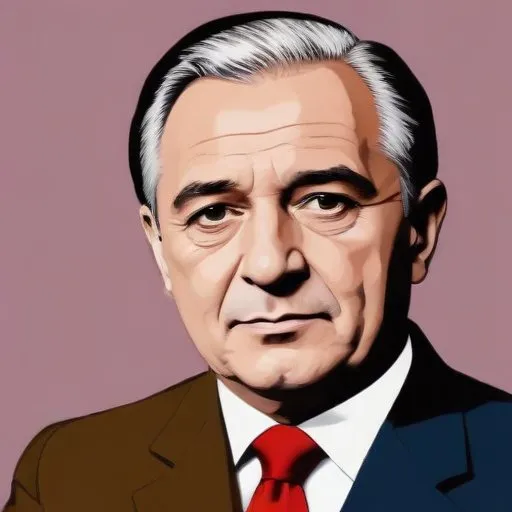
The 22nd Chancellor of Austria, a prominent figure in post-WWII Austrian politics, known for his social democratic policies and efforts to maintain Austria's neutrality during the Cold War.
Bruno Kreisky is renowned for his remarkable 13-year tenure as the Chancellor of Austria, from 1970 to 1983, making him the oldest Chancellor in post-World War II Austria at the age of 72. During his term, he left an indelible mark on Austrian politics, earning him a place as one of the most significant figures in Western European social democracy.
Born on January 22, 1911, in Margareten, Vienna, to a non-observant Jewish family, Kreisky was raised with an understanding of the importance of social justice. His parents, Max Markus Kreisky and Irene Kreisky, instilled in him a strong sense of morality, which would later influence his political philosophy.
Kreisky's commitment to social democracy was unwavering, even in the face of adversity. In 1934, when the Socialist Party was banned by the Dollfuss dictatorship, he became active in underground political work, risking imprisonment and persecution. His resolve eventually led to his arrest in 1935 and conviction for high treason. However, he was released in 1936 and continued to fight for his ideals.
In 1938, Kreisky escaped Nazi persecution by emigrating to Sweden, where he would later become an influential figure in the Socialist International. His experiences during this period solidified his dedication to promoting peace, social justice, and human rights.
As Chancellor, Kreisky implemented a range of reforms that transformed Austrian society. His government introduced progressive policies on education, healthcare, and labor rights, significantly improving the lives of Austrian citizens. He also played a crucial role in shaping Austria's foreign policy, fostering close relationships with other European countries and promoting international cooperation.
Bruno Kreisky's legacy extends beyond his impressive political career. He remains an iconic figure in Austrian politics, remembered for his unwavering commitment to social democracy and human rights. His influence can be seen in the many political leaders who have followed in his footsteps, including Willy Brandt of West Germany and Olof Palme of Sweden.
"A statesman is not a dealer in politics, but a servant of the people." - Bruno Kreisky
Kreisky's remarkable life and achievements serve as a testament to the power of dedication, perseverance, and vision. As a champion of social democracy, he continues to inspire generations of politicians, activists, and citizens around the world.
Bruno Kreisky passed away on July 29, 1990, leaving behind a legacy that continues to shape Austrian politics and inspire international cooperation. His life's work serves as a beacon of hope, reminding us of the importance of standing up for our values and fighting for a better world.
Born in 1918
An Austrian colonel and politician who served as the 9th President of Austria, known for his controversial past as a Nazi officer during World War II. He was also the Secretary-General of the United Nations from 1972 to 1981.
97 Years Old
The 19th Chancellor of Austria, who served from 1983 to 1986, is most known for his social democratic policies and efforts to reform the Austrian economy. He played a key role in shaping the country's post-war politics.
81 Years Old
The 26th Chancellor of Austria, a lawyer and politician, served as the country's leader from 2000 to 2007, known for his conservative policies and European integration efforts. He played a key role in shaping Austria's economy and foreign policy during his tenure.
66 Years Old
The 28th Chancellor of Austria, serving from 2008 to 2016, is most known for his strong stance on European Union policies and his efforts to reform Austria's economy. He played a key role in shaping the country's response to the European sovereign-debt crisis.
88 Years Old
The 11th President of Austria, a renowned academic and politician, served as the country's head of state from 2004 to 2016, known for promoting unity and stability. He's also a respected historian and law expert.
Born in 1870
Austrian lawyer and politician who served as the 4th President of Austria, known for his role in establishing the country's post-WWII government and drafting its constitution. He played a key role in Austria's transition to democracy.
