


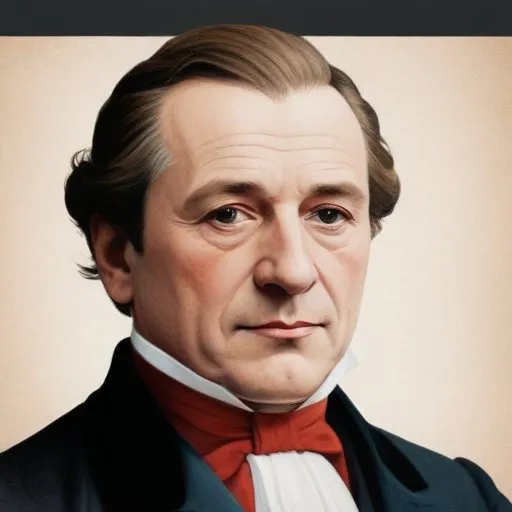
Austrian composer and musicologist who edited and published many unknown works of Anton Bruckner, significantly contributing to the composer's recognition. His research and publications also shed light on the lives and works of other notable Austrian composers.
Leopold Nowak, an Austrian musicologist, is renowned for editing the works of Anton Bruckner, a prominent Austrian composer, for the International Bruckner Society. His meticulous approach to editing Bruckner's music, particularly reconstructing the original form of some of his works, has earned him a reputation as a leading authority in the field.
Born on August 17, 1904, in Vienna, Austria, Nowak's love for music was nurtured from a young age. He pursued his passion by studying piano and organ at the Imperial Academy of Music in Vienna. Later, he delved into musicology, studying under the guidance of Guido Adler and Robert Lach at the Vienna University, where he would eventually teach from 1932 to 1973.
Nowak's approach to editing Bruckner's music was revolutionary, as he employed a more scientific approach than his predecessor, Robert Haas. This involved producing separate editions for different versions of Bruckner's works, rather than combining passages. His essays on theoretical aspects of music by Bruckner and other composers, such as Beethoven, further solidified his expertise.
His dedication to preserving documents about Bruckner led to him succeeding Robert Haas as music director of the music collection of the Austrian National Library in 1946.
Nowak's impact on musicology extended beyond his work on Bruckner. He also worked on a new edition of Wolfgang Amadeus Mozart's famously incomplete Requiem, identifying Mozart's own handwriting from that of other contributors. This achievement earned him the prestigious Goldene Mozart Medaille in 1985.
In addition, Nowak delved into Gregorian chant, the music of Heinrich Isaac, Joseph Haydn, Austrian church and folk music, and various Austrian composers from the 1480s onwards.
Nowak's work on Bruckner's music, particularly the Finale of Bruckner's Ninth Symphony, was continued by William Carragan. His contributions to musicology have left an indelible mark, shaping the way we understand and appreciate classical music today.
In recognition of his contributions, Nowak was awarded the Goldene Mozart Medaille in 1985, cementing his place among the most respected musicologists of his time.
Leopold Nowak's life was a testament to his passion for music and musicology. His commitment to preserving and promoting the works of renowned composers has inspired generations of music enthusiasts and scholars. As we reflect on his life and achievements, we are reminded of the power of dedication and the importance of preserving our cultural heritage.
Born in 1824
A renowned composer of symphonies and sacred music, known for his complex harmonies and innovative orchestration. His works are considered a bridge between Romanticism and modern classical music.
Born in 1833
A renowned pianist and composer, he crafted complex, expressive works that blended traditional and innovative techniques, leaving an indelible mark on classical music.
Born in 1811
A virtuosic pianist and composer who revolutionized classical music with his technically demanding and emotionally expressive works, blending Hungarian folk influences with Romantic-era drama.
Born in 1813
A revolutionary composer who transformed opera with his epic, mythological works, creating a new era of musical storytelling. His iconic operas, such as "Der Ring des Nibelungen," continue to captivate audiences worldwide.
Born in 1860
A visionary composer and conductor who expanded symphonic music's emotional depth and complexity, creating works of profound beauty and intensity.
Born in 1864
A renowned composer and conductor of the late Romantic era, known for his tone poems and operas that showcased his mastery of orchestration and expressive storytelling.
Born in 1860
A Slovene-Austrian composer who expanded the art of songwriting by setting poetic lyrics to music, creating a new level of emotional intensity and depth. His innovative compositions continue to influence classical music today.
Born in 1874
A pioneer of atonality and 12-tone serialism, revolutionizing classical music with innovative compositions that pushed boundaries of harmony and melody.
