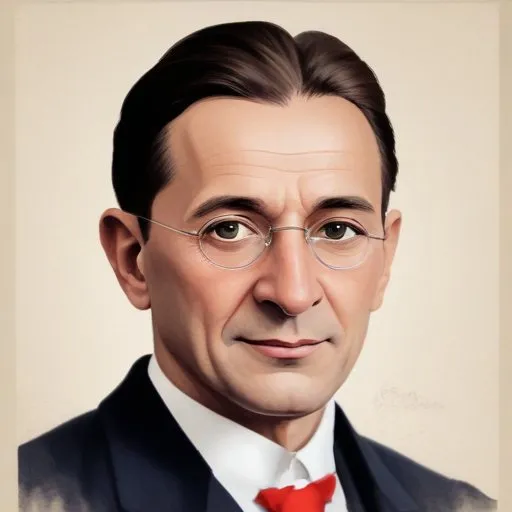
Leopold Ružička: A Pioneer in the Realm of Polymethylenes and Terpenes
The Nobel Laureate Behind the Synthesis of Male Sex Hormones
Leopold Ružička, a Croatian-Swiss scientist, made history by becoming the joint winner of the 1939 Nobel Prize in Chemistry for his groundbreaking work on polymethylenes and higher terpenes. This achievement marked a significant milestone, as he successfully achieved the first chemical synthesis of male sex hormones.
Early Life and Education
Ružička was born on September 13, 1887, in Vukovar, which was then part of the Austro-Hungarian Empire (present-day Croatia). His family, comprising craftsmen and farmers, had a mix of Croat, Czech, and Austrian roots. The loss of his father at a tender age of four led his mother to move him and his younger brother to Osijek, where Ružička attended the classics program at the secondary school.
Initially, Ružička wanted to become a priest, but he later shifted his focus to technical disciplines, with chemistry being his preferred choice. He hoped to secure a position at the newly opened sugar refinery in Osijek. However, the trying economic and political conditions led him to pursue his higher education at the High Technical School in Karlsruhe, Germany.
Academic Pursuits and Collaborations
Ružička excelled in his studies, particularly in organic chemistry, which he believed would be crucial for his future endeavors. Despite facing opposition from his physical chemistry professor,
Fritz Haber (a Nobel laureate in 1918), Ružička achieved a summa cum laude degree. During his time at Karlsruhe, he formed an excellent partnership with
Hermann Staudinger, a Nobel laureate in 1953. This collaboration led to Ružička obtaining his doctoral degree in 1910, after which he moved to Zurich as Staudinger's assistant.
Research and Career Highlights
Ružička's research focused on the realm of polymethylenes and terpenes, which led to his Nobel Prize-winning work. He made significant contributions to the field of organic chemistry, and his discoveries opened up new avenues for the synthesis of complex molecules. Throughout his career, Ružička received numerous honors and awards, including eight doctorates honoris causa in science, medicine, and law, as well as twenty-four honorary memberships in various scientific societies.
Legacy and Impact
Ružička's pioneering work had a profound impact on the field of chemistry, paving the way for further research and breakthroughs. His legacy extends beyond the scientific community, as his discoveries have influenced the development of various industries, including pharmaceuticals and perfume manufacturing. Today, Ružička is remembered as a trailblazer who expanded our understanding of the intricate world of polymethylenes and terpenes.
Personal Milestones and Key Life Events
- 1887: Born on September 13th in Vukovar, Austro-Hungarian Empire (present-day Croatia)
- 1910: Obtained doctoral degree from the High Technical School in Karlsruhe, Germany
- 1910: Became Hermann Staudinger's assistant in Zurich
- 1939: Jointly awarded the Nobel Prize in Chemistry with Adolf Butenandt
- 1976: Passed away on September 26th
Philosophical Contributions and Beliefs
Ružička's work embodies the spirit of scientific inquiry, emphasizing the importance of perseverance and collaboration. His contributions to the field of chemistry serve as a testament to the power of human curiosity and the rewards that come from pushing the boundaries of knowledge.
FAQ
What was Leopold Ružičkas Nobel Prize-winning research on?
Leopold Ružičkas Nobel Prize-winning research was on the chemistry of sesquiterpenes and dieterpenes, which are a type of organic compound found in plants.
What was Leopold Ružičkas contribution to the field of biochemistry?
Leopold Ružičkas contribution to the field of biochemistry was his work on the structure and synthesis of natural products, including steroids and terpenes.
What was Leopold Ružičkas role in the development of modern organic chemistry?
Leopold Ružička played a crucial role in the development of modern organic chemistry. He was one of the first scientists to synthesize complex natural products, including steroids and terpenes.
How did Leopold Ružičkas work impact the field of medicine?
Leopold Ružičkas work had a significant impact on the field of medicine. His research on steroids led to the development of new medicines, including cortisone and other hormone replacements.
What honors did Leopold Ružička receive for his contributions to chemistry?
Leopold Ružička received many honors for his contributions to chemistry, including the Nobel Prize in Chemistry in 1939.