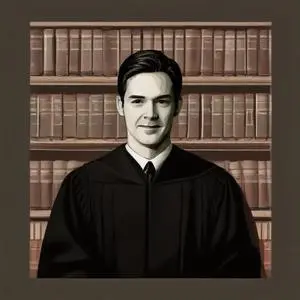
Lewis F. Powell, Jr.: The Unwavering Defender of Justice
A Pillar of American Jurisprudence
Lewis F. Powell, Jr. is perhaps best known for his pivotal role as an Associate Justice of the Supreme Court of the United States from 1972 to 1987. During his tenure, he earned a reputation as a steadfast defender of individual rights and liberties, leaving an indelible mark on American jurisprudence.
Early Life and Education
Born on September 19, 1907, in Suffolk, Virginia, Powell's upbringing was marked by a strong emphasis on education and public service. He graduated from Washington and Lee University in 1929 and later earned his law degree from Harvard Law School in 1932. Powell's academic achievements set the stage for a successful career in law and public service.
Rise to Prominence
Powell's distinguished legal career spanned over four decades, during which he served as a judge, lawyer, and civic leader. Notably, he was a partner in the prominent law firm of Hunton & Williams, where he specialized in corporate and securities law. His commitment to public service was evident in his roles as Chairman of the American Bar Association's Standing Committee on the Judiciary (1964-1967) and as a member of the Virginia Board of Education (1961-1969).
Supreme Court Tenure
Powell's appointment to the Supreme Court by President
Richard Nixon in 1971 marked a significant milestone in his career. During his 16-year tenure, he authored several landmark opinions, including
First National Bank of Boston v. Bellotti (1978) and
University of California Regents v. Bakke (1978). These decisions upheld the rights of corporations to engage in political speech and struck down racial quotas in university admissions, respectively.
Philosophical Contributions and Beliefs
Powell's judicial philosophy was characterized by a commitment to judicial restraint, individual liberties, and the limitations of government power. He believed that judges should interpret the Constitution in line with its original intent, rather than imposing their own policy preferences. This approach earned him the respect of his conservative colleagues, while also influencing the Court's liberal justices.
Influence on Modern Society
Powell's legacy extends far beyond the courtroom. His emphasis on individual rights and limited government has shaped American political discourse and informed policy decisions. His opinions on corporate speech and affirmative action continue to resonate in contemporary debates about campaign finance reform and diversity initiatives.
Personal Milestones and Key Life Events
Powell's personal life was marked by a strong sense of community and public service. He was an active member of the Episcopal Church and served on the boards of several educational institutions, including Washington and Lee University and the Virginia Episcopal School.
Quotes and Memorable Sayings
Powell's eloquence and wit are reflected in his judicial opinions and public statements. One of his most notable quotes is: "The idea of the Court as a moral and cultural leader is a very un-American idea." This sentiment captures his belief in the Court's limited role in shaping society and underscores his commitment to judicial restraint.
Historical Context and Legacy
Powell's tenure on the Supreme Court coincided with a period of significant social and political upheaval in the United States. His judicial philosophy and opinions reflect a commitment to individual rights and limited government, which continues to influence American jurisprudence today. As a champion of judicial restraint, Powell has left an enduring legacy that shapes the Court's approach to constitutional interpretation.
Career Highlights and Major Works
Powell's remarkable career is marked by several notable achievements and opinions, including:
- First National Bank of Boston v. Bellotti (1978)
- University of California Regents v. Bakke (1978)
- Millage v. United States (1972)
- Connell v. Dummett (1976)
Awards and Honors
Powell received numerous accolades for his contributions to law and public service, including:
- The American Bar Association's Gold Medal (1985)
- The Virginia Bar Association's Lifetime Achievement Award (1986)
- The honorary degree of Doctor of Laws from Washington and Lee University (1973)
Trivia and Fun Facts
Powell was an avid outdoorsman and enjoyed hiking and fishing in his free time. He was also a loyal alumnus of Washington and Lee University, where he served as a trustee and later received an honorary degree.
By examining Powell's remarkable life and career, we are reminded of the significance of individual rights, judicial restraint, and public service. His enduring legacy continues to shape American jurisprudence, inspiring future generations of legal scholars, judges, and citizens.