


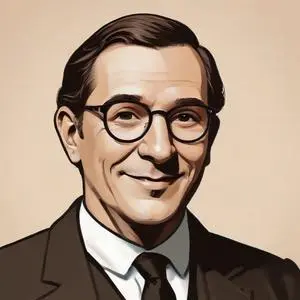
A pioneer in anthropology, he's credited with developing the concept of kinship systems and writing influential works on Native American cultures. His research laid the groundwork for modern anthropology.
Lewis Henry Morgan is renowned for his groundbreaking work on kinship and social structure, as well as his theories of social evolution and ethnography of the Iroquois. As a pioneering American anthropologist and social theorist, Morgan's contributions have left an indelible mark on the fields of anthropology, sociology, and beyond.
Born on November 21, 1818, in Aurora, New York, Morgan was descended from a line of Welsh pioneers who settled in the American colonies in the 17th century. He received his education at the Cayuga Academy and later attended Yale College, where he graduated in 1840. Morgan's early interests lay in law, and he went on to practice as a railroad lawyer.
Morgan's fascination with the social organization of Native American tribes, particularly the Iroquois, led him to conduct extensive research and fieldwork. His seminal work, League of the Iroquois (1851), presented a comprehensive ethnography of the Iroquois people, shedding light on their social structure, kinship systems, and cultural practices. This work not only established Morgan as a respected authority in the field but also paved the way for future generations of anthropologists.
Morgan's most influential contribution lies in his theory of social evolution, which posits that human societies progress through a series of stages, from savagery to civilization. In his book Ancient Society (1877), Morgan outlined his vision of social evolution, arguing that the earliest human domestic institution was the matrilineal clan, rather than the patriarchal family. This theory challenged prevailing views of the time and had a significant impact on the development of social theory.
Morgan's work has had far-reaching implications for our understanding of social structures, cultural development, and the complexities of human societies. His ideas have influenced prominent thinkers such as Karl Marx, Friedrich Engels, Charles Darwin, and Sigmund Freud, solidifying his position as a pioneer in the realm of social theory.
Morgan's work reflects his commitment to understanding the complexities of human societies and the driving forces behind social change. He believed that technology played a crucial role in shaping cultural development and that the study of material culture was essential for grasping the dynamics of social evolution.
Morgan was elected as a member of the National Academy of Sciences and served as president of the American Association for the Advancement of Science in 1880. His contributions to the field of anthropology earned him recognition as one of the most influential thinkers of his time.
Lewis H. Morgan's groundbreaking work has left an enduring legacy in the fields of anthropology, sociology, and social theory. His ideas continue to inspire new generations of scholars, ensuring that his contributions remain a vital part of our understanding of human societies and cultural development.
Morgan's remarkable life and work serve as a testament to the power of human curiosity, dedication, and intellectual rigor. As we continue to navigate the complexities of our own social structures and cultural practices, Morgan's pioneering spirit and innovative ideas remain an essential guide for understanding the intricate tapestry of human societies.
Born in 1793
Pioneering explorer and scholar who mapped the American wilderness, studied Native American cultures, and coined the term "Oklahoma" to describe the region. He's credited with discovering the source of the Mississippi River.
Born in 1805
A French diplomat and engineer who developed the Suez Canal, a crucial waterway connecting the Mediterranean Sea to the Red Sea, revolutionizing global trade and commerce.
Born in 1763
A German-American mogul who built a fur trading empire and invested in real estate, amassing a vast fortune, which he later used to support the arts and education.
Born in 1845
A prominent lawyer and politician who served as Secretary of State, earning a Nobel Peace Prize for his diplomatic efforts. He's most known for his work in international arbitration and conflict resolution.
Born in 1858
A pioneering leader who championed progressive reforms, trust-busting, and conservation, earning a Nobel Peace Prize for mediating the Russo-Japanese War. He's also famous for his rugged outdoorsmanship and "big stick" diplomacy.
Born in 1838
A pioneering conservationist and writer who advocated for the preservation of America's wilderness and national parks, inspiring generations to appreciate and protect the natural world.
