


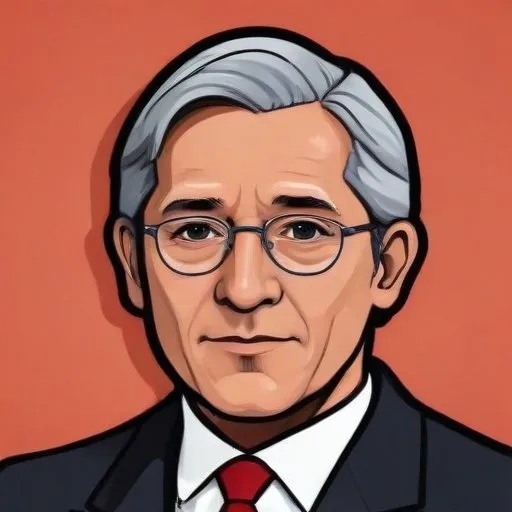
A Canadian lawyer and politician who served as Premier of Quebec, known for his progressive reforms and efforts to promote French-Canadian autonomy. He played a key role in shaping Quebec's identity and politics during the early 20th century.
Lomer Gouin was a Canadian politician who left an indelible mark on the country's history, serving as the 13th premier of Quebec, a Cabinet minister in the federal government of Canada, and the 15th lieutenant governor of Quebec.
Throughout his illustrious career, Gouin demonstrated unwavering dedication to public service, earning him a reputation as a respected leader and statesman.
Born on March 19, 1861, in Grondines, Quebec, Gouin was the son of Dr. Joseph-Néré Gouin, a doctor, and Sraphine Fugère.
On May 24, 1888, he married Éliza Mercier, daughter of Honoré Mercier, and they had a son, Paul Gouin, who would later become the leader of the Action libérale nationale party.
Gouin's entry into politics began in 1897 when he was first elected to the Legislative Assembly of Quebec in Montréal division no. 2.
He was reelected in 1900 and 1904, and in the 1908 election, he ran in both Portneuf and Montréal no. 2, emerging victorious in the former and defeated in the latter.
In 1912, he won election in both Portneuf and Saint-Jean, ultimately resigning the Saint-Jean seat.
Gouin's political prowess was evident in his subsequent reelections in Portneuf in 1916 and 1919.
In 1920, Gouin was named to the Legislative Council of Quebec but resigned in 1921 without taking his seat, instead pursuing federal politics.
In the federal election of 1921, he was elected as a Liberal member of Parliament and served as Justice Minister under Prime Minister William Lyon Mackenzie King until 1924.
In 1929, Gouin was appointed Lieutenant Governor of Quebec, a position he held for only two months until his passing on March 28, 1929, in Quebec City.
Lomer Gouin's contributions to Canadian politics and society are still celebrated today, with numerous sites and landmarks named in his honor:
Gouin's legacy serves as a testament to his dedication to public service and his profound impact on Canadian history.
He is interred in the Notre-Dame-des-Neiges Cemetery in Montreal, a fitting tribute to a life devoted to serving the people of Canada.
Born in 1841
The 7th Prime Minister of Canada, a champion of national unity and French-English relations, who navigated the country through significant industrial and economic growth. He's also known for his role in shaping Canada's autonomy from Britain.
Born in 1867
The 14th Premier of Quebec, a Canadian lawyer and politician, led the province from 1920 to 1936, implementing significant reforms and shaping Quebec's identity. He's most known for his progressive policies and strong leadership during a tumultuous period in Quebec's history.
Born in 1868
A French-Canadian publisher and politician who advocated for Canadian autonomy and opposed British imperialism, known for his influential writings and speeches that shaped Canadian nationalism.
Born in 1912
A Canadian lawyer and politician who served as the 11th Premier of Quebec, known for modernizing the province's economy and education system. He led the Quiet Revolution, a period of significant social and political change in Quebec.
Born in 1915
The 20th Premier of Quebec, a Canadian lawyer and politician, is most known for his role in shaping Quebec's politics and economy during the 1960s. He played a key part in the province's Quiet Revolution, modernizing its society and government.
Born in 1890
The 16th Premier of Quebec was a dominant figure in Quebec politics from the 1930s to the 1950s, known for his authoritarian rule and promotion of Quebec nationalism. He implemented various social and economic reforms, shaping the province's identity and development.
Born in 1907
The 17th Premier of Quebec, a Canadian lawyer and politician, served from 1936 to 1939 and implemented significant reforms, including the creation of the Quebec Pension Plan. He played a crucial role in shaping Quebec's politics and economy.
