


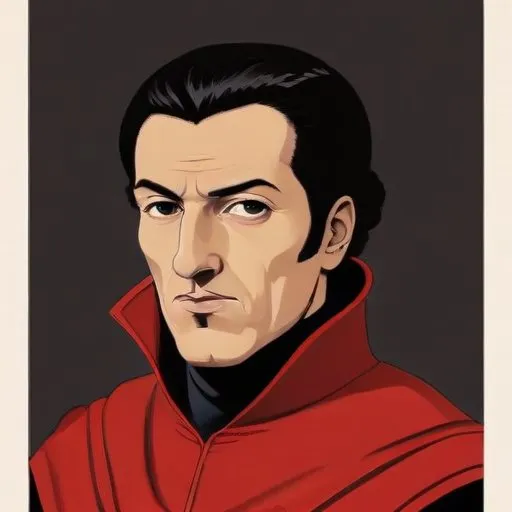
A Renaissance writer and conspirator who penned a famous treatise on tyranny and orchestrated the murder of his cousin, a powerful duke.
Lorenzino de Medici, also known as Lorenzaccio, was an Italian politician, writer, and dramatist who etched his name in the annals of history as the mastermind behind the assassination of his cousin, Alessandro de Medici, Duke of Florence in 1537. This audacious act catapulted Lorenzino to notoriety, earning him a reputation as a ruthless and cunning figure in the treacherous world of Renaissance politics.
Born on March 22, 1514, Lorenzino was the son of Pierfrancesco de Medici and Maria Soderini. Following his father's untimely death in 1525, Lorenzino was raised by his mother at the Villa del Trebbio, where he was surrounded by his younger brother Giuliano and two sisters, Laudomia and Maddalena.
In 1526, Lorenzino's mother relocated to Venice with his brother and cousin, the future Cosimo I de Medici, to escape the approaching Landsknechts. This decision proved providential, as it spared the family from the devastating Sack of Rome in 1527, which severely weakened the Medici's grip on power.
In 1530, Lorenzino returned to Florence, where he forged a complicated bond with his cousin Alessandro, who had become the ruler of Florence. The duo's partnership was marred by a series of wild escapades, but beneath the surface lay a web of deceit and power struggles.
The simmering tension between Lorenzino and Alessandro finally boiled over in 1537, when Lorenzino orchestrated the assassination of his cousin. The motives behind this act remain shrouded in mystery, with speculation ranging from a desire for power to a quest for revenge against Alessandro's perceived injustices.
In the aftermath of the assassination, Lorenzino fled to Bologna, where he continued to write and engage in politics. However, his actions did not go unpunished for long. In 1548, Alessandro's supporters exacted their revenge, murdering Lorenzino in retaliation for his role in the duke's death.
Lorenzino de Medici's life serves as a testament to the treacherous nature of Renaissance politics, where alliances were forged and broken with reckless abandon. Despite his tumultuous existence, Lorenzino left an indelible mark on Florence's history, cementing his place as one of the most intriguing and complex figures of his time.
Ultimately, Lorenzino de Medici's legacy serves as a poignant reminder that even the most seemingly powerful figures can fall prey to the whims of fate and the cruelty of their own kin.
Born in 1389
Ruler of Florence who brought stability and prosperity to the city, patronizing artists and humanists, and establishing the Medici dynasty. He was a shrewd politician and banker who laid the groundwork for the Renaissance.
Born in 1449
Renaissance leader who ruled Florence and sponsored artists like Michelangelo and Botticelli, shaping the city's cultural and artistic heritage.
Born in 1519
The Italian-French queen who married into the French monarchy and wielded significant power behind the scenes, known for her cunning politics and lavish court festivities. She sponsored the arts and architecture, leaving a lasting legacy on French culture.
Born in 1536
Led the Catholic Church during a tumultuous period, issuing papal bulls and playing a key role in the Counter-Reformation. He's also famous for his coffee habit, being the first Pope to try and approve of it.
Born in 1535
The second shortest-reigning pope in history, serving for just 27 days in 1605, he is most known for his brief but tumultuous papacy marked by power struggles and controversy.
Born in 1768
The last Holy Roman Emperor, who ruled from 1792 to 1806, oversaw the dissolution of the Holy Roman Empire and was a key figure in European politics during the Napoleonic Wars.
Born in 1500
Ruling over a vast empire from 1519 to 1556, he was a powerful and influential leader who played a crucial role in shaping European politics and religion. He is most known for his efforts to unify Christian Europe and defend it against the Ottoman Empire.
Born in 1503
The first Habsburg to rule the Holy Roman Empire, he unified Austria and introduced the concept of a hereditary monarchy, shaping European politics for centuries to come.
