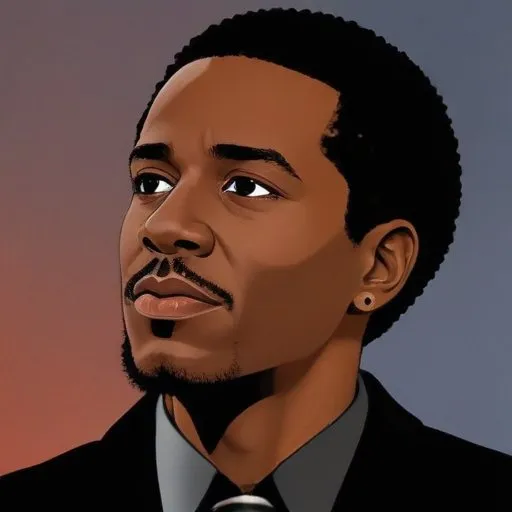
Lorenzo Komboa Ervin: The Anarchist Activist Who Hijacked a Plane for Freedom
A Life of Rebellion and Resistance
Lorenzo Komboa Ervin is known for his brazen act of hijacking a plane to Cuba in 1969, evading prosecution for allegedly attempting to kill a Ku Klux Klan leader. This daring move catapulted him into the spotlight as a radical activist, but his journey was far from ordinary, marked by a lifetime of fighting for social justice and challenging the status quo.
Youthful Activism and Military Service
Born on March 30, 1947, in Chattanooga, Tennessee, Ervin's early life was shaped by his involvement in the NAACP youth group at just 12 years old. He participated in sit-in protests, contributing to the eventual desegregation of Chattanooga. Later, during the Vietnam War, Ervin was drafted into the army, where he became an anti-war activist, further solidifying his convictions.
The Black Panther Party and Airborne Resistance
In 1967, Ervin joined the Student Nonviolent Coordinating Committee and soon after, the Black Panther Party. His disillusionment with the system grew, and on February 19, 1969, he hijacked a plane to Cuba, fleeing prosecution for his alleged role in a plot to kill a Ku Klux Klan leader. This bold move made him the first person to hijack a plane to escape the US justice system.
Prison, Anarchism, and Writing
Ervin's hijacking stunt earned him a life sentence, but it was during his imprisonment that he discovered anarchism. He devoured anarchist literature, and his case was adopted by the Anarchist Black Cross, a political prisoner support organization. While behind bars, Ervin penned several influential anarchist pamphlets, including
Anarchism and the Black Revolution, which has been reprinted numerous times and remains a seminal work.
A Lasting Legacy
Ervin's struggles, writings, and unwavering dedication to social justice have left an indelible mark on the anarchist movement. His life's work continues to inspire generations of activists, challenging them to question authority and fight for a more just society.
Personal Milestones and Key Life Events
- 1947: Born on March 30th in Chattanooga, Tennessee
- 1967: Joined the Student Nonviolent Coordinating Committee and the Black Panther Party
- 1969: Hijacked a plane to Cuba, fleeing prosecution
- 1970s: Discovered anarchism while in prison
- 1980s: Authored influential anarchist pamphlets, including Anarchism and the Black Revolution
Influence on Modern Society
Lorenzo Komboa Ervin's unconventional life and ideology have resonated with many. His courageous stance against oppression, coupled with his written works, have contributed to the ongoing conversation about social justice and anarchism. As a testament to his impact, Ervin's story continues to inspire new generations of activists and thinkers.
FAQ
What were Lorenzo Komboa Ervins contributions to the Black Power movement?
Lorenzo Komboa Ervin was a key figure in the Black Power movement, advocating for Black autonomy and self-determination. He wrote extensively on anarchism and Black liberation, influencing a generation of activists.
How did Lorenzo Komboa Ervins anarchism inform his activism?
Lorenzo Komboa Ervins anarchism emphasized the importance of grassroots, decentralized organizing and direct action. He argued that hierarchical structures and state power were antithetical to true social change.
What were some of Lorenzo Komboa Ervins notable writings?
Some of Lorenzo Komboa Ervins notable writings include Anarchism and the Black Revolution and The Progress of Anarchism in Our Times. These works remain essential reading for anyone interested in the intersection of anarchism and Black liberation.
How did Lorenzo Komboa Ervins ideas influence contemporary social movements?
Lorenzo Komboa Ervins ideas have influenced contemporary social movements, including Black Lives Matter and Occupy Wall Street, by emphasizing the importance of decentralized organizing and direct action.
What is Lorenzo Komboa Ervins legacy in modern activism?
Lorenzo Komboa Ervins legacy in modern activism is that of a visionary and a pioneer. His work continues to inspire activists and scholars committed to social justice and anarchist principles.