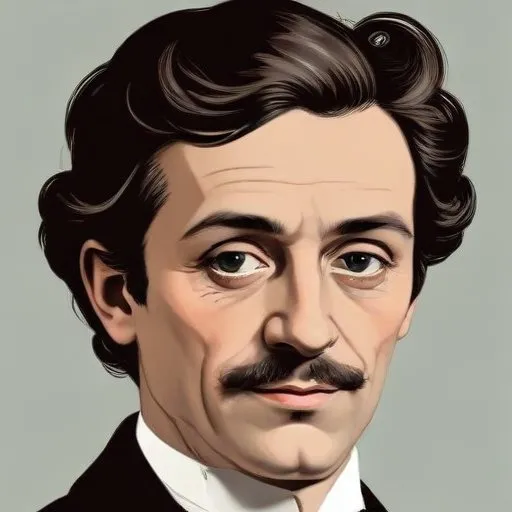
Louis Bouveault: The Pioneering French Chemist Behind Groundbreaking Syntheses
A Legacy of Innovation in Organic Chemistry
Louis Bouveault, a French scientist, is renowned for his remarkable contributions to the field of organic chemistry. Specifically, he is credited with developing the Bouveault aldehyde synthesis and the Bouveault-Blanc reduction, two groundbreaking methods that revolutionized the field.
Early Life and Education
Born on February 11, 1864, in Nevers, France, Bouveault's academic pursuits led him to earn doctorates in medicine and physical sciences from the University of Paris. His thesis on keto nitriles and their derivatives, defended in 1890, laid the foundation for his future research endeavors.
A Career of Discovery and Mentorship
Bouveault's academic career took him to various institutions, including the Medical Faculty in Lyon, where he taught for a brief period. Subsequently, he became a lecturer in general chemistry in Lyon, where he mentored
Victor Grignard, influencing him to pursue a career in chemistry. His research during this period focused on syntheses using camphor and terpenes.
Breakthroughs and Milestones
In 1903, Bouveault, along with Gustave Louis Blanc, described the Bouveault-Blanc reduction, a method for reducing esters to their corresponding alcohols in an alcoholic solvent. This was followed by his development of the Bouveault aldehyde synthesis in 1904, a formylation process that converts alkyl or aryl halides to their homologous aldehydes or carbaldehydes.
Leadership and Recognition
Bouveault's expertise and contributions earned him the position of professor of organic chemistry at the Faculty of Sciences of the University of Paris. In 1907, he was elected president of the French Chemical Society, a testament to his influence in the scientific community.
Prolific Author and Legacy
Throughout his career, Bouveault published numerous papers, leaving behind a rich legacy of research and discovery. His work has had a lasting impact on organic chemistry, paving the way for future generations of scientists.
Personal Milestones and Key Life Events
- February 11, 1864: Born in Nevers, France
- 1890: Defended thesis on keto nitriles and their derivatives
- 1894: Influenced Victor Grignard to pursue chemistry
- 1903: Described the Bouveault-Blanc reduction
- 1904: Developed the Bouveault aldehyde synthesis
- 1907: Elected president of the French Chemical Society
- September 5, 1909: Passed away
Bouveault's remarkable journey, marked by innovative discoveries and leadership, continues to inspire scientists and researchers in the field of organic chemistry.
FAQ
What was Louis Bouveaults contribution to organic chemistry?
Louis Bouveault was a French chemist who made significant contributions to the development of organic chemistry, particularly in the areas of synthetic methodology and natural product synthesis.
How did Louis Bouveaults work impact the development of modern chemistry?
Louis Bouveaults work had a profound impact on the development of modern chemistry, as his discoveries and innovations enabled subsequent scientists to develop new synthetic methods and understand the properties of complex molecules.
What was Louis Bouveaults approach to research?
Louis Bouveaults approach to research was marked by his emphasis on experimentation, his attention to detail, and his willingness to challenge established theories and methods.
How did Louis Bouveaults work influence the development of pharmaceuticals?
Louis Bouveaults work played a significant role in the development of pharmaceuticals, as his discoveries and innovations enabled the development of new medicines and treatments.
What is Louis Bouveaults legacy in chemistry?
Louis Bouveaults legacy in chemistry is marked by his groundbreaking contributions to organic chemistry, his influence on subsequent generations of chemists, and his role as a pioneer in the development of modern synthetic methodology.