


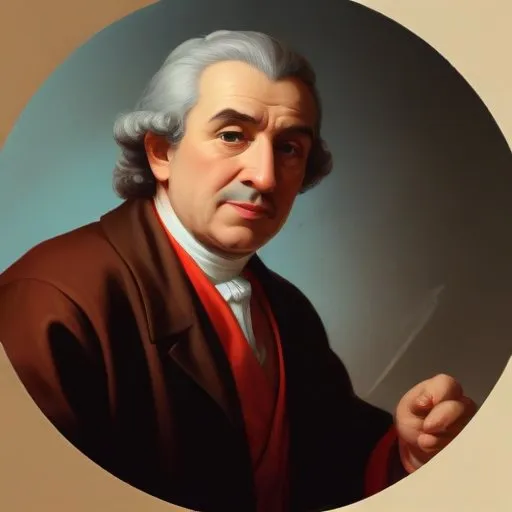
A prolific Neapolitan painter and illustrator, renowned for his vibrant and emotive works that blended Baroque and Rococo styles, creating dramatic and expressive scenes.
Luca Giordano, a 17th-century Italian painter and printmaker, was renowned for his incredible speed, versatility, and elaborate Baroque style. Dubbed "Luca fa presto" (Luca paints quickly), Giordano's remarkable talent earned him two other epithets: "The Thunderbolt" (Fulmine) and "The Proteus of painting."
Born on October 18, 1634, in Naples, Italy, Giordano was the son of painter Antonio Giordano. At the tender age of 15, he was apprenticed to the esteemed artist Ribera, under the recommendation of the Viceroy of Naples. Giordano's early work was heavily influenced by his teacher, and he went on to develop a distinctive style that blended Venetian and Roman influences.
Giordano's mature work is characterized by an elaborate Baroque style, combining the ornamental pomp of Paul Veronese with the lively complex schemes of Pietro da Cortona. His use of color is particularly noteworthy, showcasing a vibrant and showy palette that added depth and emotion to his works.
Giordano's work had a significant impact on the development of Baroque art, influencing artists such as Giovanni Battista Gaulli and Francesco Solimena. His ability to fuse different styles and techniques has made him a model for aspiring artists. Today, Giordano's works can be found in museums and galleries across Europe, including the Uffizi Gallery in Florence and the Prado Museum in Madrid.
Luca Giordano's remarkable talent, speed, and versatility earned him a lasting legacy in the art world. As "The Thunderbolt of painting," Giordano continues to inspire artists and art enthusiasts alike with his stunning Baroque masterpieces.
Born in 1598
A renowned Baroque master who crafted exquisite sculptures and paintings that captivated 17th-century Rome, leaving an indelible mark on the art world.
Born in 1596
A prominent Baroque painter who created elaborate, dramatic, and emotive works that adorned the ceilings of Roman palaces and churches, influencing the development of 17th-century art.
Born in 1581
A prominent painter of the Baroque period, known for his vivid and emotive depictions of mythological and biblical scenes, which greatly influenced the development of 17th-century art.
Born in 1575
A prominent Baroque painter and illustrator, renowned for his vivid and emotive depictions of mythological and religious scenes. His works are celebrated for their dramatic lighting and intense emotional power.
Born in 1657
A prominent Neapolitan painter and illustrator of the Baroque era, known for his dramatic and emotive works, often depicting mythological and biblical scenes. His style blended grandeur and elegance, influencing 18th-century art.
Born in 1591
A 17th-century master of dramatic lighting and intense emotions, creating powerful, psychologically complex works that explored the human condition. His bold, expressive brushstrokes and use of chiaroscuro influenced many artists.
Born in 1642
A 17th-century Jesuit Brother who excelled as an architect and painter, creating stunning Baroque trompe l'oeil ceilings that seemed to defy gravity. His works continue to inspire artists and architects today.
