


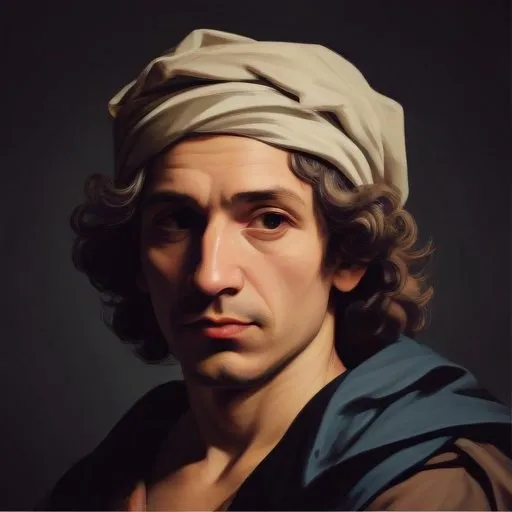
A prominent Neapolitan painter and illustrator of the Baroque era, known for his dramatic and emotive works, often depicting mythological and biblical scenes. His style blended grandeur and elegance, influencing 18th-century art.
Francesco Solimena, a prolific Italian painter of the Baroque era, is renowned for his breathtaking frescoes, altarpieces, and portraits that adorned the walls of Naples' grandest churches, palaces, and aristocratic residences. With a career spanning over seven decades, Solimena dominated Neapolitan painting, leaving an indelible mark on the artistic landscape of the 17th and 18th centuries.
Born on October 4, 1657, in Canale di Serino, a small town in the province of Avellino, Solimena received his early training from his father, Angelo Solimena. The younger Solimena honed his skills by working alongside his father on several projects, including a Paradise for the cathedral of Nocera and a Vision of St. Cyril of Alexandria for the church of San Domenico at Solofra.
In 1674, Solimena settled in Naples, where he joined the studio of Francesco di Maria. It was during this period that Cardinal Vincenzo Orsini, later Pope Benedict XIII, took notice of Solimena's talent and patronized him, encouraging him to pursue a career in art. By the 1680s, Solimena had secured independent fresco commissions, and his studio soon became the epicenter of Neapolitan painting.
Solimena's artistic style was deeply rooted in the Roman Baroque tradition, drawing inspiration from masters such as Luca Giordano, Giovanni Lanfranco, and Mattia Preti. He emulated Preti's technique of warm brownish shadowing, which became a hallmark of his work. Solimena's paintings are characterized by their theatrical drama, with figures and draperies bathed in pools and shafts of light, set against stark backgrounds with minimal architectural details.
Solimena's prolific career and artistic prowess earned him a fortune, and his influence can be seen in the works of his contemporaries and successors. He played a significant role in shaping the aesthetic of Neapolitan Baroque, leaving behind a rich cultural legacy that continues to inspire art lovers and historians alike.
Francesco Solimena's remarkable career, spanning over seven decades, left an indelible mark on the artistic landscape of Naples and beyond. His breathtaking frescoes, altarpieces, and portraits continue to inspire and awe art lovers, cementing his place as one of the greatest painters of the Baroque era.
Born in 1606
A master of light and shadow, this 17th-century artist is renowned for his emotionally charged and deeply human portraits, landscapes, and biblical scenes that continue to captivate art lovers worldwide.
Born in 1599
A renowned Spanish painter and educator, known for his masterful use of chiaroscuro and his iconic portraits of royalty, particularly the Spanish royal family.
Born in 1577
A renowned Flemish painter and diplomat, famous for his vivid and emotive Baroque-style masterpieces, particularly his lush nudes and dramatic altarpieces.
Born in 1599
A renowned Flemish-English painter and etcher, famous for capturing the essence of 17th-century European aristocracy through his exquisite portraits, characterized by dramatic lighting and subtle emotional depth.
Born in 1632
A master of capturing intimate, serene domestic scenes, particularly of women, in exquisite detail and soft, luminous light. His works evoke a sense of quiet contemplation and everyday beauty.
Born in 1598
A renowned Baroque master who crafted exquisite sculptures and paintings that captivated 17th-century Rome, leaving an indelible mark on the art world.
