


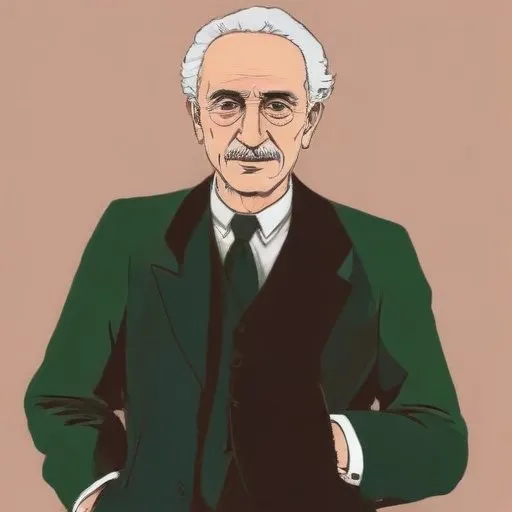
A 16th-century poet and diplomat who wrote influential works in Italian, helping to establish the language as a literary force, and served as an ambassador to France.
Luigi Alamanni, an Italian poet and statesman, is renowned for introducing the epigram into Italian poetry, leaving an indelible mark on the literary landscape of the Renaissance. His prolific and versatile poetry earned him recognition as one of the most prominent figures of his time.
Born on March 6, 1495, in Florence, Italy, Alamanni was raised in a family of devoted adherents to the Medici party. However, he defied his family's allegiance when he joined an unsuccessful conspiracy against Giulio de Medici, later to become Pope Clement VII. This bold move forced him to flee to Venice and eventually to France after the Medici ascended to power.
In 1527, when Florence temporarily overthrew the Medici rule and established a republic, Alamanni returned to his hometown, taking an active role in managing the affairs of the short-lived republic. During this period, he was instrumental in forming alliances with the French, participating in the war against the Holy Roman Empire.
After the Florentine Republic's fall in 1530, Alamanni fled to France once again, where he composed the majority of his works. He won the favor of King Francis I, who appointed him as ambassador to the Holy Roman Emperor Charles V after the Peace of Crepy in 1544. This diplomatic achievement showcased Alamanni's exceptional tact, exemplified by his encounter with the emperor, during which he cleverly navigated a potentially volatile situation.
Alamanni's poetry is characterized by its epigrammatic style, which he introduced to Italian literature. His works are marked by wit, satire, and a sharp insight into the human condition. Although he wrote in various genres, including sonnets, odes, and elegies, it is his epigrams that have had the most enduring impact on Italian poetry.
Alamanni's witty epigrams have become legendary in Italian literary circles. One of his most famous quotes is "Laquila grifagna, Che per più devorar, duoi rostri porta" ("The grasping eagle, to devour more, carries two beaks"). This satirical poem, quoted by Charles V, showcases Alamanni's cleverness and his ability to navigate complex situations with wit and diplomacy.
Luigi Alamanni's life and works are deeply rooted in the tumultuous landscape of 16th-century Italy. His poetry and diplomatic career reflect the intricate web of alliances, rivalries, and power struggles that defined the era. As a poet, statesman, and diplomat, Alamanni left an indelible mark on the cultural and political heritage of the Renaissance.
Alamanni's introduction of the epigram into Italian poetry has had a lasting impact on the development of Italian literature. His works have inspired generations of poets and writers, shaping the course of Italian literary history. Today, his poetry remains a testament to the power of wit, satire, and diplomacy in the face of adversity.
Born in 1469
Italian historian and philosopher who wrote "The Prince", a seminal work on politics and power that still influences modern leadership and governance today.
Born in 1449
Renaissance leader who ruled Florence and sponsored artists like Michelangelo and Botticelli, shaping the city's cultural and artistic heritage.
Born in 1483
A Renaissance-era statesman and historian who chronicled the Italian Wars and developed a realistic approach to politics, emphasizing the role of individual ambition and self-interest. 42
Born in 1470
A 16th-century Renaissance humanist who wrote influential poetry and treatises on literature, and was a key figure in developing the modern Italian language.
Born in 1463
Renaissance humanist and philosopher who wrote the famous "Oration on the Dignity of Man," a treatise that declared human beings' potential for greatness and their capacity for self-improvement. He's known for his emphasis on humanism and individualism.
Born in 1478
A Renaissance man who wrote "The Courtier," a influential book on etiquette and courtly behavior, shaping the ideal of the perfect gentleman. His work remains a cornerstone of Western cultural heritage.
Born in 1520
A powerful and influential figure in the Catholic Church, he played a crucial role in shaping the Church's policies and was a skilled diplomat, known for his clever negotiations and strategic alliances.
Born in 1452
A Dominican friar who preached about moral reform and prophesied the downfall of corrupt rulers, leading a short-lived theocratic government in Florence before being executed. He's known for his fiery sermons and clashes with the powerful Medicis.
