


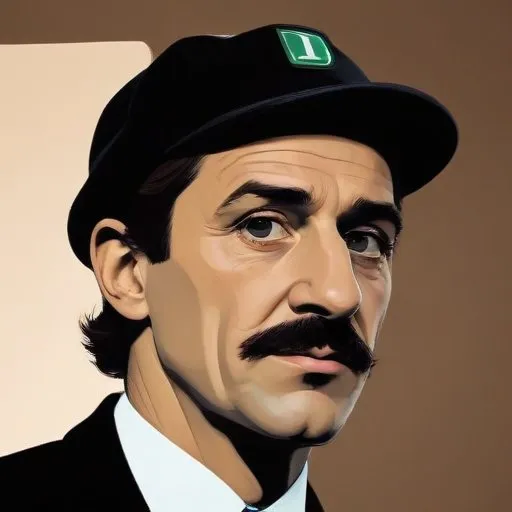
A renowned filmmaker behind neorealist classics, exploring social issues and human struggles in post-war Italy, leaving a lasting mark on the country's cinematic identity.
Luigi Zampa, a renowned Italian film director, is best recognized for his significant contributions to the Italian neorealism movement in the 1940s and his later work in the Commedia all'Italiana genre, which showcased his mastery of comedy and satire.
Born on January 2, 1905, in Rome, Italy, Zampa grew up in a working-class family. His early interest in filmmaking led him to enroll in the prestigious Italian film school, Centro sperimentale di cinematografia, where he honed his skills from 1932 to 1937.
Zampa's directorial debut in the 1940s marked the beginning of his association with Italian neorealism, a movement that aimed to portray the struggles of the common man in post-war Italy. His films during this period, such as Anita Garibaldi (1941) and Un Americano in vacanza (1946), showcased his ability to craft stories that were both poignant and thought-provoking.
In 1949, Zampa ventured into international collaborations with his film Alarm Bells on Ischia, which was simultaneously shot in a British version titled Children of Chance. This experiment demonstrated his adaptability and ability to work with diverse crews and audiences.
During the 1950s and 1960s, Zampa transitioned to the Commedia all'Italiana genre, which focused on satirical and humorous portrayals of Italian society. His films, such as The Traffic Policeman (1961) and A Question of Honour (1966), starring Alberto Sordi, became enormous box-office successes and cemented his reputation as a master of comedy.
Zampa's filmography spans over 40 films, showcasing his versatility and range as a director. His contributions to Italian cinema have been recognized with numerous awards and honors, including the prestigious Nastro d'Argento and the Italian National Syndicate of Film Journalists Award.
Zampa's influence on Italian cinema is undeniable. He played a significant role in shaping the neorealist movement and later helped establish the Commedia all'Italiana genre. His films have inspired generations of filmmakers, including icons like Federico Fellini and Michelangelo Antonioni.
"Cinema is a mirror that reflects the society we live in. As a director, it is my duty to hold up that mirror and show the truth." - Luigi Zampa
Zampa's legacy continues to inspire filmmakers and audiences alike, serving as a testament to his dedication to storytelling and his profound impact on Italian cinema.
Born in 1901
A renowned filmmaker and actor, known for directing poignant, neorealist classics like "Bicycle Thieves" and "Umberto D.", which still influence world cinema today.
Born in 1920
Visionary filmmaker behind surreal, poetic, and deeply personal cinematic masterpieces that blur the lines between reality and fantasy.
Born in 1912
A pioneering filmmaker who explored the human condition through visually stunning and psychologically complex movies, often focusing on alienation and social isolation.
Born in 1906
Acclaimed Italian filmmaker renowned for lavish, visually stunning productions that often explored themes of social class, morality, and the human condition. His cinematic masterpieces continue to influence filmmakers today.
Born in 1906
Pioneering filmmaker behind neorealist classics like "Rome, Open City" and "Paisan", known for gritty, socially conscious storytelling that influenced generations of directors.
Born in 1900
Pioneering filmmaker behind neorealist classics, exploring Italy's post-war struggles and societal changes through poignant, humanist storytelling.
Born in 1858
A Neapolitan painter of historical and mythological scenes, known for his dramatic and emotionally charged works that often featured intense lighting and vivid colors.
